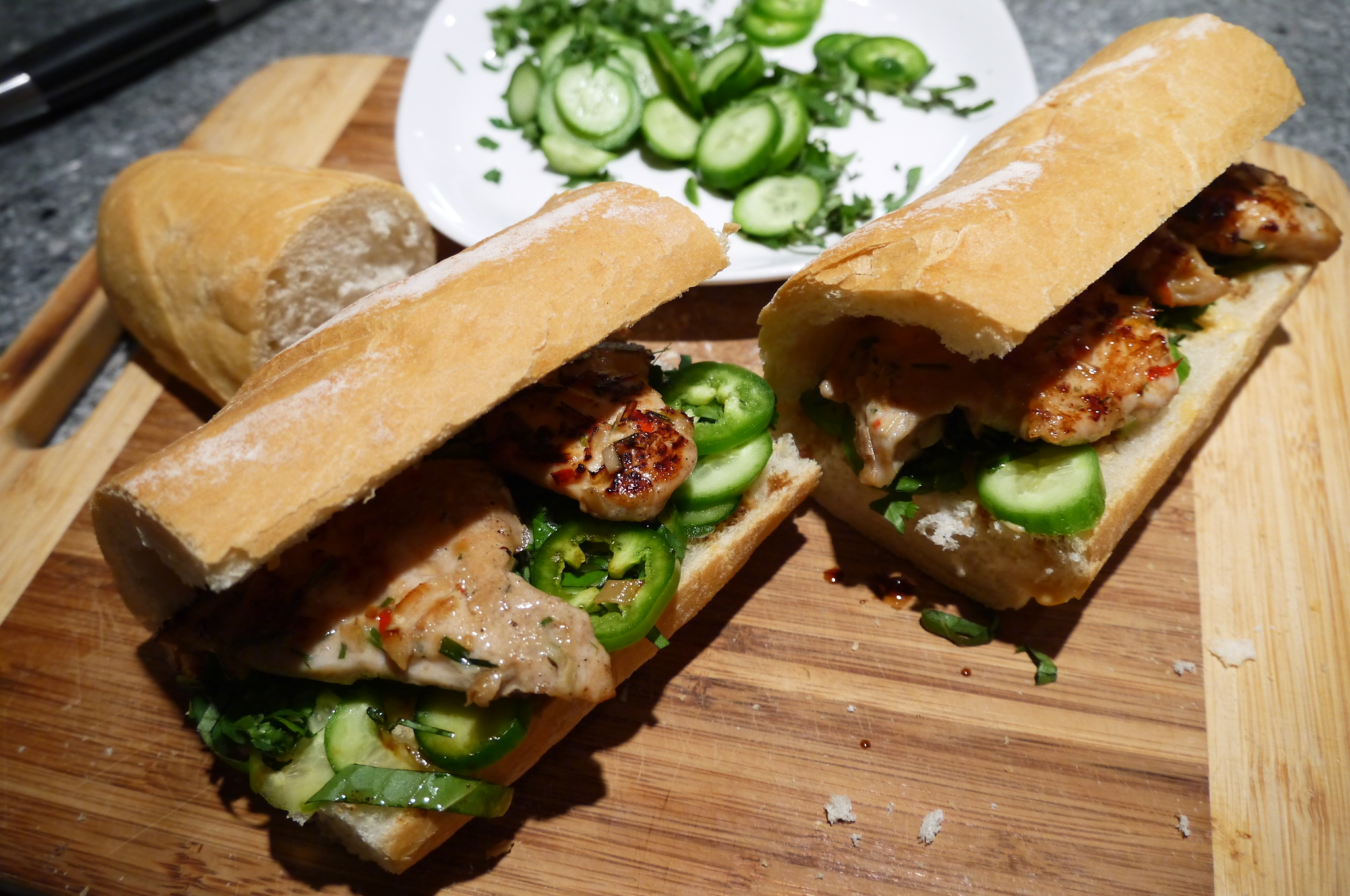
Lemongrass Chicken Banh Mi Sandwich

lemongrass banh mi - trust in kim

A little while ago I posted a recipe for tofu banh mi wraps, which were quite delicious. On Halloween I ate a lemongrass chicken banh mi from a place that my friend John loves in the West End of Vancouver. It was so tasty that I knew I had to feed John’s addiction for these things by making them for him at my house. So I found this recipe on thedilettantechef, and I love the flavour. Marinating the chicken overnight really infuses it with the lemongrass and other flavours. It is topped it off with some homemade pickled daikon & carrots, cilantro, Thai basil, cucumbers and optional jalapeño, and you’ve got the best sandwich ever.

I’m a bit of a sandwich snob – if I’m going to eat bread it has to be fresh and awesome, and if I’m going to eat a sandwich it has to be made on the spot, and have interesting flavours. Plus it has to contain a reasonable amount of fresh vegetables. No pre-made, plastic-wrapped sandwiches for this princess! This one passes my guidelines easily.

Be careful of the jalapeño – sometimes they are hotter than other times, so you might want to go easy on them if you don’t love them really hot. The jalapeños I bought for this one were so hot that our mouths and lips were on fire, and it took away from the flavour and enjoyment a bit.

For a later, gluten-free version, I used rice paper wraps to make up some sandwiches – loved that too!

What you need for the chicken:

  • 6 boneless, skinless chicken thighs or breasts(~2 lbs)
  • 2 stalks lemongrass, finely chopped
  • 1 clove garlic, finely chopped
  • 1 red Thai chili pepper, finely chopped
  • 1 tablespoon fish sauce
  • 2 teaspoons vegetable oil
  • 2 teaspoons soy sauce
  • 1 tablespoon honey
  • 1/2 teaspoon sesame oil
  • a few teaspoons peanut or canola oil for frying

What you need for the pickled carrot and daikon:

  • 1 large julienned carrot
  • 1 cup julienned daikon (optional)
  • 1 cup warm water
  • 2 tablespoons rice vinegar
  • 2 tablespoons sugar or honey
  • a large pinch of salt
  • a large pinch of red chili flakes

What you need for the sandwich:

  • a fresh crusty baguette
  • cilantro
  • Thai basil (if you absolutely can’t find it you can substitute fresh mint)
  • cucumber, thinly sliced
  • soy sauce
  • mayonnaise
  • Sriracha sauce
  • jalapeño slices

What you do:

  1. The day before you want to make these sandwiches, or at the very least 3-4 hours before, prepare the marinade for the chicken. Cut each chicken breast or thigh into about 3 pieces. Place each piece between a sheet of parchment paper and pound it until it is about 2cm thick. Combine all the marinade ingredients in a sealable container and coat the chicken with the sauce. Refrigerate for 3 hours or overnight.
  2. You can also make the pickled carrot and daikon ahead of time. It needs at least a few hours to pickle the vegetables. Combine all the ingredients in a jar, put the lid on it and shake it up a bit, then refrigerate. If the liquid doesn’t quite cover the vegetables, make up a little more of it.
  3. To prepare to build the sandwiches, get the toppings ready. Chop the cilantro and Thai basil, and slice the cucumbers and jalapeño pepper. Add a little bit of Sriracha sauce to the mayonnaise and stir it up. Have the soy sauce and pickled veg on hand, and slice the baguette open hotdog style. I like to let people make their own sandwich, so I just lay all the ingredients out on a platter.
  4. To prepare the chicken, heat a heavy frying pan on medium high and add a little bit of the peanut or canola oil. When it is hot add some of the chicken, not crowding the pan. Fry until the first side gets some dark colour, just a few minutes, then flip it and fry the other side until cooked through.
  5. To serve, sprinkle a little soy sauce on the inside of the bread (you might remove a little bit of bread from the inside before doing this), and spread on a little bit of Sriracha mayo. Add the chicken and some of each of the toppings as you desire, and enjoy immediately.
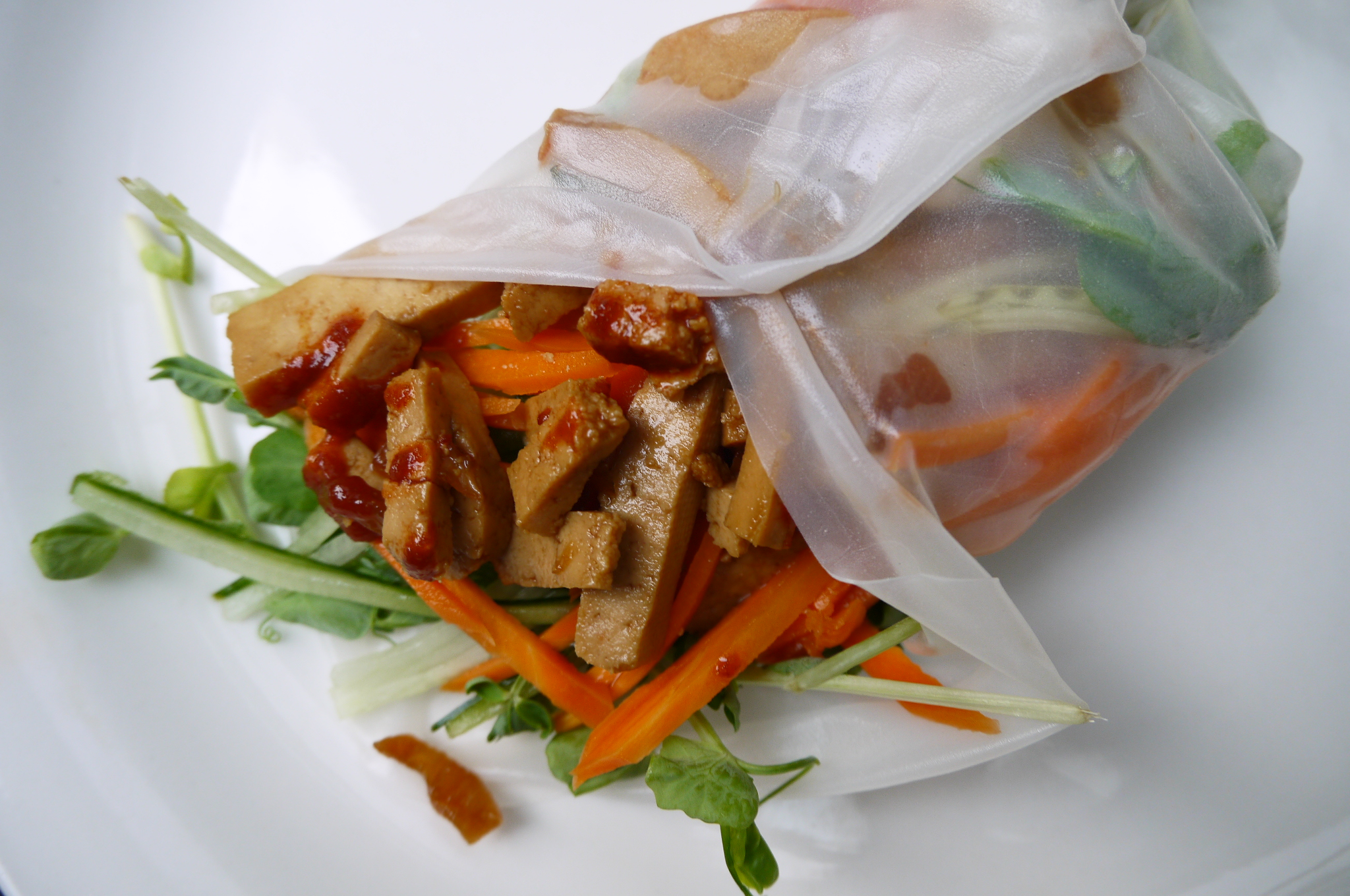
Banh Mi Wraps – Gluten-free, Vegan & Scrumptious

banh mi wrap - trust in kim

This is a little something I invented for a super healthy dinner recently.  This summer I tasted my first Banh Mi sandwich, a Vietnamese dish which seems to be very popular these days.  I loved it, but I wanted to make a healthier version, and something for people who can’t eat gluten or are trying to stay away from it.  So I made this version with tons of veggies, and chose to put in tofu instead of meat.  I also made it once with shrimp, but I preferred the tofu version because the sauce it is made in is so yummy. If you substitute meat make sure it is something with a flavourful sauce – there are tons or recipes available on the internet.

So the idea for the rice paper wrap is mine, but the sauce for the tofu comes from Mark Bittman.  I made his recipe a little simpler by using the tofu right out of the package; his recipe calls for cutting, freezing and thawing the tofu – way too much work! And it also tasted great this way.

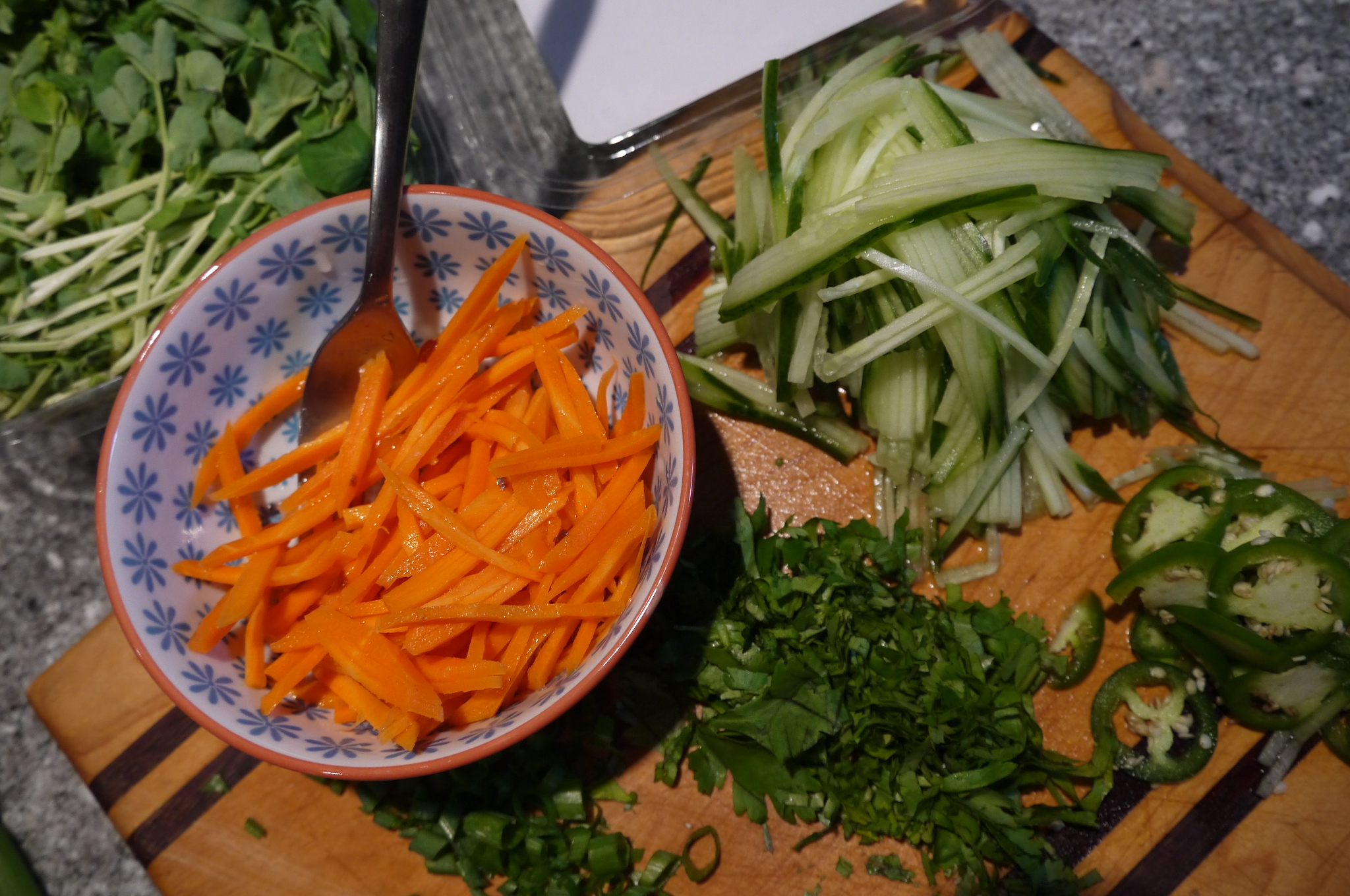
You can alter the fillings, but it really needs to have some cilantro, cucumbers, jalapeno slices, pickled carrots, and something with a sauce, like tofu or meat.

What you need for the caramelized tofu:

  • 1 – 14 oz package extra-dry tofu
  • 1/3 cup sugar
  • 2 & 1/2 tablespoons fish sauce (or use 2 & 1/2 tablespoons more soy if you don’t use fish sauce)
  • 2 & 1/2 tablespoons soy sauce
  • 1 medium onion, thinly sliced
  • 1 & 1/2 teaspoons freshly ground black pepper
  • 1 tablespoon rice vinegar

What you need for the pickled carrot daikon:

  • 1 large grated or julienned carrot (and some daikon if you want)
  • 1/2 cup warm water
  • 1 tablespoon rice vinegar
  • 1 tablespoon sugar or honey
  • a large pinch of salt
  • a large pinch of red chili flakes

What you need for the rest of the wraps:

  • cucumber cut into matchsticks
  • Sriracha sauce
  • cilantro, chopped
  • 1 jalapeno, thinly sliced
  • 1 red bell pepper cut into matchsticks (optional)
  • 1/2 cup spinach, chopped (optional)
  • pea shoots (optional)
  • spring onions, sliced

What you do:

  1. Make the pickled carrots/daikon ahead of time. Just combine the water, rice vinegar, sugar or honey, salt and chili flakes and stir to combine.  Then add the carrot and give it a little stir.  Let this sit for at least 1/2 hour or overnight.  I made mine a day ahead of time. Double the recipe if you add daikon.
  2. Thinly slice the onion.
  3. To make the caramelized tofu put the sugar into a large skillet over medium-low heat  with 1 tablespoon of water. Cook for about 10 minutes, shaking the pan from time to time, but not stirring – not stirring is an important to get your sugar to caramelize properly.  ( watch a video on how to caramelize here) It will be done when it is a golden brown colour. When the sugar has caramelized, slowly add the soy sauce and fish sauce. Add the onion and cook, stirring often, for about 8-10 minutes, or until the onion is softened. Add the tofu and pepper and cook, stirring occasionally, for about 15 minutes or until the tofu has absorbed a lot of the sauce.  Add the tablespoon of rice vinegar and remove from the heat.
  4. Boil some water to prepare the rice paper.
  5. Get all your topping chopped and ready to assemble the wraps.
  6. To prepare the rice paper, pour some very hot water into a dinner plate or shallow pan.  Place one sheet of rice paper into the water and let it sit for a few seconds, until it becomes more pliable, but not so much that it tears apart easily.
  7. Remove the rice paper from the water and place fillings in the middle, leaving room to fold the edges into a wrap.  Add vegetables and tofu with sauce, then top with some jalapeno slices and Sriracha sauce to your liking. Fold the bottom of the rice paper part way up then fold the left and right sides over each other, leaving the top open.
  8. Eat it right away. The rice paper doesn’t like to be kept waiting, and will turn crusty. I like to let people add what they like to their own wraps, so I just lay out all the options and they can go to it.

banh mi toppings - trust in ki