Antipasto Salad with Bocconcini, Salami, and Olive Tapenade

antipasto salad with bocconcini and olive tapenade - trustinkim

Here’s a salad for the meat lovers out there, and it makes a good meal salad on a warm day, or a starter if you make a smaller portion. If you have vegetarians or non-pork eaters at your table, the salad is also delicious without the salami. You could always add a boiled egg as an alternative.

It’s an easy recipe, and just requires a bit of chopping. The dressing can be made a day ahead to speed things up.

I visited an Italian specialty store to find the ingredients, but you should be able to find similar items at your local grocery store.

I found this Nancy Silverton recipe on the Food & Wine site, and served it with a lovely homemade no-knead focaccia and a crisp white wine. I halved the recipe, and my version feeds four people. The only change I made to the recipe was to add the salami to the top instead of mixing it in with the dressing. That way it can be left off for people who don’t want any, or want less meat; I think it looks nicer with the salami on top for presenting family-style on the table.

What you need:

  • 1 & 1/2 tablespoons green-olive tapenade
  •  2 tablespoons peperoncini—stemmed, seeded and finely chopped
  • 1/4 cup extra-virgin olive oil
  • 3/4 cups bocconcini
  • 2 teaspoons fresh lemon juice
  • 2 teaspoons red wine vinegar
  • 2 teaspoons minced garlic
  • 1/2 teaspoon dried oregano
  • salt to taste
  • freshly ground pepper
  • 1/2 small head of iceberg lettuce, halved, cored and finely shredded (about 2 cups)
  • 85 grams (3 oz) thinly sliced Genoa salami, cut into thin strips (about 3/4 cup)
  • 6 small basil leaves
  • 1/4 cup of your favourite green olives

What you do:

  1. Combine the tapenade, peperocini and half of the olive oil in a bowl, then toss the bocconcini in it. This can be refrigerated and used later or the next day.
  2. In another bowl combine the lemon juice, vinegar, garlic and oregano. Whisk in the remaining half of the olive oil, then season to taste with salt and pepper.
  3. Place the shredded lettuce in a large bowl, then add the marinated bocconcini and half of the salad dressing. Toss well, then plate the salad on a large platter.
  4. Add the salami strips to the top of the salad and top it with the basil and olives. Drizzle on a little bit more dressing, and serve immediately.
  5. Enjoy!

Grilled Chicken over Soba Noodles with Gai Lan

Grilled chicken over soba noodles with gai lan

Here’s a take on a delicious salmon soba noodle meal I posted recently. Although I don’t get a lot of comments on my blog (? please comment if you like or don’t like something – I need to know you’re out there!!!), a lot of people told me in person that they have made this dish and loved it. Me too! And because I loved it so much I worked on altering it a little to make a new meal.

It’s easy, tasty, and can be used for a leftover meal the next day. The additional gai lan is something I really like, as I feel it’s important to eat a lot of veggies, and grilling them is delicious.

This recipe is designed for two people, so double or triple for more people.

What you need:

  • 100 grams chicken thigh, boneless, skinless
  • 1/2 cup soy sauce
  • 1/4 cup rice vinegar
  • 1/4 cup mirin
  • tablespoons toasted sesame oil
  • tablespoons ginger (grated finely)
  • tablespoons sugar
  • pinch of crushed red pepper flakes
  • 100 grams soba noodles
  • 2 small Persian cucumbers 
  • scallions, thinly sliced, white and green parts
  • tablespoons sesame seeds, most crushed, some whole for garnish (I used black sesame seeds)
  • lime, optional
  • a bunch of gai lan

What you do:

  1. Combine the soy sauce, rice vinegar, mirin, sesame oil, ginger, sugar, and crushed pepper flakes. Chop the chicken, then place it in a shallow dish and pour about 1/4 cup of the marinade (the rest will be the dressing) over it. Cover and refrigerate for about 20 minutes.
  2. Toss the gai lan in some olive oil.
  3. Preheat the grill to high. Boil a large pot of water to cook the soba noodles. Follow the instructions on the package (mine took about 7 minutes). Drain the noodles, then place them in a bowl of cold water until they have cooled off.
  4. Toss the gai lan in some olive oil.
  5. Remove the chicken from the marinade and grill it for about 5-7 minutes, until it has cooked through.
  6. Grill the gai lan for a few minutes, turning when the leaves on one side begin to brown. Drizzle the gai lan with a bit of dressing, or just sprinkle with a little salt when it’s done.
  7. Slice the cucumbers as thinly as you can – I used a vegetable peeler to do this, but a mandoline works well too.
  8. Once the noodles have cooled, drain them and place them in a large bowl.
  9. Place the soba noodles, cucumber, scallions, sesame seeds and some of the dressing in the bowl. Give it all a good toss, adding more dressing if you need it, and some freshly squeezed lime if you wish. Chop and place the chicken on top of the salad and garnish with some sesame seeds if you wish. Serve with the grilled gai lan.

Soba Noodles with Cucumbers and Grilled Salmon

Soba Noodles with Grilled Salmon - trustinkim

I have made this recipe twice so far, and I already know it’s going to be a regular in my repertoire. This soba noodle dish is perfect for a warm evening, or any time you want something healthy, not too difficult, and super tasty. You only need to marinate the salmon for a little while, then boil the noodles, slice the cucumbers and scallions, grill the salmon, and put it all together.

I found this recipe on the Food 52 site – one of my favourite sites because they have so many recipes, and everything I’ve tried has been delicious. The original recipe called for cedar-planked salmon – I’m sure that I’m missing out, and I may never know exactly what I’m missing out on, but . . .  I’m probably never going to buy cedar planks to make this – I just grilled mine on foil (and now that I’ve bought a copper grill mat I don’t have to use non-usable tin foil again). If you don’t have a bbq you could pan fry or bake the salmon; it might just be missing that faint smoky taste and smell, but will still be awesome.

I made my own mirin, which was really easy to do. The stuff I found in the store was either really expensive, or didn’t seem to be a very good quality. The homemade version might not be cheaper because you have to buy a bottle of sake to make it, but I think it tastes a lot better. 

Here are some tips for using ginger:  First, I recently had a revelation about the quality of ginger – those great big roots we typically find in the grocery store are really woody, and the flavour and texture of the smaller or newer crop ginger is so much better. So when I find the small kind, which is usually an expensive organic type, I buy a whack of it and put it in the freezer. Whenever I need some I have it on hand, and I just use the finest grater I have to shred whatever amount of the frozen ginger that I need for the recipe. It grates much easier after freezing! It’s taken me a while to figure this out, and this has been a really helpful discovery.

And one note on the sesame seeds – in order to benefit from the nutrients in the seeds you really need to crush them; we can’t digest the whole seeds. So I like to crush most of them, then use a few extra to scatter on top of the dish to make it look pretty. You can do this in a spice grinder, with a mortar and pestle, or just squish them with a heavy pot on top of a cutting board. When you crush them you also get more of a sesame flavour, so keep that in mind when deciding how much to add.

This portion would easily serve four people, but it’s easy to halve the recipe if you’re feeding two. It was good the next day for lunch too!

Because I like to add extra veg to my meals, another time I made this I added grilled gai lan on the side. Bok choi would also be great. 

What you need:

  • 280 grams/10 ounces wild salmon fillets
  • 1/2 cup soy sauce
  • 1/4 cup rice vinegar
  • 1/4 cup mirin
  • tablespoons toasted sesame oil
  • tablespoons ginger (grated finely)
  • tablespoons sugar
  • pinch of crushed red pepper flakes
  • 170 grams/6 ounces soba noodles
  • English cucumber, or several of the smaller onest
  • scallions, thinly sliced, white and green parts
  • tablespoons sesame seeds, most crushed, some whole for garnish
  • 1 lime, optional

What you do:

  1. Combine the soy sauce, rice vinegar, mirin, sesame oil, ginger, sugar, and crushed pepper flakes. Place the salmon in a shallow dish and pour about 1/4 cup of the marinade (the rest will be the dressing) over the salmon. Flip the salmon so that the skin is facing up, then cover and refrigerate for about 20 minutes.
  2. Preheat the grill to high. Boil a large pot of water to cook the soba noodles. Follow the instructions on the package (mine took about 7 minutes). Drain the noodles, then place them in a bowl of cold water until they have cooled off.
  3. Remove the salmon from the marinade and grill it skin side down for about 5 minutes. Make sure not to overcook it – you can put a knife in it to test if it’s done and not worry about it looking bad because you’re going to break it apart for serving anyways. When the salmon is done let it rest off the grill for 5 minutes.
  4. Once the noodles have cooled, drain them and place them in a large bowl.
  5. Slice the cucumbers as thinly as you can – I just used a vegetable peeler to do this, and it was really efficient for a thin uniform slice. Place the soba noodles, cucumber, scallions, sesame seeds and some of the dressing in the bowl. Give it all a good toss, adding more dressing if you need it, and some freshly squeezed lime if you wish.
  6. Once the salmon has cooled, remove the skin and break the fish into small pieces. You can either mix the salmon into the noodles or put it on top. Garnish with some sesame seeds.
  7. Enjoy!

Awesome Slow-Cooked Beef Tacos

slow-cooked beef taco - trustinkim

If you have a thing for tacos, you’re going to love this slow-cooked beef taco recipe. The blackened peppers, slightly caramelized onions, and red wine give this recipe a lot of depth in flavour. Because of the long cooking time the meat becomes super tender, so you don’t need to buy an expensive cut of meat. It makes enough for a crowd, and also freezes well.

The recipe called for using a slow-cooker, but I don’t have one, so I cooked it in my Le Creuset baker in a low oven for a few hours.

Serve with your favourite taco toppings. Cilantro is always good, extra lime wedges, and your favourite bottled salsa. I didn’t use the Mexican crema that the original recipe suggested. Nor did I get to serve it with the Guacamolata (avocado sauce)  that I love, since there were no ripe avocados available in any of the five stores I tried!. I absolutely love X’nipek on this, a red onion topping that is really easy to make; it adds a little tartness and spice, and looks really pretty on top of a taco.

Some other topping ideas you could make are roasted tomatillo salsa, tomatillo salsa, guajillo chile salsa, or salsa fresca.

I found this recipe on the Food52 site.

What you need:

  • pounds boneless beef chuck roast, trimmed of excess fat
  • salt
  • freshly ground black pepper
  • poblano/pasilla peppers
  • serrano chile
  • tablespoons vegetable oil
  • medium-sized sweet onion, sliced about 1/2 cm thick
  • clove garlic, minced
  • 1/2 cup red wine
  • 430 mL/14.5 ounces canned diced fire-roasted tomatoes (or regular if you can’t find these)
  • tablespoon fresh oregano, chopped
  • tortillas (I like the ones made with a combination of corn and flour)
  • 1 tomato, chopped 
  • greens for garnish; I used some salad mix and cilantro

What you do:

  1. Take the beef out of the fridge 1/2 an hour before you begin cooking, then season generously with salt and pepper.
  2. If you have a gas range or a barbecue, turn it on high. Place the poblano and serrano peppers over the flame, turning from time to time, until they are blackened all over. You can also do this in the oven under the broiler. Once blackened, place the peppers in a bowl and cover with a lid. Let them sit for about 15 minutes before removing most of the skin, and cutting out the stem and seeds. It’s okay to have some blackened bits; this will give your tacos some smoky flavour, and makes it look authentic. Roughly chop the peppers.
  3. Preheat the oven to 250F/120C.
  4. Put a large skillet on high heat, then pour in a little glug of vegetable oil. Once the oil is smoking hot add the beef; let it brown on each side for about 2 minutes, then remove it from the pan, keeping the drippings to cook the onions in.
  5. Reduce the heat to medium-high and add the onions, stirring often to avoid burning. Cook until they have softened and become browned. If they seem too dry you can add a bit more oil to the pan.
  6. Add the chopped chile peppers and garlic, and cook for about 2 – 3 minutes, making sure that the garlic does not burn.
  7. Add the red wine and stir to scrape up all the nice brown bits off the bottom of the pan. Continue cooking until the wine has reduced by half, then add the diced tomatoes. Bring the mixture to a boil, then place the beef back in the pot.
  8. Put the pot in the oven an cook for 2-3 hours – this will give you lots of time to prepare the toppings, or make your own tortillas, and enjoy a cerveza. My beef was done somewhere after the two hour mark. It will be easy to tell if it is done – the meat will fall apart when you pull it with a fork. When it is done, shred the beef using two forks.
  9. Taste, then add more salt and pepper if you think it is needed. Sprinkle the chopped fresh oregano on top.
  10. To warm the tortillas, wrap them in a clean damp cloth and microwave on high for 1 minute.
  11. To serve, place some of the shredded beef in the middle of a tortilla. Top with a little bit of the pickled onion, chopped tomato, or whatever other topping you like. It’s nice to squeeze a little lime on top.
  12. Enjoy! Please let me know if you enjoyed the recipe, if there are any typos, or what you did differently!

Lamb, Root Vegetable and Mushroom Stew

lamb, root vegetable and mushroom stew - trustinkim

The other day, in the middle of a bleak, grey Vancouver winter week, I needed to make something warm and comforting. And since I love lamb, this seemed the perfect thing to make. If you don’t love lamb, you could substitute beef.

I really enjoyed the variety of vegetables in this stew. Ass well, a rich broth was created using red wine and beef broth, with the lamb, vegetables and herbs adding flavour. You can use any root vegetables you wish, or just go with the ones I’ve listed in the ingredients.

I found the recipe on this site. It was posted as a pressure cooker recipe, but since I don’t have a pressure cooker, I made it using the slower stove-top method. I know that a lot of people got Instapots for Christmas this year, so this would be a suitable recipe to use that.

In the original recipe Herbes de Provence are used, but I prefer to make my own mix. One reason is that I already have all the herbs that I need to go into it, so I don’t want to buy yet another jar for my spice drawer. As well, I think lavender makes a great sachet to put in the dryer, or to keep clothing drawers smelling fresh –  but I really don’t like to eat lavender. So I made my recipe sans lavender. It has thyme, oregano, and tarragon, and there is already a spring of rosemary in the stew, so I didn’t put in more of that.

Serves at least 4 people with some bread, or on top of mashed potatoes.

What you need:

  • 1/2 kg / 1 pound lamb, cubed
  • 1/2 cup flour
  • 1/2 teaspoon salt
  • a few grinds of pepper
  • 2 tablespoons olive oil
  • 1 shallot, minced
  • 2-3 cloves garlic, minced 
  • 1 cup dry red wine
  • 4 cups beef broth
  • 1 sprig fresh rosemary
  • 2 fresh bay leaves
  • 1/2 teaspoon fresh thyme
  • 1/2 teaspoon oregano
  • 1/2 teaspoon fresh tarragon
  • 1 cup red pearl onions or 1 sweet onion, chopped
  • 2 cups mushrooms quartered 
  • 4 cups root vegetables cubed- I used  a little bit each of carrot, potato, parsnip, sweet potato and turnip
  • several grinds sea salt and pepper to taste

What you do:

  1. Place the flour, salt and pepper in a large bowl. Add the cubed lamb and toss until all the pieces are coated. Remove the lamb from the bowl, discarding the remainder of the flour.
  2. Heat a large French oven or pot to medium high heat and pour in the olive oil. Add the lamb to the pot, along with the shallot and garlic, cooking the lamb until it has browned all over.
  3. Pour the wine and broth into the pot with the lamb, along with the rosemary, bay leaves, thyme, oregano and tarragon. Bring to a boil and cook without a lid on for 1 to 1 & 1/2 hours, stirring from time to time. The lamb should be tender at the end of this cooking time.
  4. Before the lamb cooking time is done, prepare the vegetables. If you are using the pearl onions, blanch them in boiling water for a few seconds, snip off the root end, and pop the onions out of their skins.
  5. When the lamb is tender, add the vegetables to the pot and cook for about 30 minutes, until the vegetables are tender.
  6. Taste before adding pepper, and possibly some salt. If you used a store-bought beef broth you may not need to add salt. If you like you can garnish with a little parsley.
  7. This makes excellent leftovers, and is possibly even better when reheated.
    Enjoy!

Cinnamon Curry Roasted Chicken with Tomato Yogurt Sauce

Cinnamon Curry Roasted Chicken with Tomato Yogurt Sauce - trustinkim
This one’s a keeper! For the perfect dinner for four I added some potatoes to the roasting dish, and then served it with the most amazing date and almond spinach salad.
I was skeptical at first when I saw cinnamon in the recipe, because that’s something I’ve never had with chicken, but I’m so glad I took the risk and made this one. Paired with the yogurt sauce it is really a delicious combo.
What you need for the chicken:
  • 1 (4-pound/ 1.8 kg) roasting chicken
  • 1 teaspoon cumin seeds
  • 1/2 teaspoon peppercorns
  • 1/2 teaspoon coriander seeds
  • 3 cardamom pods
  • 1 tablespoon curry powder
  • 1 teaspoon ground cinnamon
  • 1/2 teaspoon red pepper flakes
  • 1 head garlic cloves separated and unpeeled, plus 6 peeled cloves
  • 2 tablespoons finely grated ginger
  • 1 tablespoon olive oil
  • 1 & 1/2 teaspoons salt
  • 2 shallots, unpeeled and quartered
  • 3 sticks cinnamon
  • 1 cup chicken broth
What you need for the sauce:
  • 1 cup plain yogurt, at room temperature
  • 2 tomatoes, seeded and chopped
  • 3 tablespoons chopped cilantro
What you do:
  1. Preheat the oven to 450F. Pat the chicken dry with paper towels. Place the chicken breast-side up on a rack in a roasting pan. If you don’t have a rack you can place some carrots under the chicken to raise it up.
  2. Combine the cumin seeds, peppercorns, coriander seeds and cardamom pods in a small frying pan. Over medium heat toast the spices, swirling the spices around for about 2-4 minutes. Remove from the heat and allow to cool slightly, then grind with a mortar and pestle or in a grinder. Mix with the curry powder, cinnamon and red pepper flakes.
  3. Chop the 6 cloves of peeled garlic finely and combine it with the ginger and olive oil, then rub this mixture all over the chicken. Sprinkle the chicken with salt, then sprinkle on the spice mixture.
  4. Place the unpeeled garlic, shallot quarters, and cinnamon sticks inside the chicken cavity, then tie the legs together with kitchen twine.
  5. Place the chicken in the oven and set a timer for 30 minutes.
  6. If you are making potatoes, place them around the chicken about 20 minutes into the roasting time, and drizzle them with olive oil.
  7. At the 30 minute mark, baste the chicken with half of the broth.
  8. Roast for 20 minutes more, then baste with the remaining broth.
  9. Continue to roast the chicken for about 20 more minutes, until the juices run clear when the leg joint it pierced with a knife. If you have a meat thermometer, it should read 165F/ 74C. My chicken cooked very quickly, so I recommend checking it earlier than you think you might need to. Remove the chicken from the oven and let it rest while you prepare the sauce. Salt and pepper the potatoes, then place them in a serving dish. Cover to keep warm.
  10. Separate the fat from the pan juices, discarding the fat. Place the pan juices in a saucepan and heat to boiling. Reduce the heat, then whisk in the yogurt. It may curdle, so you can press the sauce through a sieve if this happens. Remove the sauce from the heat and add the tomatoes and cilantro, setting some of these aside to garnish with if you wish.
  11. Serve with the sauce on the side. When I served this people found the sauce made a very nice topping for the potatoes too.

Enjoy!


Green Thai Curry Chicken with Eggplant, Red Peppers and Cauliflower

green thai cury chicken - trustinkim

Your home will smell amazing while you are making this.
 
This is a recipe for Thai-style chicken that is cooked in a beautifully aromatic coconut curry, along with roasted vegetables. To the eggplant and red pepper I added cauliflower for my version, because I like to jam as many veggies in as possible. Feel free to substitute your favourite vegetables for any of these. I served this on jasmine rice.
 
This recipe was found in the cookbook Whitewater Cooks with Passion by Shelly Adams.


If you have trouble finding lemongrass that isn’t dried out or woody, here’s a product that you might be interested in. It’s lemongrass in a tube, made by Gourmet Garden. So until I can extend our summer growing season in Vancouver and grow it in my garden, I’ll be using this product. I plan to freeze portions of it so that it extends its shelf life.

What you need:

  • 1/2 cup green curry paste (but I used yellow)
  • 400 ml can of coconut milk (not light)
  • 2 tablespoons fish sauce
  • 1 tablespoon sugar
  • 6 kaffir lime leaves (or the zest of a lime, which I used)
  • 1 stalk lemongrass, cut in thirds and bruised (or 1 tablespoon lemongrass paste)
  • 8 chicken thighs, bone in, skin on
  • 1 teaspoon salt
  • 1 long Japanese eggplant, diced
  • 1 red bell pepper, diced
  • 1/2 head cauliflower, broken into florets
  • 2 tbsp olive oil
  • 1 cup thinly sliced mini cucumbers
  • 1 cup chopped cilantro
  • juice of 1 lime

What you do:

  1. Combine the curry paste, coconut milk, fish sauce, sugar, lime leaves and lemongrass in ovenproof baking dish.
  2. Preheat oven to 350 F. Rub the chicken on all sides with salt, then place it in the  sauce in the baking dish with the skin facing up. Cover with a lid or foil and bake for 1 hour.
  3. Prepare rice if you are using it.
  4. Remove the lid from the chicken dish and bake for 30 minutes, until the chicken skin is browned and crispy.
  5. Meanwhile, on a baking pan, toss the eggplant, cauliflower and red peppers with olive oil. Roast in the oven for the last 30 minutes with the chicken.
  6. Arrange the roasted vegetables around the chicken on a serving dish. Garnish with the cucumbers and cilantro. Squeeze lime juice over the dish and serve.

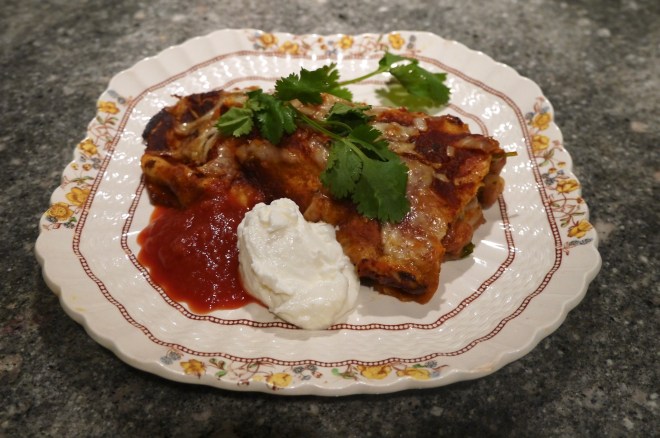
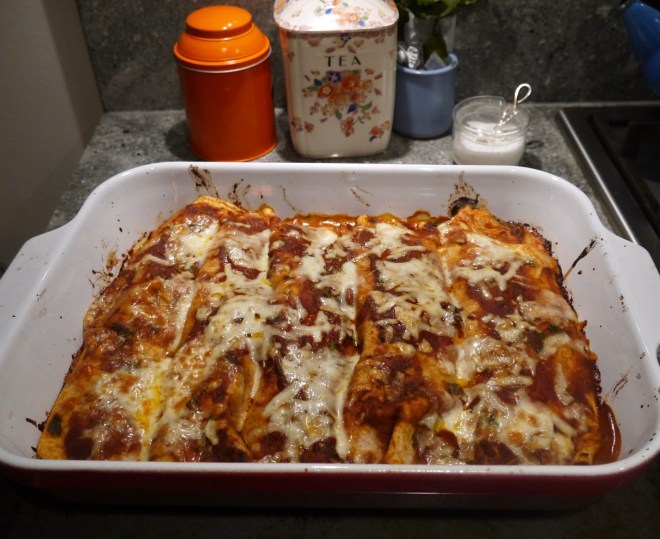
Avocado and Pinto Bean Enchilada

avocado and pinto bean enchiladas - trustinkim

This is a really satisfying vegetarian enchilada. The beans are loaded with flavour, and the avocado adds a lovely creaminess. Making this the first time was a bit of an experiment, as I was testing out what it would be like to bake the enchiladas with the avocado stuffed inside them – and it’s awesome!

The beans need to be soaked a day in advance, and then they take over an hour to cook. I made the beans and sauce ahead of time, so it was really quick to just roll the enchiladas, bake, and eat. It’s a bit of an involved recipe, but it makes a lot of delicious food that is excellent as leftovers.

The recipe for the sauce is from the Thug Kitchen cookbook, and the filling is my own creation. I prefer to make the beans myself instead of using canned ones; when you cook them yourself you can add all those great flavours. Plus it’s really cheap.

What you need for the beans:

  • 1 cup dry pinto beans
  • about 4 cups vegetable stock, or water and a bouillon cube
  • 1 sweet onion, diced
  • 3 dry Morita chilis
  • 1 stalk celery, whole
  • 1 carrot, whole
  • 1 bunch cilantro stems, minced
  • 1 clove garlic, smashed
  • 2 bay leaves
  • salt and pepper to taste

What you need for the Enchilada Sauce:

  • 2 & 1/4 cups vegetable broth
  • 1/3 cup tomato paste
  • 2 & 1/2 tablespoons chili powder
  • 2 teaspoons ground cumin
  • 1 & 1/2 teaspoons dried oregano
  • 3 cloves garlic, minced
  • 2 teaspoons soy sauce or tamari
  • 1 tablespoon lime juice

The other ingredients:

  • 5-6 flour or corn tortillas
  • 2 avocados
  • the greens from the cilantro, chopped
  • lime juice
  • 1-2 cups grated aged cheddar
  • salsa or hot sauce to serve
  • yogurt or sour cream to serve

What you do:

  1. Begin by soaking the beans the night before you want to cook them.
  2. Drain the beans and add the broth, or the water and bouillon. Add the onion, Morita chilis, celery, carrot, cilantro stems, garlic, and bay leaves. Bring to a boil, then lower the heat to a simmer. Cook for about 1 hour and 45 minutes, or until the beans are soft. Add a little boiling water if they start looking too dry.
  3. At this point I cook off any excess liquid by raising the heat and stirring. Keeping all that concentrated liquid retains its flavour, making the beans irresistible.
  4. Discard the vegetable pieces and bay leaves.
  5. The enchilada sauce can also be made ahead of time and refrigerated. Put all the ingredients for the sauce except the lime juice into a medium saucepan. Whisk the tomato paste and let the sauce simmer for 10-15 minutes until it has thickened up a bit. Add the lime juice and take the sauce off the heat. Let the sauce cool before making the enchiladas.
  6. Preheat the oven to 375F. To make the enchiladas, begin by spreading some of the sauce in the bottom of a large baking dish. Mix the beans with the chopped avocado, chopped cilantro, and some lime juice. Dip a tortilla in the tomato sauce so that there is some on both sides. Spread the bean mixture in down the centre of the tortilla and top it with some grated cheese. Roll it up and place it in the pan seam-side down. Do the same with the rest of the filling.
  7. Add any remaining sauce to the top of the enchiladas, and then sprinkle on the remaining cheese. Cover the pan with foil and bake for 20 minutes. Remove the foil and bake 5 minutes more. Let the enchiladas sit for 5-10 minutes before serving.

avocado and pinto bean enchilada - trustinkim

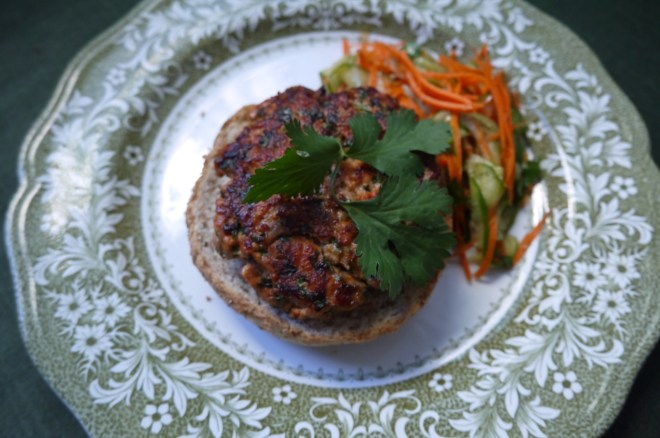
Thai Salmon Burgers

thai salmon burger - trustinkim

This is a really great salmon burger recipe, tender and full of flavour. Add a little salad and you’ve got a great little meal. I served them with a refreshing cucumber salad. They were pretty quick to whip up for a weeknight dinner.

I like the idea of making my own patties, partly so I know the fish is really fresh, and so I can adjust the spices, depending on the preferences of the people eating them (including e!). It’s easy enough to chop up the salmon, but you could buy ground salmon if you prefer. I thought the patties would fall apart when frying, but they stayed together nicely.

I found the recipe here; I just added lime zest, used a little less curry paste, and made a lime mayonnaise to serve the burgers. You could also add a little tomato or other toppings to the burger as you see fit. I like my buns toasted, and just a little lime mayo and a slice of tomato.

Enjoy! This recipe serves two people.

What you need for two salmon burgers:

  • 2 boneless, skinless salmon fillets, about 275g in total
  • 2 teaspoons Thai red curry paste
  • 4 cm piece fresh root ginger, grated finely
  • 1 tsp soy sauce
  • zest of one lime
  • 1/4 bunch cilantro, finely chopped
  • 1 tsp vegetable oil for cooking
  • two buns

What you need for the mayonnaise sauce:

  • a few tablespoons of mayonnaise
  • a tablespoon or so of lime juice
  • salt and pepper to taste

What you do:

  1. Finely chop the salmon. Add the curry paste, ginger, soy sauce, lime juice, and finely chopped cilantro and mix until well combined (or use a food processor). Refrigerate for about 10 minutes.
  2. Prepare the mayonnaise sauce by combining the mayonnaise, lemon juice, and a little salt and pepper.
  3. Add the oil to a pan on medium heat, then fry the patties 4-5 minutes per side.
  4. Enjoy them while they are hot!


Chicken Teriyaki

chicken teriyaki - trustinkim

I had plans to make a delicious fried rice with veggies, and wanted to add a little chicken to it, so I found this recipe for Classic Chicken Teriyaki here. The only change I made was to use skinless chicken – I know it’s not authentic, but it’s healthier, and the sauce was so delicious that I felt it didn’t need the skin. I don’t have the fried rice recipe posted (oops, forgot to write down how I made it!), but here’s an awesome one that I posted a long time ago: Kale and Scallion Fried Rice.

The chicken just needs to marinate for at least 30 minutes, and that time can be used to prepare your rice, or whatever else you want to serve with it. Alternately, you could begin marinating the day before, or earlier in the day.

I usually keep a knob of ginger in the freezer, so that I always have some on hand, and because it is easier to grate when it is frozen.

What you need:

  • 300 grams (2/3 lb) of chicken thighs, boneless and skinless (unless you prefer skin-on)
  • salt and pepper
  • 1/4 of a medium sized onion
  • 4 cm knob of ginger
  • 1 clove garlic
  • 2 tablespoons soy sauce
  • 1 tablespoon saké
  • 2 tablespoons mirin
  • 1 tablespoon sugar
  • 1 tablespoon canola oil
  • 2 more tablespoons saké
  • 1 tablespoon butter

What you do:

  1. Cut the chicken into pieces and sprinkle with a little salt and pepper.
  2. In a container large enough to fit all the chicken, finely grate the onion and ginger, and mince the garlic.
  3. Add the soy sauce, 1 tablespoon of saké, mirin, and the sugar. Stir to combine. Add the chicken and coat it completely with the sauce. Cover and place in the fridge to marinate for at least 30 minutes.
  4. Heat the oil in a frying pan on medium-high heat. Remove the chicken from sauce and it  add to the pan. Cook until browned, then flip chicken, and turn the heat down to medium. Add the remaining saké, cover, and cook until saké is absorbed.
  5. Add the rest of the sauce to the pan and cook until it thickens. Add the butter and stir until it has evenly coated the chicken.
  6. Enjoy!