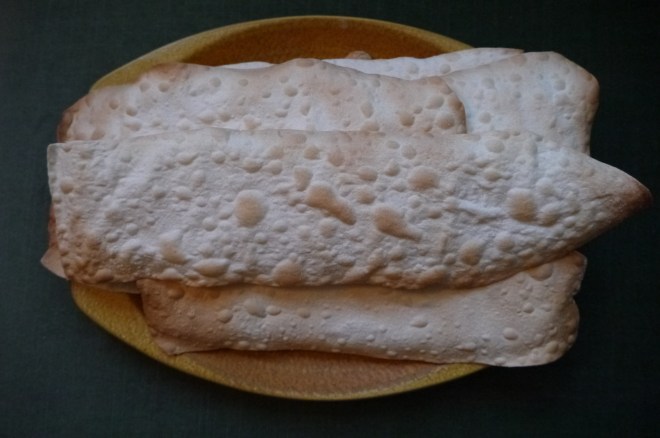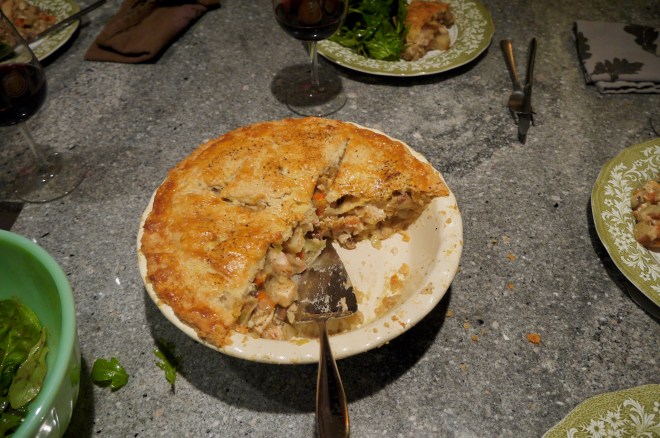
Chicken and Vegetable Pie with an Amazing Duck Fat Crust

chicken and vegetable pie - trustinkim

I’m really proud of this recipe – it turned out perfectly! My goal was to create a savoury pie crust using duck fat, and this one ended up being so perfectly flakey and flavourful. And the chicken and vegetable filling was super tasty as well.

I used half butter, half duck fat for the crust, because I wanted it to still have that awesome buttery flavour, which is even more decadent when paired with the duck fat.

For the filling I began with this recipe, and made a few changes. I used my own pastry recipe, used a store-bought rotisserie chicken instead of cooking the chicken breasts, used butter instead of olive oil for frying the veggies, omitted a few items, made less sauce, and added the mushrooms, leek, and potato. I also added some thyme and a lot of freshly ground pepper.

The keys to a successful pastry are using very cold ingredients, weighing rather than measuring, and not overworking the dough. One of my guests was surprised to see rather large chunks of fat in the crust, but leaving the butter and duck fat in pea-sized pieces allows the pastry to be flakey rather than dense.

This recipe would feed 6 hungry people. I served it with a salad of arugula and spinach, with a walnut dressing.

What you need for the crust:

  • 350 grams flour
  • 1 teaspoon salt
  • 140 grams cold butter
  •  140 grams cold duck fat
  • 6-ish tablespoons ice-cold water

What you need for the chicken and vegetable filling:

  • meat from 1 small rotisserie chicken (I used a Whole Foods chicken)
  • butter for frying
  • 1 small onion
  • 1 small leek
  • 10-12 brown mushrooms
  • 2 carrots
  • 1 small red potato
  • (frozen peas optional)
  • 2 & 1/2 cups chicken stock (preferably homemade)
  • 1 cup white wine (or just use more chicken stock)
  • 2 chicken or vegetable bouillon cubes
  • 1/4 cup butter
  • 1/4 cup flour
  • 3 tablespoons cream
  • a little thyme
  • lots of freshly ground pepper
  • salt to taste
  • 1 egg plus 1 tablespoon water, for the pastry wash

What you do:

  1. Begin a few hours ahead of time by preparing the dough. In a large bowl weigh and pour in the flour along with the salt. Cut the cold butter and duck fat into small pieces, then add that to the flour. Use your fingers (cold hands are the best for this – lucky me!) to rub the flour into the fat, only working until the fat is in pea-sized pieces. Add about 5 tablespoons of the ice-cold water, and stir it in using a spatula. Add a bit more water if necessary. Turn the dough out onto the counter and push it together into a ball. Cut the dough in half (or a larger piece for the bottom crust, smaller for the top) and form each piece into a disk. Wrap each piece in plastic wrap. Refrigerate for about 2 hours.
  2. To make the filling, begin by chopping the onions and leek. Heat a large frying pan to medium, add a little butter. Cook the onions and leek, lowering the heat, for about 10 minutes, or until the onions are translucent. Clean and slice the mushrooms while the onions are cooking.
  3. Remove the onions to a large bowl, then turn the heat up on the frying pan and add a bit more butter. Fry the mushrooms, possibly in two batches, until they are browned. Remove them to the bowl as well.
  4. Cut the carrots into a medium dice. Blanch them for 2 minutes, then move them to the bowl.
  5. Cut the potatoes to a medium dice, blanch for 2 minutes, then move them to the bowl as well.
  6. To make the sauce, begin by heating the chicken stock and wine, and dissolve the bouillon cubes in it.
  7. Melt the butter in the frying pan, then sprinkle in the flour. Stir constantly over low heat for 2 minutes. Slowly add the liquid, stirring to combine the liquid into the flour mixture as you add it. Simmer for about another minute, until the sauce thickens a little. Add the cream, ground pepper, thyme, and salt to taste (keep in mind the bouillon cubes contain salt, so don’t over-do it).
  8. Cut the chicken into cubes and add them to the bowl with the veggies. Add the sauce to the bowl and combine everything. (Add frozen peas if you are using them. I had so much filling that I didn’t have room for them.)
  9. Preheat the oven to 375F.
  10. Remove the pie crusts from the fridge. Sprinkle a little flour on the counter and place one of the disks (the larger one) of dough on the counter. Roll the dough a little, then turn, roll, turn, continuing until you get a circle of dough that is 7-8 cm larger than your pie plate. Roll the dough over the rolling pin, being careful not to stretch it, then transfer it to the pie plate. It’s okay if it breaks in places, just pinch it back together. Roll the other crust out. Add all the fillings to the pie plate, then brush the edges of the bottom crust with the egg wash. Place the top crust over the bottom, cut off excess pastry, then crimp the edge.
  11. Cut slits in the top of the pastry, then brush it with the egg wash, and sprinkle with salt and pepper.
  12. Place the pie on a baking sheet, put it in the oven, and bake for 1 hour. The pie should look golden brown, and the filling should be bubbling.
  13. Wait about 10 minutes before slicing and serving.

Vegan Lemon Cookies

vegan lemon cookies - trustinkim

A nice balance of sweet and tart, these cookies are easy to make, and vegan-friendly. I needed to find a vegan cookie recipe to make with my students, and I found this one on food.com. It makes a lot of cookies, at least 3 dozen.

I made a mistake when I made these, and must have added too little flour or too much oil. The first batch came out looking like a lace cookie. So for the second baking I added more flour – but a little bit too much. I pronounced it a “cookie fail,” but not wanting to waste them, I brought them to the staffroom at work. Well, either the teachers were starving and desperate, or they really enjoyed them. Some people loved the lacy variety, and others liked the more compact ones. So in the end it was declared a “cookie win,” and I was strongly encouraged to make these again.

I only made one change to the original recipe: I rubbed the zest into the sugar to release the oils, providing more lemon flavour.

What you need:

  • 1 & 1/2 cups sugar
  • 2 tablespoons lemon zest
  • 2 & 1/2 cups flour
  • 2 teaspoons baking soda
  • 1/4 teaspoon salt
  • 3/4 cup canola oil
  • 1/2 cup freshly squeezed lemon juice
  • 2 teaspoons vanilla

What you do:

  1. Preheat the oven to 350F.
  2. Place the sugar and lemon zest in a bowl and rub the sugar into the zest with your fingers.
  3. Add the flour, sugar, baking soda and salt to the sugar; combine and make a well in the centre. Pour in the liquid ingredients and stir until it is combined.
  4. Drop by the teaspoonful onto parchment-lined cookie sheets.
  5. Bake for 8-10 minutes, depending on whether you prefer them chewier or crunchier.
  6. Let them sit on the pan for a few minutes before removing to cooling racks.
  7. Store in an airtight container.

Pinto Bean Stew

fullsizeoutput_15fe

I can honestly say that this is one of the best recipes I have ever invented. This morning I was longing for lunchtime, just because I had leftovers of this stew. It is so flavourful, plus a healthy vegan meal. Filling, healthy and satisfying – the perfect combination for me.

The sweet potatoes give a hint of sweetness, and the Morita chilies add a little smokiness. If you’re not a fan of a lot of spice, no worries, the Morita chilies aren’t very hot, and you can always add a little less jalapeño pepper. When serving you can also add some of your favourite hot sauce to spice things up a little; this is a great option, since everyone has a different tolerance of spice. One person’s ‘warm’ is another person’s ‘deadly.’

I had a taste of the stew after cooking it yesterday when I made it. The flavours seemed even better today, so I would imagine this would freeze well. I think I won’t have any leftovers, so I won’t be able to test that. Please comment if you freeze it and let us know how it was after thawing. I’d also love to hear if people make substitutions; this is one of those recipes that could be great with so made different ingredients.

The garnishes really add to it, but aren’t necessary – a tiny bit of salty Cotija cheese, some chopped cilantro, and the crunch of the toasted pepitas.

What you need:

  • 1 & 1/2 cups dry pinto beans, soaked the night before
  • 1 carrot
  • 1 stalk celery
  • 1 onion
  • 2 bay leaves
  • 3 dried Morita chilies (a smoked red jalapeño)
  • olive oil
  • 1 vegetable bouillon cube
  • 1 jalapeño pepper, minced
  • a few mushrooms, chopped
  • 1 small zucchini, diced
  • 1 sweet potato, diced
  • 1 small can cherry tomatoes, chopped
  • 1 bunch cilantro (stems go in the stew)
  • salt and pepper to taste
  • Garnishes: crumbled Cotija cheese, toasted pepitas (pumpkin seeds), cilantro

What you do:

  1. Soak the beans in a large pot of water the night before you are going to make the stew.
  2. Drain the beans, then cover them with fresh water. Add the whole carrot, celery stalk, 1/4 of the onion, the bay leaves, and the chilies. All of these vegetables are for flavouring the stew and will be removed before serving. Bring the contents of the pot to a simmer.
  3. While the beans are simmering, heat a frying pan to medium and add a little olive oil. Add the mushrooms and fry until cooked, then add them to the pot. Dice the rest of the onions and brown them lightly, then add them to the pot.
  4. Add the minced jalapeño (or half if you you’re spiciness scares you), the diced zucchini, sweet potato, and canned cherry tomatoes to the pot. Chop the cilantro stems and add them to the pot, along with the bouillon cube.
  5. Simmer the stew for 1 & 1/2 hours, stirring now and then, until the beans are soft and the stew has thickened.
  6. Add salt and pepper to taste. Serve garnished with crumbled Cotija cheese, toasted pepitas and cilantro.

French Lemon-Yogurt-Olive Oil Cake

French Lemon Yogurt Cake - trustinkim

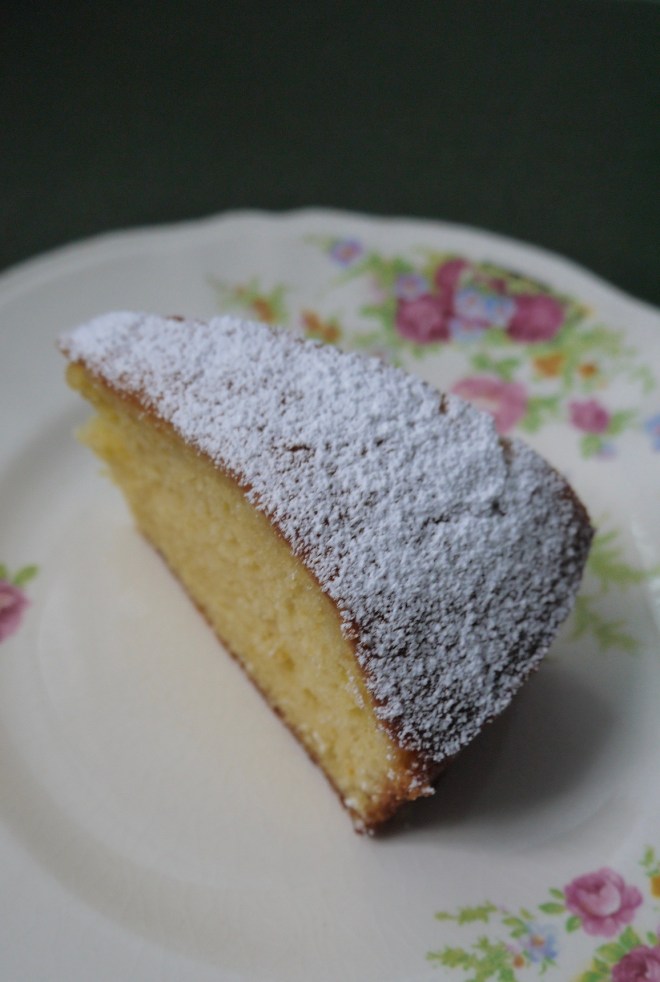
This gorgeous little cake is drenched in a lemon glaze, making it irresistible. I found the recipe on Orangette.  I was looking for a lemony cake, but I wanted to make a recipe that used olive oil. I altered the original recipe slightly by using olive oil, and adding a little more lemon zest.

One other change I made was in the preparation of the recipe, which I think is quite important. I added the zest at the beginning, along with the sugar. If you rub the sugar and zest together it releases the oils from the zest better.

I served part of the cake, then wrapped up a portion and put it in the freezer – just as good a few days later!

What you need for the cake:

  • 1/2 cup plain yogurt
  • 1 cup granulated sugar
  • 3 large eggs
  • 1 & 1/2 cups all-purpose flour
  • 2 teaspoons baking powder
  • 1/2 teaspoon salt
  • lemon zest, from 1 large or two small lemons
  • ½ cup olive oil

What you need for the glaze:

  • 1/4 cup freshly squeezed lemon juice
  • 3/4 cup of powdered sugar
 What you do:
  1. Prepare an 8 inch cake pan by spraying it or rubbing it with butter. Cut a circle of parchment paper to fit in the bottom of the pan. Spray or spread butter on the parchment paper. Preheat the oven to 350˚F.
  2. Place the sugar and zest in a large bowl. Rub the zest into the sugar with your fingers.
  3. Add the yogurt and eggs, one at a time, and stir until well blended.
  4. Add the flour, baking powder, and salt, mixing enough to just combine the dry ingredients.
  5. Add the oil a little at a time and stir until it is a smooth batter.
  6. Pour the batter into the prepared pan.
  7. Bake for 30-40 minutes, until the cake feels springy to the touch and a toothpick inserted into the centre comes out clean.
  8. Cool the cake on rack for 10 minutes; then turn the cake out onto the rack.
  9. Prepare the glaze by stirring the lemon juice and powdered sugar together. Place a plate or baking tray below the cake to catch drips. While the cake is still warm, use a pastry brush spread the glaze all over the cake –  some of it will drip off, but keep going until the glaze is gone, as it will soak in.
  10. Allow cake to cool completely.
  11. Sprinkle with powdered sugar if you desire it and serve. This cake was still delicious a few days after baking.


Roasted Chicken and Vegetables in a Clay Baker

p1070249

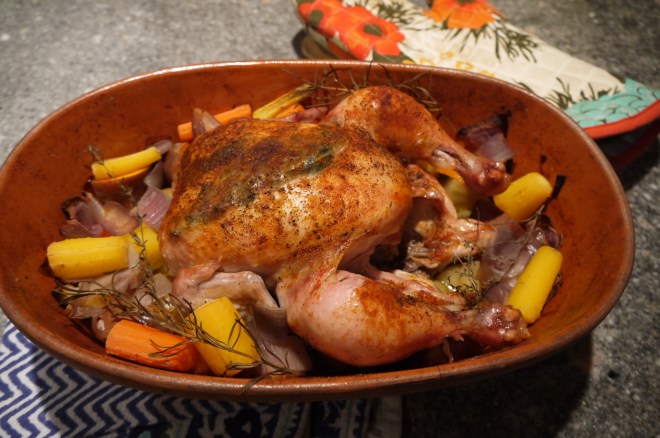
I’ve roasted a chicken many times in a clay baker, and have posted the recipes a few times. Romertopf roasted chicken remains one of the most popular recipes on my blog. I changed up a few of the ingredients this time, and added more vegetables to cook inside the baker.

On a winter’s evening it is a perfect simple and satisfying meal. Impressive too, since it seems like you went to a lot of effort, but it’s actually quite simple, and you don’t need to do any last-minute preparation.

Served with a salad and maybe a nice baguette, it’s the perfect winter meal. And the leftovers are awesome!

What you need:

  • 1 free-range chicken
  • 1-2 tablespoons garlic-infused olive oil (or regular olive oil, or room temperature butter)
  • a few sprigs of fresh thyme
  • a few stems of fresh rosemary
  • paprika
  • salt
  • pepper
  • a few cloves of garlic
  • a few small potatoes
  • a small sweet potato or yam
  • a few carrots
  • 1/2 red or sweet onion
  • lemon (optional)

What you do:

  1. Soak the Romertopf clay roaster for at least 15-20 minutes before using. This provides some moisture for the cooking process, and keeps the roaster from cracking.
  2. Drain the roaster and place the rosemary stems in the bottom of the roaster, reserving one. Chop the vegetables into chunks and place them in the roaster, leaving an empty spot in the middle around the rosemary.
  3. Dry the body and cavity of the chicken with paper towel. At the breast of the bird, put your fingers under the skin to separate the skin. Put the rosemary stem and a few springs of thyme under the skin. Salt and pepper the whole chicken.
  4. Spread some of the garlic-infused olive oil all over the chicken, using your hands. Now sprinkle on some paprika on the chicken.
  5. If you have a lemon you can stuff it into the cavity of the chicken, along with some thyme.
  6. Place the chicken in the roaster, breast side up, and tuck the wing tips down so they won’t burn. Throw a few sprigs of thyme on top of the vegetables.
  7. Place the cover on the roaster, then put it in a cold oven – this is important to prevent the clay roaster from cracking when it goes into a hot oven. Turn the temperature to 4ooF and set the timer for 1 & 1/2 hours. Leave it to roast without peeking; this will help keep all the moisture inside.
  8. After the 1 & 1/2 hours of cooking time, remove the roaster from the oven. Test the chicken to see if it’s cooked all the way through by cutting into the leg joint: if the juices run clear it is done. If not, return it to the oven for a little longer. As well, if the skin doesn’t look browned, pop it back in without the lid and let it brown a little. Once it is done let it sit with the cover on for about 20 minutes before carving.  I like to ladle some of the juices over the chicken, and you could also make a gravy with the juices.

Save the bones and excess juices in the freezer to make a gorgeous  stock that you can use to make the best soups.

Garlic Confit

garlic confit - trustinkim

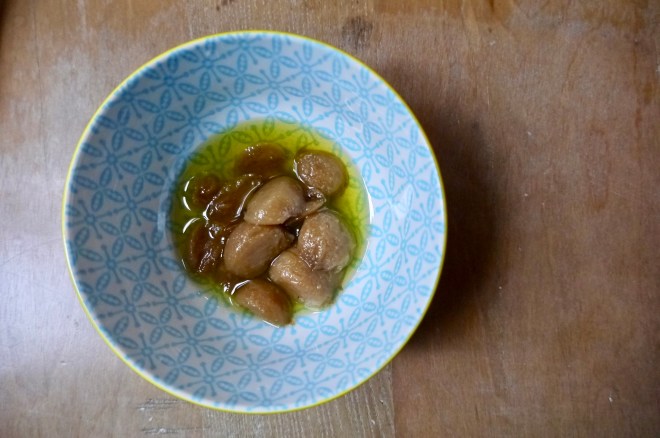
Garlic confit is simply garlic that has been slow-cooked in olive oil – but it is also magical! It can be added to pizza, vegetable, soup and so many other foods, and the garlic-infused oil can be added to salad dressing or used for roasting.

I made up a batch recently and I’m quickly making my way through the jar of garlic, which has a lovely mellow roasted flavour. So good!

What you need:

  • a few bulbs of garlic
  • olive oil

What you do:

  1. The most labour-intensive part of this recipe, peel the garlic cloves. Mine had the green “germ” growing inside, so I cut the cloves in half to remove it. I think it adds a bitter taste.
  2. Preheat the oven to 200F.
  3. Place the peeled cloves in a dish and pour in some olive oil, until all the cloves are covered. Use tin foil to cover the container, then place it in the oven for about 2 hours.
  4. Remove the container from the oven and let it cool. Pour into a jar and store in the fridge. It should keep for a few weeks.


Healthier Butter Chicken

healthier butter chicken - trustinkim

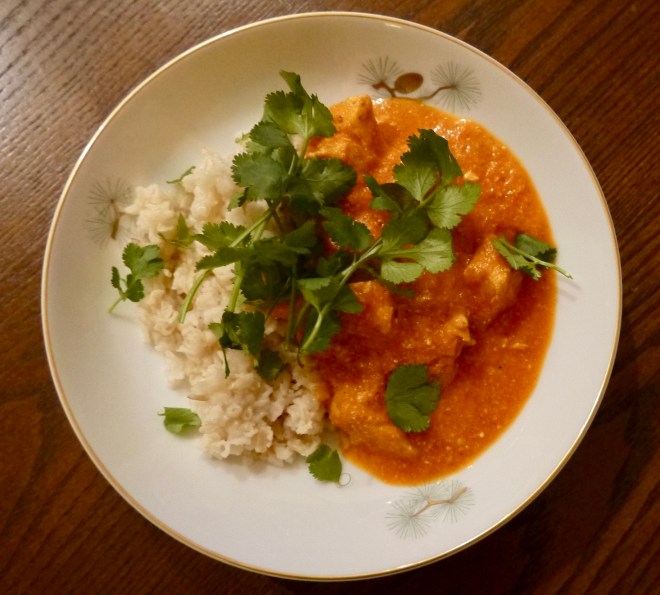
Let me start off by saying that this is not a traditional Butter Chicken recipe. I referred to a traditional recipe when making this, but my goal was to create a lower-fat version of Butter Chicken. So now it’s ‘A Little Butter and No Cream Chicken’. I used yogurt rather than cream, and I cut down greatly on the amount of butter (about 1/6 the amount).

Even with out all the butter and cream, it’s still delicious! I recognize that it would it be much more decadent with them, sure, but the lower-fat version is healthier while still tasty.

I served this with brown rice, and roasted cauliflower and eggplant.

What you need for the marinade:

  • 400 to 500 grams of chicken
  • ½ to ¾ teaspoons cayenne powder
  • 1/s teaspoon grated ginger
  • 1/2 teaspoon grated garlic
  • Salt
  • 2 tablespoons yogurt
  • ¾ teaspoon garam masala
  • pinch of turmeric
What you need for the sauce:
  • 1 teaspoon butter
  • 1 cup cubed onions
  • 1 & 1/2 cups finely chopped deseeded tomatoes (I used canned tomatoes)
  • ½ to ¾ teaspoons garam masala powder
  • ½ to ¾ teaspoons kashmiri red chilli powder (or a combo or cayenne and sweet paprika)
  • 1 teaspoons ground coriander
  • ½ teaspoons sugar (optional)
  • 1 teaspoon  butter
  • 1 bay leaf
  • 3 green cardamom pods
  • 2 to 3 cloves
  • 1 small cinnamon stick
  • 1 teaspoon grated ginger
  • 1 teaspoon grated garlic
  • ½ teaspoon ground fenugreek
  • salt to taste
  • 1/4-1/2 cup yogurt (not low-fat)
  • cilantro for garnish
 

What you do:

  1. Combine the ingredients for the marinade. Cut the chicken into bite-sized pieces and coat them in the marinade. Cover and refrigerate for a few hours, or preferably overnight.
  2. Heat 1 teaspoon butter or in a large pan and fry the onions on medium heat until the raw smell goes away.
  3. Add the tomatoes and some salt to the pan, then add the cayenne, garam masala and coriander. Cook for a few minutes, until the onions are soft.
  4. Cool and purée the tomato and onions with 3/4 cup water, and set it aside.
  5. Heat a large pan on medium heat and add a teaspoon of butter. Fry the cinnamon stick, cloves, bay leaf, and cardamom. Add the ginger and garlic and fry for a for less than a minute.
  6. Add the marinated chicken to the pan and sauté on medium heat until it is dry, just a minute or two. Pour in the tomato purée, adding cayenne and garam masala to taste. Add more water if needed. Cook until the chicken turns tender. Stir in the fenugreek, and try to fish out the bay leaf and other whole spices.
  7. Stir in the yogurt, and serve with rice or naan, garnished with cilantro.

Healthy Oatmeal Apple Muffins

healthy oat muffins - trust in kim

Searching for a low-fat muffin recipe, I came across this recipe online. These muffins taste surprisingly good, especially considering there’s no oil or dairy in them, and they have a nice light texture. Rather than using butter or oil, this recipe uses apple sauce.

The original recipe says, “no flour, no sugar, no oil,” but I consider honey a sugar, so I can’t say this is really sugar-free. I cut the amount of honey from 1/3 to 1/4 cup because the applesauce has natural sugar. I changed the milk to almond milk. The original recipe calls for mashed banana, or apple sauce substitute, but I don’t love banana breads, so I made some apple sauce and put that in. As a topping, the recipe called for sprinkling some oats on, but I don’t like dry oats; instead I sprinkled on a tiny bit of brown sugar to give it a little colour. And who doesn’t like that little bit of sweetness?

You can add anything you wish to these; I added 1/2 cup pecans. Other nuts or dried fruit, or apple chunks would be nice in here.

Remember to use a delicate hand in the last stages of the recipe, taking care not to over-mix – this will ensure that delicate texture that you want.

What you need:

  • 2 &½ cups old-fashioned oats (1 &1/2 cups ground, 1 cup whole)
  • 1 cup applesauce (or mashed very ripe banana)
  • 2 large eggs, lightly beaten
  • 1/4 cup honey
  • 3/4 cup soy or almond milk
  • 2 tsp real vanilla
  • 2 tsp baking powder
  • 1/2 tsp baking soda
  • 1/2 tsp salt
  • 1 tsp cinnamon
  • 1 tablespoon brown sugar (optional, for topping)

What you do:

  1. Preheat the oven to 325F. Spread the oats on a baking sheet and toast them for 5-6 minutes, stirring partway through. Allow the oats to cool, then grind 1 & 1/2 cups in a spice or coffee grinder (you could substitute 1 & 1/2 cups of flour if you have no grinder). Turn the oven up to 350F for baking the muffins.
  2. Pour the apple sauce (or mashed banana – no lumps!) into a large bowl. Mix in the eggs, then the honey, milk and vanilla.
  3. Combine the oats with the baking powder, baking soda, salt and cinnamon, and gently stir the dry ingredients into the liquids. Allow this to sit for 10 minutes so the oats can absorb some liquid. The batter will become light and fluffy.
  4. Gently fold in nuts or fruit if you are using them.
  5. Scoop the batter into lined muffin tins. Bake for 19-22 minutes. Test with a toothpick to see if it is done.

Enjoy! I froze most of my batch, and they were delicious in the coming days.

Sugar Snap Peas and Bell Peppers in Soy Sauce Glaze

fullsizeoutput_15f3

Simple and healthy, this is one of the vegetable dishes I make up on a regular basis. Add a little protein and rice, and it makes a complete meal for one. But truth be told, sometimes I just make up a giant bowl of this and eat it on its own for dinner.

What you need for one serving:

  • 1/2 red bell pepper
  • a handful of sugar snap peas
  • sesame oil
  • 1 clove garlic
  • soy sauce
  • black chinese vinegar
  • mirin
  • hot sauce (I used Sriracha)

What you do:

  1. Prepare the vegetables by slicing the pepper and removing the strings from the sugar snap peas. Slice the garlic.
  2. Heat a frying pan to medium-high heat and add a drizzle of sesame oil. Add the peppers to the pan and fry until they begin to get soft. Add the garlic to the pan, then throw in the snap peas.
  3. Add a splash each of soy, vinegar, mirin, and a few drops of hot sauce. Adjust the flavours to taste. Cook this until the sauce begins to thicken up, only a minute or two, so the snap peas still have some crispness to them.
  4. Serve immediately – enjoy!

Croccantini Flatbread Crackers

croccantini flatbread crackers -trustinkim

These crispy crackers were a big hit at the New Years party I brought them to last night. They are reasonably easy to make, but take a little bit of time. It is so worth it though – they are nice an crispy, a little salty, and the bubbles are pretty cool.

My friend Sarah often buys La Panzanella Croccantini to serve with cheese. They are delicious crackers, but quite expensive. So this was my attempt to make a cracker like those. I also made some into uniform rectangles and poked them with a fork to get rid of bubbles like the store-bought version, but they didn’t get into the photo. For presentation I really liked these big ones, and the bubbles in them.

I served it with a red pepper jelly, an apricot and peach jam, and a beautiful Manchego cheese.

I found the recipe here. The original recipe had rosemary in it, which I will try next time, but for this appetizer I wanted to stick to this salted version to highlight the flavours of the jams and cheese. Also, it was a messy slushy afternoon, and I couldn’t be bothered to head out into that weather again for an herb. In the original recipe they were baked for 3 minutes per side, but I didn’t read that part of the recipe (oops), and it worked well to just bake them on one side.

It is really helpful to have a pasta machine for this, to roll the dough out to a uniform thinness. You can also do this carefully with a rolling pin.

What you need:

  • 1 & 1/2 cups all-purpose flour
  • 1 tsp salt
  • 1/2 tsp sugar
  • 2 tbsp olive oil
  • 1/2 cup cold water
  • spray bottle filled with water
  • more salt to sprinkle on top

What you do:

  1. Combine the flour, salt and sugar on your countertop and make a well in the centre. Pour half the water and the olive oil into the centre. Little by little, add the flour to the centre, until you can mix and form it into a ball, adding more water as you need it (as you knead it). (Or you could do this all in a food processor by drizzling the liquid in as the food processor it running.)
  2. Knead the dough until it forms a smooth ball, adding a little flour to the countertop if it gets sticky. Divide the dough into four pieces and cover with a towel for 10 minutes to allow the gluten to relax.
  3. Preheat the oven to 450 degrees F. Line baking pans with parchment paper. A pizza stone would be great here!
  4. Use a pasta machine or rolling pin to roll the dough out as thinly as possible. I did the same process I would use for making pasta: start by running the dough through the thickest setting, then fold the dough over in thirds, run through again, and repeat one or two more times, until you get a nice rectangle. Change the setting to one thickness lower, run the dough through, then keep going until you get to the thinnest setting. Part way through you will get a really long strip of dough – you can cut this in half at any point.
  5. Carefully place the dough flat on the parchment paper lined pans. Spray with a little water, then sprinkle some salt on top (I ground some kosher salt).
  6. Bake immediately, starting to watch it after about 3 & 1/2 minutes. It should be slightly browned.
  7. Place the crackers on a cooling rack. They will crisp up more as they cool. If they don’t seem crispy enough they can go back in the oven for a minute or so, even after they have cooled.
  8. Once they have cooled completely, store in an airtight container. I have no idea how long they will keep because there were no leftovers this time!

Enjoy!