Chicken, Corn and Kale Soup

This cold weather is perfect for soup making.  This one’s quite easy, too, an old standby that I created a long time ago out of foods I had on hand.  Kale is packed with vitamin C – and don’t we all need a bit more of that with all the germs flying around these days?  It also provides a lot of iron and calcium, among other nutritional benefits.

What you need:

3-4 chicken thighs, bone-in, skin removed

1-3 whole cloves garlic, skin removed

3 cups chicken or vegetable broth

1 can cannellini beans (white kidney beans), drained and rinsed

1 bunch kale, chopped roughly

1 can corn

salt and a generous amount of pepper

optional:  1/2 cup orzo

What you do:

1.  Place a large pot on medium heat, then put the chicken thighs in.  Add the garlic cloves and cook for a few minutes on one side.

2.  Add the broth, bring to a boil, then lower heat and cook for 30 minutes.

3.  Add the beans and cook for 20 more minutes, unless you’re in a big hurry, in which case you can move to step 4.

4.  Cook the pasta in a separate pot and have it ready to add at the end.

5.  Remove the chicken and pull it apart with a fork, so it is shredded rather than chopped.
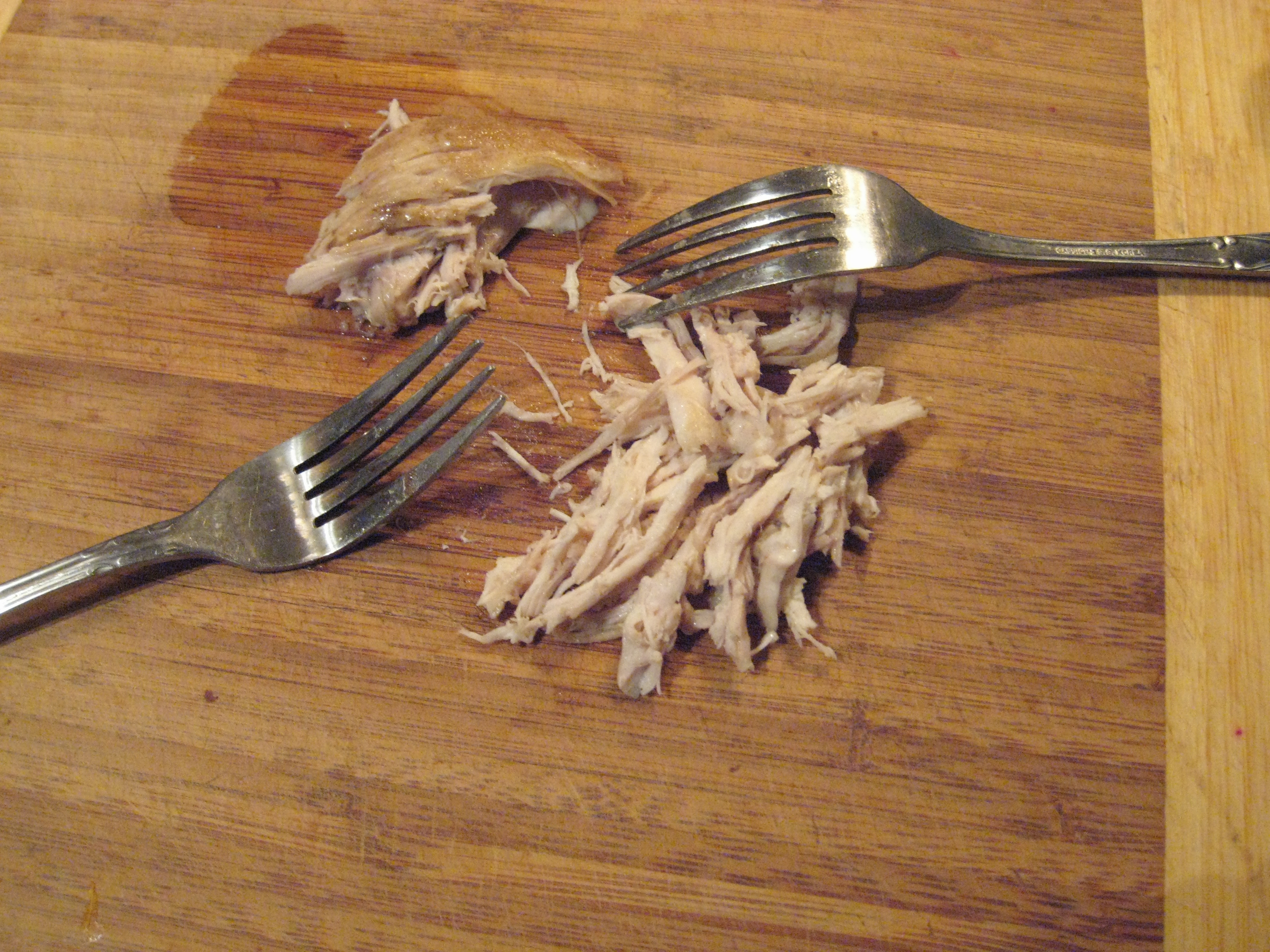
6.  Put the chicken back in the pot, add the kale, corn, pasta, salt and pepper, and cook until just heated.

Done!  And it’s great for left-overs.

Vegan Caesar Salad Dressing

A creamy dressing that’s also vegan – yum!

What you need:

2/3 cup soft Silken Tofu

3 teaspoons Dijon mustard

1/3 cup lactose-free parmesan or soy parmesan

1/4 teaspoon sugar or agave nectar

juice of 1 lemon

1/2 clove chopped garlic

2 tablespoons olive oil (or more as needed)

1/2 teaspoon salt

1/2 teaspoon pepper

What you do:

1.  Blend all the ingredients using a blender or immersion blender.  Add a little more olive oil if it’s too runny.

2.  Refrigerate for an hour or two, if you’ve got the time, to let the flavours mingle.

3.  Toss with romaine and top with croutons.  Serve with a wedge of lemon for squeezing on top.

And here’s a crouton recipe:

For 2 servings you need:

2 slices bread

olive oil

2 cloves garlic

1/4 teaspoon sage

1/4 teaspoon oregano

salt and pepper

What you do:

1. Cut the bread into cubes.  Heat a frying pan to medium, then add a little olive oil.  Once the oil is hot add the bread, tossing until coated.  Add a little more olive oil if necessary.

2.  Chop up the garlic, and add to the frying pan, along with the spices.

3.  When the bread has browned on one side, turn it over and let the other side brown.

4.  Throw it on top of your dressed salad, scraping out the spices with it.

Kim’s Lasagna, Lactose-Free but still cheesy and flavourful!

I’ve been avoiding making lasagna for years because I can’t eat cheese, and a non-cheesy lasagna just doesn’t seem right – but now there are all these great lactose-free cheeses out there, and my whole lactose-intolerant world is changing! I’m not talking about those horrible soy cheeses – I’m talking about real cheese that happens to have no lactose.  It tastes like cheese and melts like cheese – because it IS cheese.  I also added some of my tofu ricotta, which is as creamy as the real thing… try it and see.

Yes, this recipe is a bit of work, or a lot of work.  But it’s soooo good!  There’s the tomato sauce, a ricotta layer, mushrooms, pesto, and a white sauce.  Lots of flavour!

What you need:

1 & 1/2 to 2 recipes of tomato sauce (recipe here!)

tofu spinach ricotta (recipe here!)

1 lb mushrooms, fried

pesto (recipe here!)

9-12 lasagna noodles (I used the no-boil ones for this)

1 cup lactose-free mozzarella, grated

white sauce: -2 tablespoons butter/soy butter

-2 tablespoons flour

-3/4 – 1 cup soy milk (regular if you’re not concerned about lactose)

-1/2 of a  227 gram tub  of soy cream cheese

-salt and pepper

What you do:

1.  To make the white sauce, melt the butter in a small pot. then whisk in the flour.  Cook for about a minute, stirring constantly.  Don’t let it brown!  Very gradually add the soy milk, a little at a time so it boils.  Mix it in so it has no lumps, then add a bit more until it has a runny-pudding consistency.  Add salt and pepper to taste.

2.  You have all the parts ready to assemble the lasagna, so now you just have to build it.  This is the layering I did – of course you can experiment with this to make it your own.  If you are using no-boil noodles you just have to make sure you have enough moisture to cook them, or they will be a little crunchy around the edges. Use a 9×12 pan for this amount of lasagna.

– spread about 1/3 of the tomato sauce on the bottom of the pan, then lay down some noodles

– sprinkle the tofu ricotta. then the mushrooms, then another layer of noodles

– spread on another 1/3 of the tomato sauce, then the pesto, then another layer of noodles

– the final layer consists of the remaining tomato sauce, the white sauce, and the mozzarella cheese

3.  Cover with foil and bake at 350F for 45 minutes.  Remove the foil and bake for about 15 more minutes.  For the last minute I switched to broil so it would brown on top – since real cheese actually browns, I like to take advantage of this feature!

4.  Allow the lasagna to rest for 15 minutes before cutting it.  This will increase the chances that the pieces can be cut and stay together as you serve them.  And it won’t be too hot to eat.

Enjoy!

Note: if you’re one of the many people who can’t eat wheat, try out the brown rice, kamut or quinoa noodles – they’re great!  So great that they are all I usually eat.

Beets with Maple-Grapefruit Glaze

Beets are a beautiful vegetable to make for a winter feast.  The glaze is tangy yet sweet, and can be served hot or cold.  I’ve served them hot as a side dish, and cold on a green salad with some ground toasted sesame seeds.

What you need:

1/2 pound beets, cooked (You can use beets that have been boiled or baked, with the skins rubbed off.)

juice of 1 pink grapefruit

1 tablespoon rice vinegar

2 or more tablespoons maple syrup

1 teaspoon corn starch

What you do:

1.  Bring the grapefruit juice and vinegar to a boil, then mix the corn starch with a little cold water.  Mix it so there are no lumps, and stir it into the boiling juice. Make sure it is boiling when you add the cornstarch or you will get lumps.

2.  Add maple syrup to taste.  Remember that the beets are sweet, so you don’t want the sauce to be too sweet.

Easy Pesto

Here’s your basic pesto recipe.  You just need a food processor or mortar and pestle, some lovely fresh ingredients, and you’re set!

What you need:

1/4 cup very lightly toasted pine nuts

3/4 – 1 cup basil

1/2 clove of garlic

1/4 cup freshly grated parmesan (I use lactose-free l’Ancetre brand)

olive oil

salt

What you do:

1.  Toast your pine nuts very very lightly; you still want them to be creamy when you puree them.

2. Place the pine nuts, basil,  and garlic and a bit of salt in the food processor and add as much olive oil  as you need to make it smooth.  Then add the parmesan and give it one last whirl.

3.  That’s it – use it on some pasta, add it to hummous, make a lasagna, add it to eggs, whatever you want!

Yogurt Cheese

Yogurt cheese is a great versatile spread, and it’s really easy to make.  I usually use it as a spread for crackers or bread, as in the recipe below, and it can also be used as a substitute for cream cheese or sour cream in a lot of other recipes.  I’ve never tried baking with it though – I’m not sure how it would react when heated.  As a person who is lactose-intolerant but can eat yogurt, this recipe has been a god-send!

I like to sprinkle sumac on my yogurt cheese.  I’ve never seen it in my local grocery store, but I found it at a Lebanese shop.  It’s got a bit of a tartness to it that goes perfectly with yogurt, and it’s got a great deep red colour.

What you need:

plain yogurt, must not be no- or low-fat or thickened with corn starch!

salt

ground sumac

cheesecloth

sieve

bowl

What you do:

1. Line a sieve with cheesecloth, and place it in a bowl.  Pour the yogurt into it, then tie up the cloth and place in the fridge.  About half the liquid will drain out, so use about twice as much yogurt as you would like to have at the end.

2.  Leave several hours, up to a day or two – I usually leave it draining for just less than a day.  You may need to pour off some of the liquid that collects in the bowl.

3.  Place yogurt cheese in a bowl and top with sumac and salt. Of course you can also substitute any of your favourite herbs – I’ve used garlic salt before, and a bit of oregano.

4.  Serve with naan, flatbread, crackers or any bready substance of your choice.  It can also be used as a vegetable dip.

I make my own yogurt – it’s easy to do, and really cheap… stay tuned for that posting.

Easy Vegetable Stock

Making your own vegetable stock is easy to do, and will give your soups amazing flavour.  I usually make some when I’m making a soup, and try to make extra so I can put it in the freezer for another time.  I don’t salt my soup stock – I wait until I put it into a recipe, and adjust the salt in a way that suits that particular recipe.

What you need:

1 onion

1 celery stalk

1 carrot

a small chunk of ginger

a few garlic cloves

1 star anise

1 bay leaf

pepper corns

What you do:

1.  Put all the ingredients in a large pot, cover with cold water, then bring to a boil.

2.  Lower heat and simmer for 1-2 hours.

3.  Strain and use right away, or freeze for later.


Fresh Salsa

Homemade salsa is easy to make, as long as you’ve got really great tomatoes.  Over the winter you can still make it, but it won’t be nearly as good as when you make it with tomatoes ripe from the garden or farmer’s market.

What you need:

3-4 tomatoes

1/4 sweet onion*, finely diced

1 jalapeno pepper, finely diced

salt

1/2 freshly squeezed lime

a pinch of sugar may be needed

optional: cilantro

What you do:

1. Cut up tomato into chunks of about 1 cm.  Place in a colander over a bowl to drain.

2. Add a little chopped onion, and a diced jalapeno pepper.  If you don’t want it to be very hot, take out the seeds.  That’s where most of the heat is.

3.  After the tomatoes have drained, add the rest of the ingredients.

4.  After letting it sit for a while to allow the flavours to mingle, have a taste and adjust the salt and lime juice as needed.  You may also want to add a pinch of sugar.

5.  I like to let the salsa sit for a while, then serve at room temperature with tortillas, fajitas and lots of other dishes.

.

* I prefer to use sweet onion because I tend to cry less – if you’ve got very sensitive eyes, you know how important this is.  Especially if you’re expecting company.  I also think they taste great!

Brown Basmati Coconut Rice

Mmm.  So simple, so good.  Just a few little additions to your regular rice make it so rich and tasty!  I serve it with palak “paneer,”  but it would be great with Thai dishes too.

You could use white rice too, but brown has so much going for it that it might be worth a try!

What you need:

1 cup brown basmati rice

1 cup coconut milk

1 cup water

a few tablespoons dried unsweetened coconut, preferably ribbons

a little salt

What you do:

1.  Add all the ingredients to a pot and put it on high heat.

2. Bring it to a boil, then reduce heat to low and cover.

3.  Cook for 45 minutes and work on the rest of your meal.

4.  After 45 minutes remove from the heat and let it sit, covered, for 10 more minutes.

5.  Fluff it up and serve!

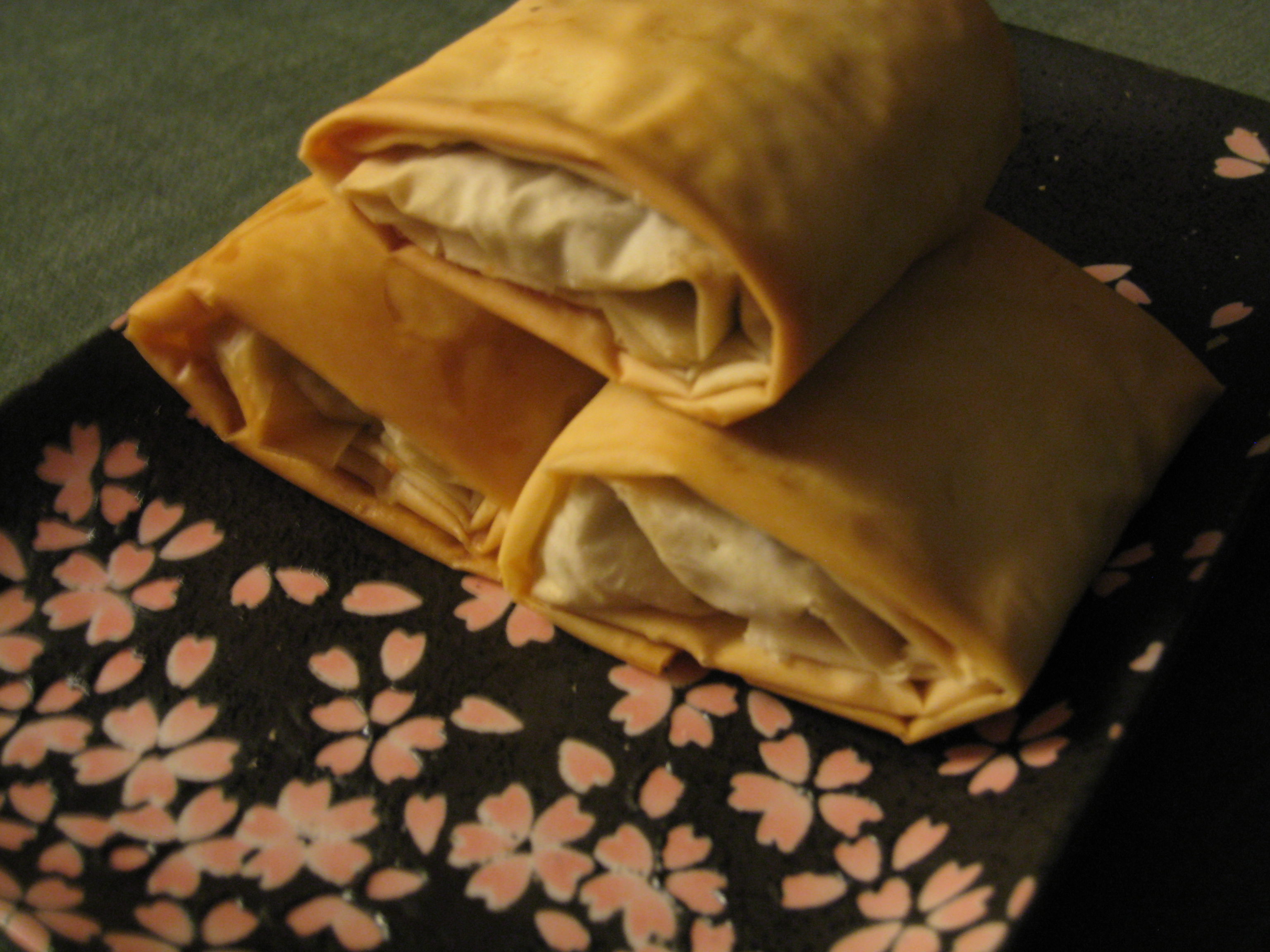
Spinach Borek with Apple Tahini Sauce

Spinach Borek is a great little vegan savoury appetizer than you can make up ahead of time, then pop in the oven as guests are arriving.  I made up the filling the day before and filled it right before putting it in the oven, but you could also fill and fold them up ahead of time.  Just put them in the fridge with a slightly damp towel over top.  I found this recipe in Molly Katzen’s ‘Enchanted Broccoli Forest’ years ago and have only slightly modified it.

What you need for the Spinach Borek:

2 packages frozen spinach

1/4 cup olive oil

1 large onion, chopped finely (about 1&1/2 cups)

1/2 teaspoon salt

pepper

3 cloves garlic

1 cup chopped walnuts, toasted

1/3 cup fine bread crumbs

1/4 cup chopped fresh mint

1/4 cup chopped fresh dill

3 tablespoons lemon juice

1/2 teaspoon grated orange rind

1/2 cup currants

a little grated nutmeg

1 pound filo pastry

What you need for the Apple Tahini Sauce:

1/2 cup tahini

1/4 cup apple juice, or more as needed

1 & 1/2 tablespoons cider vinegar

1 clove garlic, minced

pinch of salt

1/4 teaspoon cumin

1/4 teaspoon cinnamon

pinch of cayenne

How to make the spinach borek:

1. Thaw filo and spinach.  Filo needs a few hours to thaw; read the instructions on the label.  If you have it in the fridge, take it out at least one hour before you plan to use it.

2.  Heat about 1 tablespoon of the oil and fry the onion over medium heat for about 8-10 minutes.  Squeeze the excess moisture out of the spinach and add it to the onions, cooking for a few minutes.

3.  Remove from heat and add all the remaining ingredients and mix them in well.

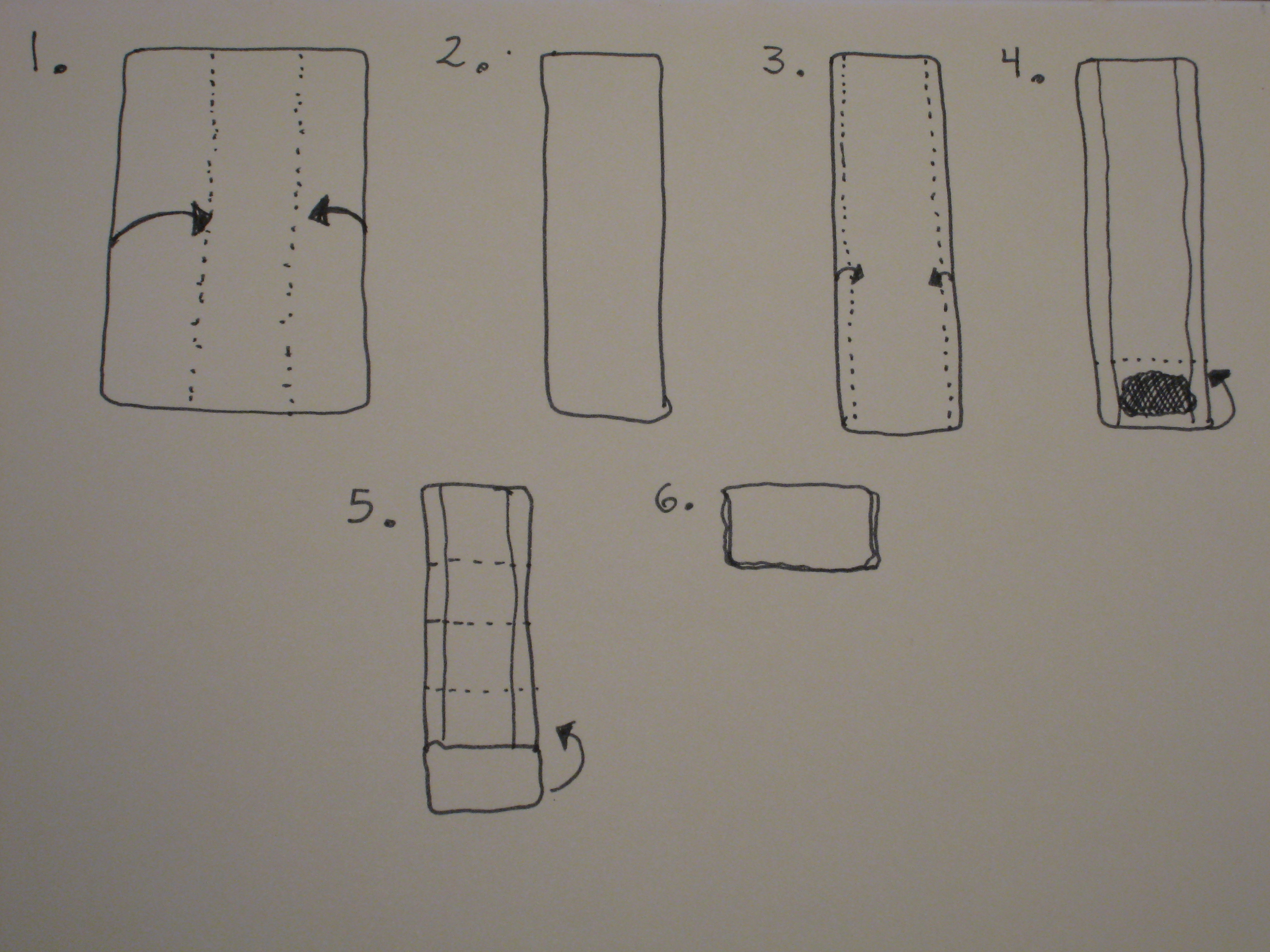
4.  Lay out the filo and brush a little olive oil over the sheet.  Follow the diagram below to fold them up, then brush on  a little more olive oil before they go in the oven.

5.  Bake at 375F for 30 minutes.  These are great hot, and can also be served at room temperature.

How to make the tahini sauce:

1.  Use electric mixer to beat tahini for about 5 minutes.

2. Gradually add apple juice and cider vinegar.  Add more apple juice if it’s too thick.

Note:  if you don’t add it gradually it will become a blobby mess and the oil may separate, like it did for me.  I spent ages trying to bring it back to the consistency it should be.

3.  Add remaining ingredients and taste to see if you want to adjust the seasonings.

4.  You can keep this in the fridge for a few weeks, but keep in mind that it thickens up when it’s cold.  You may want to take it out of the fridge a while before serving so it has time to soften up.

This sauce is also great for a veggie dip, or a spread for crackers or bread.