Cauliflower Quinoa Bake

Always looking for new ways to cook with quinoa, I found this recipe in the Hollyhock cookbook and just changed it a little, most notably by using less cheese.  Quinoa is a great source of iron, calcium and protein, and cauliflower provides lots of folate and vitamin C, and is has anticarcinogenic properties.

Oh, and it all tastes good together.

What you need:

1 tablespoon butter or olive oil

3 cups diced onion

3 chopped and rinsed leeks

2 cloves garlic, diced

1 head of cauliflower, roughly chopped

juice of 1 lemon

1 teaspoon fresh or frozen dill

1 cup kalamata olives

1 teaspoon freshly ground pepper

1/2 teaspoon salt

3/4 cup quinoa, uncooked

1 cup grated cheddar (or another favourite cheese) – I use lactose-free l’Ancetre brand

paprika

optional: soft silken tofu

What you do:

1.  Cook the rinsed quinoa in 1 & 1/2 cups water for 15 minutes.

2.  Saute the onions, leeks and garlic in the butter or oil until the onions are transparent

3.  Add the cauliflower and cook, covered, for about 5 minutes.

4.  Mix the onion mixture together with the quinoa, lemon, dill, olives, salt and pepper (optional silken tofu) and half the cheese in a baking dish.

5.  Sprinkle the remaining cheese on top and garnish with a bit of paprika.

6.  Bake for 30-40 minutes at 350F.

This one is best served hot, and also works well to heat up as leftovers.

Chicken Tomatoes and Potatoes Oliver

My friend Jen has a Jamie Oliver cookbook, which is where I found this recipe – and it was a big hit with everyone who ate it.  There are a few steps involves in putting it together, but in the end you pop it in the oven, and it comes out ready to eat. When I first made it I had a fabulous variety of different coloured cherry tomatoes, but when I took these photos I didn’t have the same access to great tomatoes.  I recommend the variety, but it’s really good with just the regular red ones.

Of course I thought olives would be a good addition, because I think everything is better with olives.  If you don’t agree, feel free to leave them out!

What you need:

3/4  lb small new potatoes

6-8 boneless, skinless chicken thighs

olive oil

salt and pepper

splash of red wine

5oo or so grams of cherry tomatoes

1/2 cup black or green olives

5 cloves of garlic, sliced

a few tablespoons of fresh oregano

red wine vinegar

What you do:

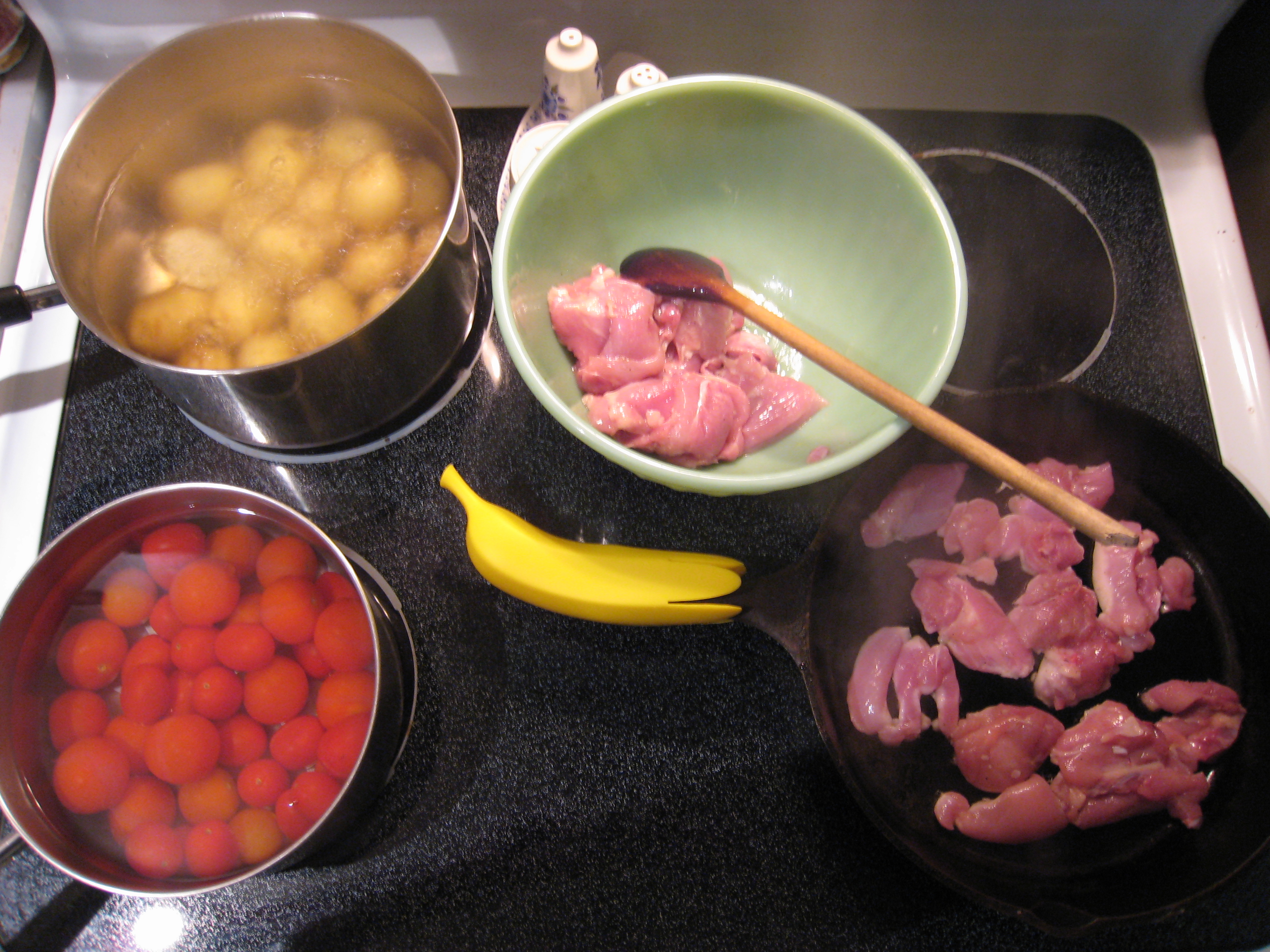
1.  Cook the potatoes in boiling water until you can pierce them easily with a knife.

2.  Cut each thigh into strips of three pieces each.

3.  Put a tablespoon or two of olive oil in a bowl with salt and pepper.  Add your chicken and mix it up so all the pieces of chicken get coated.

4.  Fry the thighs in a hot frying pan until they are quite browned and almost cooked through.  You can deglaze the pan with red wine if you want.

5.  Boil a pot of hot water and place the cherry tomatoes in it, after giving each one a little poke with a knife.  After a minute in the hot water, pour it out and rinse in cold water.  Then pinch off the skins.  If you’re in a hurry you can skip this step, but it tastes so good this way!

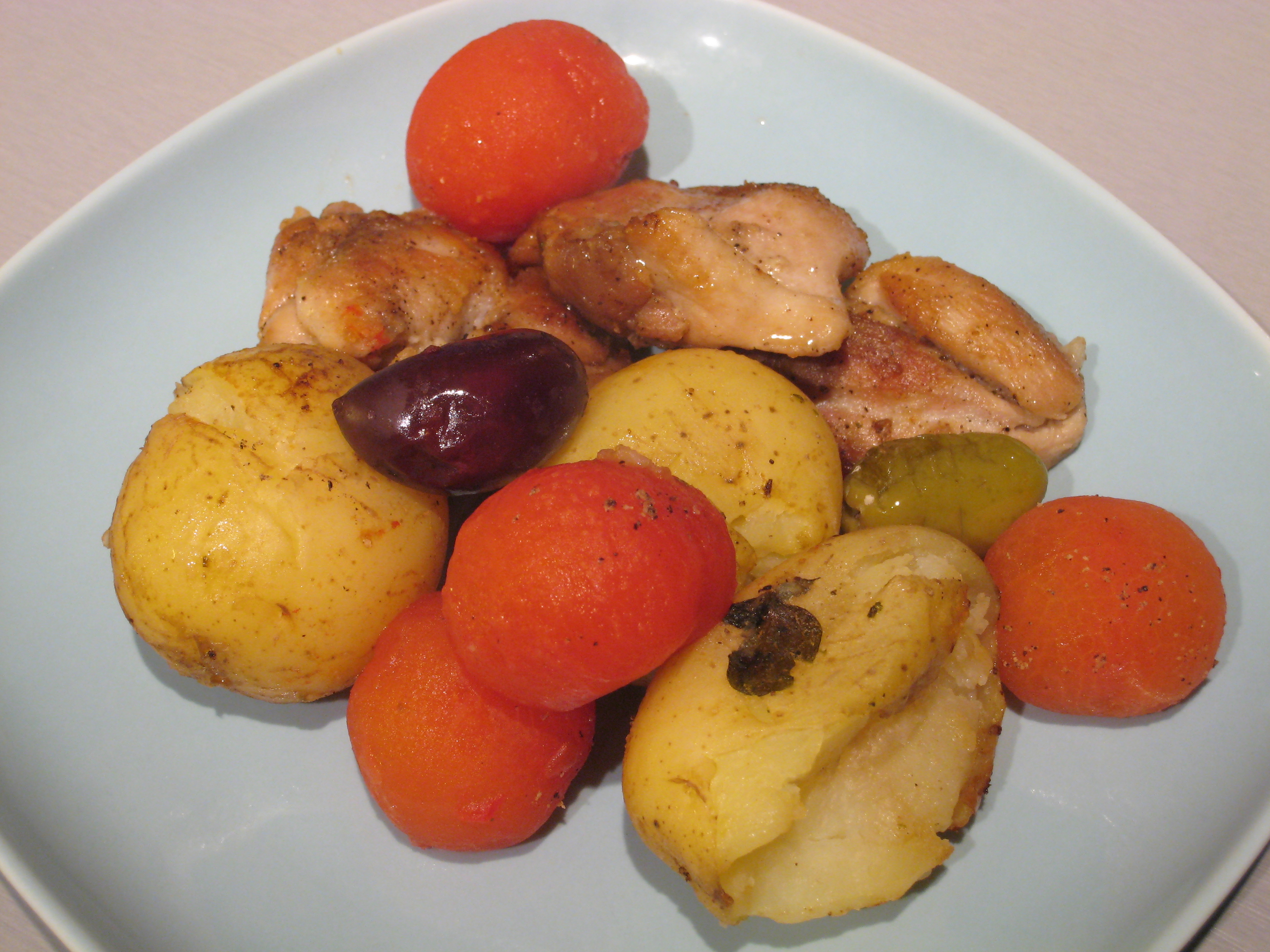
6. When the potatoes are cooked, give them a little squish, as you can see in the photo below.

7.  Put the potatoes, chicken, optional olives and tomatoes in a roasting dish.

8.  Using a mortar and pestle, bash up the oregano with some salt and pepper.  Add this to the pan, along with the garlic, a little olive oil, and a few sprinkles of red wine vinegar.

9.  Bake for 40 minutes at 400F.

Stuffed Acorn Squash

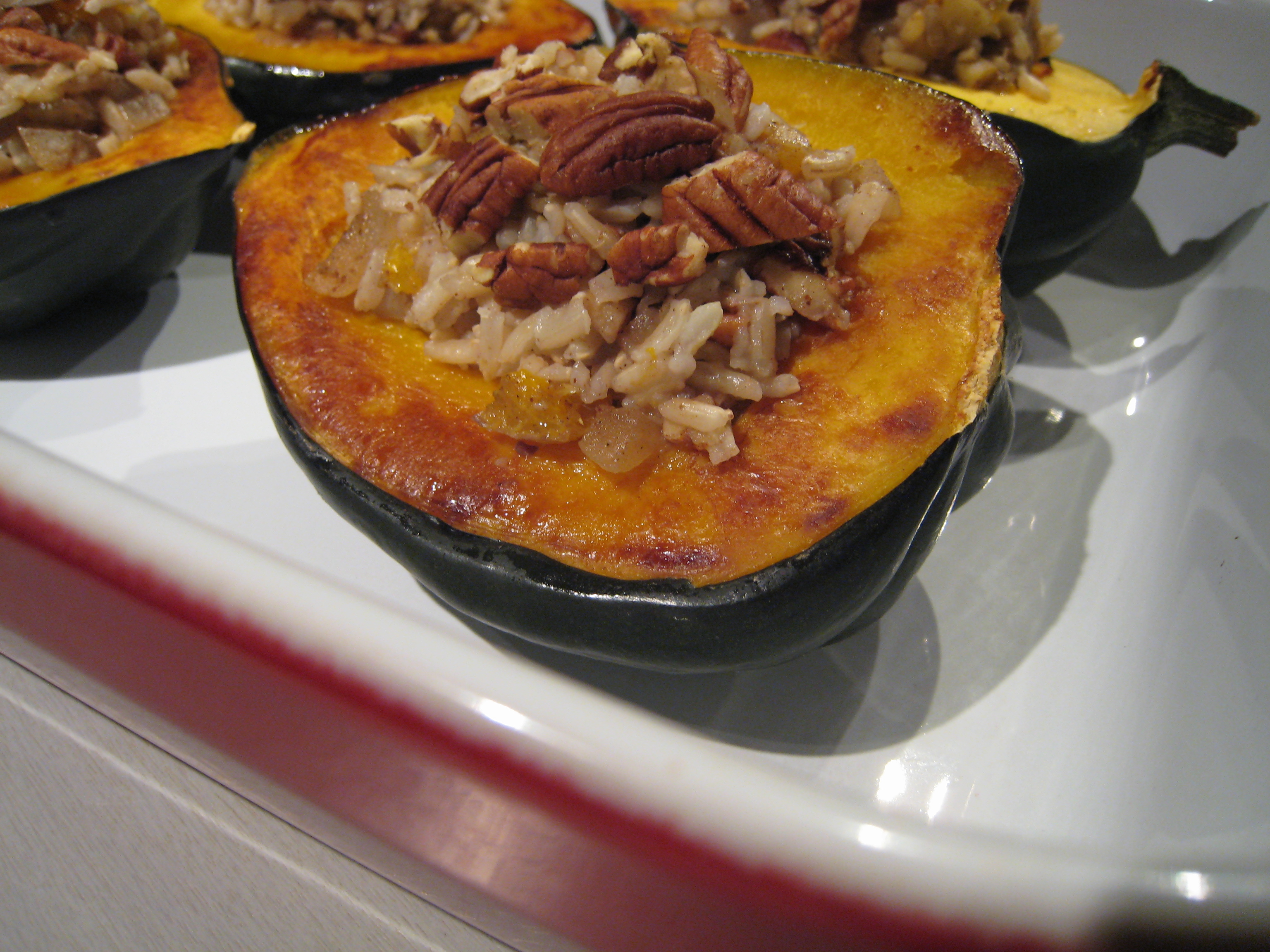
Here is a recipe from the old Moosewood Cookbook that I’ve been making for years in the winter time.  It’s a really tasty vegetarian recipe that’s also quite hearty.  It also looks pretty impressive when it’s served – it’s best to use quite small squash if you’re going to serve a half for each person.

What you need:

2 medium-sized acorn squash

1 cup uncooked brown riced

1 tablespoon butter or olive oil

2 cloves garlic, minced

2 medium-sized tart apples, diced

2 oranges, sectioned

1/2 teaspoon cinnamon

1/2 teaspoon allspice or cloves

1 teaspoon salt

2 tablespoons brown sugar

1 cup chopped pecans

What you do:

1.  Cook the rice in 1 & 3/4 cups water for 45 minutes, then let it rest off the heat for 10 minutes.

2.  Cut the squash in half, de-seed and place cut-side-down on a baking tray.  Bake for 30-40 minutes at 350F, or until very soft.

3.  Melt the butter, then cook the onions until slightly browned.

4.  Add garlic, apples, oranges and spices and cook for about 5 minutes more.

5.  Add the apple mixture to the cooked rice and season with salt and brown sugar.

6.  Fill the squash with the rice mixture, top with nuts and a little more brown sugar if you like.

7.  Bake at 350F for 20-30 minutes or until heated through.

I like to have some for leftovers – I scoop it all into a container to save in the fridge, so it doesn’t look fabulous.  But it sure tastes great!

Spaghetti Squash with Sundried Tomatoes and Olives

I love the idea of spaghetti squash, but I find it doesn’t have quite enough flavour on its own.  As my friend Meredyth says, sundried tomatoes make everything better.  I feel the same way about olives.  This easy recipe isn’t shy on taste, and it is super healthy and all-vegetable.  And  nut.  Okay, and olives are actually a fruit . . . but you get the point.

What you need:

1 spaghetti squash

6 sundried tomatoes

1 lemon, juice and zest

2 tablespoons olive oil (optional)

1/2 to 3/4 cup chopped basil

1/2 clove garlic, finely diced

about a dozen kalamata olives

1/4 cup lightly toasted pine nuts

What you do:

1.  Cut the squash in half, scoop the seeds out and place cut-side down on a baking sheet.  Bake at 400F for about 40 minutes.

2.  While the squash is baking toast the pine nuts.

3.  When the squash is cooked, remove it from the oven and let it sit for about 10 minutes, until it is cool enough to handle.

4.  Combine the lemon juice and zest, olive oil, basil, sundried tomatoes, olives, garlic and basil.

5.  Remove the squash from the shells by scraping with a fork.  Add the other ingredients to the squash.

Ready, easy and yummy!

Healthy Homemade Maple Granola

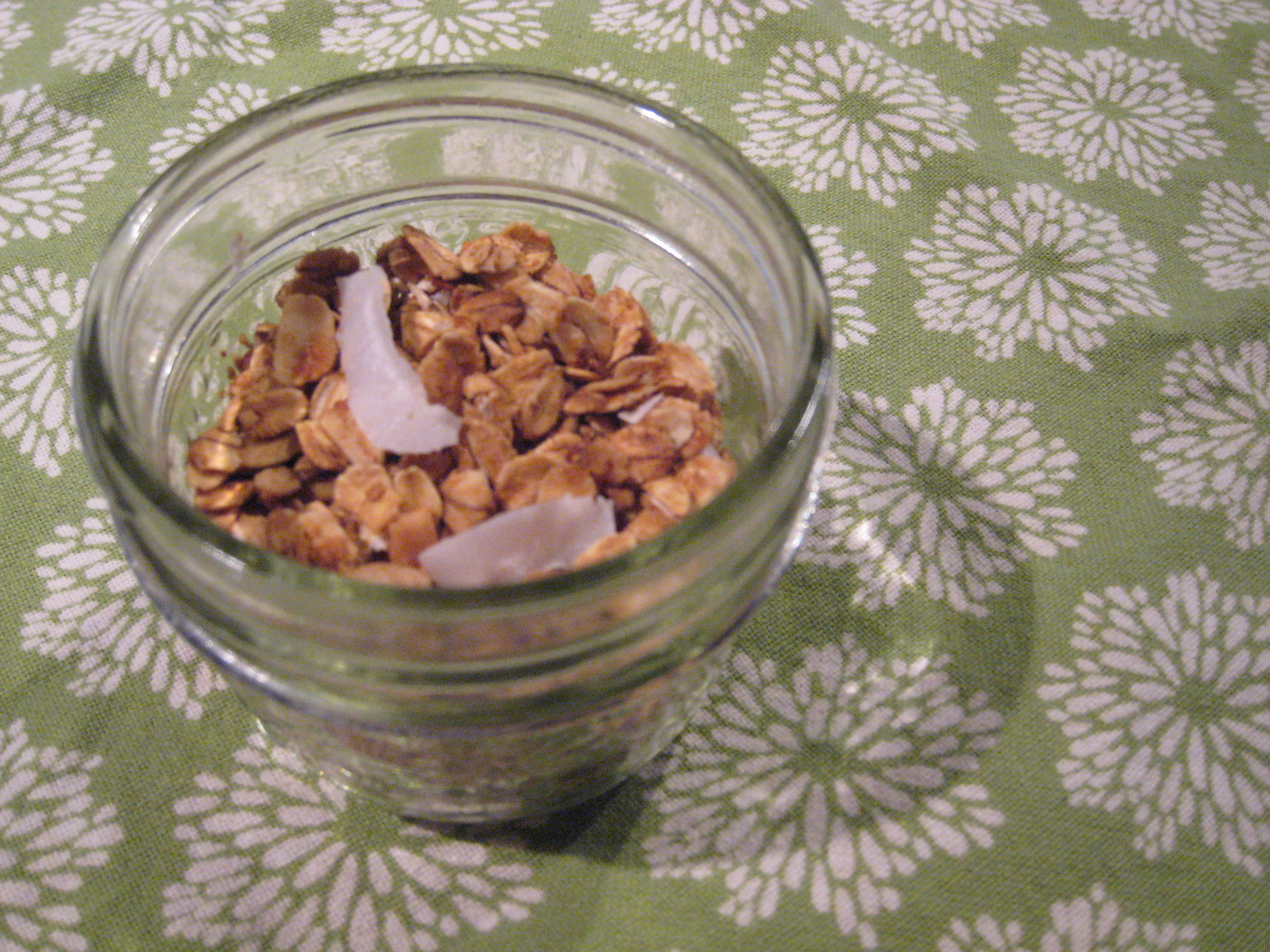
Commercial granolas have a lot of sugar, fat and even salt added, so I tried to stay away from adding a lot of those to this recipe.  Nuts contain a lot of fat, but it’s a healthy fat, so you’re okay if you eat a moderate portion.  Two of the things I like about making my own granola are:  I know exactly what’s going in it, and I can change the ingredients to suit my own taste and what I happen to have on hand.  So feel free to substitute for your favourite nuts and seeds.  Do beware that some seeds, like flax and sesame, are more freely digested and therefore benefited from, if they have been ground  – probably not the best choices for substituting here.

What you need:

4 cups rolled oats

1/4 cup raw almonds

1/2 cup dried, not roasted, pumpkin seeds

1/4 cup raw sunflower seeds

1/4 cup coconut ribbon or other unsweetened,dried coconut

1/4 cup maple syrup

1 tablespoon butter (or oil for vegan and lactose-free)

1/2 teaspoon vanilla

dash of salt

optional: 1/4 cup raisins or other dried fruit

What you do:

1.  Combine the oats, almonds, pumpkin and sunflower seeds in a large bowl.

2.  Melt the butter and add the vanilla, salt and maple syrup to it.  Stir this liquid into the nut and oat mixture.

3.  Spread evenly onto a baking sheet, and bake at 350F for about 30 minutes.  Set the timer for 10 minutes, then give it a stir.  Stir again after another 10 minutes, then check and stir every five minutes until it is golden brown.  If you can hear the pumpkin seeds popping you know it’s done.

4.  Remove from the oven to cool and add the coconut and optional dried fruit.  I prefer to add the fruit with each serving rather than adding to the recipe, so the fruit stays moist and the granola stays crunchy.  That way I can also vary the type of fruit I add, whether it be dried (if I need to take it ‘to go’) or fresh.

5.  Store in an airtight container.  Of you think it will take you more than a few weeks to consume or give away parts of this recipe, it’s a good idea to keep it in the fridge.  Because  nuts oil they are susceptible to spoiling – refrigeration helps avoid this problem.

Tante Katja’s Fruit Platz

In my cupboard is a little recipe box that belonged to my great-aunt, Katja, or Tante Katja, as we called her.  Most of the recipes are written in German, and with my limited knowledge of the language it’s been a little difficult to decipher them.  Since most of the recipes have no directions, I’ve taken a guess at the process, and altered the recipe a little.  I managed to figure this one out, a fruit platz, one of the most common Mennonite foods that I grew up eating.  It’s made up of a cake with fruit on top and sugary crumbs to top it off.  I remember eating plum and apricot platz, but in the middle of winter I couldn’t find any of those fruits, so I used some canned cherries.  Yum!

What you need for the cake layer:

1 &1/2 cups flour

2 &1/2 teaspoons baking powder

1/4 cup sugar

1/2 cup cold butter

1 egg

1 teaspoon vanilla

1/2 cup milk or cream

1/4 teaspoon salt

For the crumbs:

1/2 cup sugar

1/2 cup flour

1/4 cup + 2 tablespoons butter, room temperature

Plus fruit of your choice, a cup or two.  In my family traditional choices are fresh plum or apricot, but I used canned cherry.  Fresh is best, but if you’ve got some frozen fruits or canned, give them a try.  Just make sure that you drain them well, and don’t use something like frozen strawberries or raspberries that would be too juicy.

What you do:

1.  Combine the flour, baking powder and sugar in a large bowl.  Cut the cold butter in using a pastry cutter, fork, or your fingers.

2.  Combine the egg, milk, vanilla and salt, then add it to the dry ingredients using a wooden spoon.  If it’s too hard to get all the dry bits in, add a little more milk.  You’ll need to get in there with your hands and knead the mixture to get it all combined.

3.  Spread the thick batter into the bottom of a 9×9 inch pan.

4.  Spread the fruit over the batter.

5.  Combine the butter, sugar and flour for the crumb mixture, then sprinkle it on top of the fruit, using your fingers.

6.  Bake at 350F for 35-40 minutes.  It will be golden on the top, and you can check for done-ness using a  toothpick.

This one will cool in the pan, and you won’t remove it from the pan before cutting.  The crumb topping is crunchy and it’s best the day you make it, but of course it would still be good the next day.  It’s especially good served when it’s still a little warm.

That’s Tante Katja, standing on the highway

Corn Chowder, lactose-free

The sweetness of corn works well here with the salty-smokiness of the prosciutto and smoked paprika.  Roasted garlic comes in handy to perk up soups – sometimes when I’m baking I throw a bulb of garlic in the oven, wrapped in foil.  Then I store it in the fridge for future use.

If you don’t need to make this recipe lactose-free, feel free to use milk or half milk, half cream in place of the soy milk.

What you need:

100 grams prosciutto, chopped into medium-sized chunks

1 large onion, diced

1 leek, sliced

3 stalks celery, diced

2 teaspoons smoked paprika

1 large potato, chopped

1/2 cup chopped parsley

1 bulb roasted garlic

4 cups chicken stock

2 cans corn or a few cobs

2 cups soy milk

a few dashes of hot sauce

a few dashes of Worcestershire sauce

salt and pepper

What you do:

1.  In a large pot, cook the prosciutto for a few minutes, then add the chopped onions, leeks and celery.  Cook on medium heat until they are soft.

2.  Stir in the paprika and cook for a few more minutes.

3.  Add the chicken stock, potato, parsley and roasted garlic.  Cook for about 30 minutes on medium low heat.

4.  Add the corn and soy milk and let them heat up but not boil.  Add hot sauce, Worcestershire sauce, salt and pepper to taste.

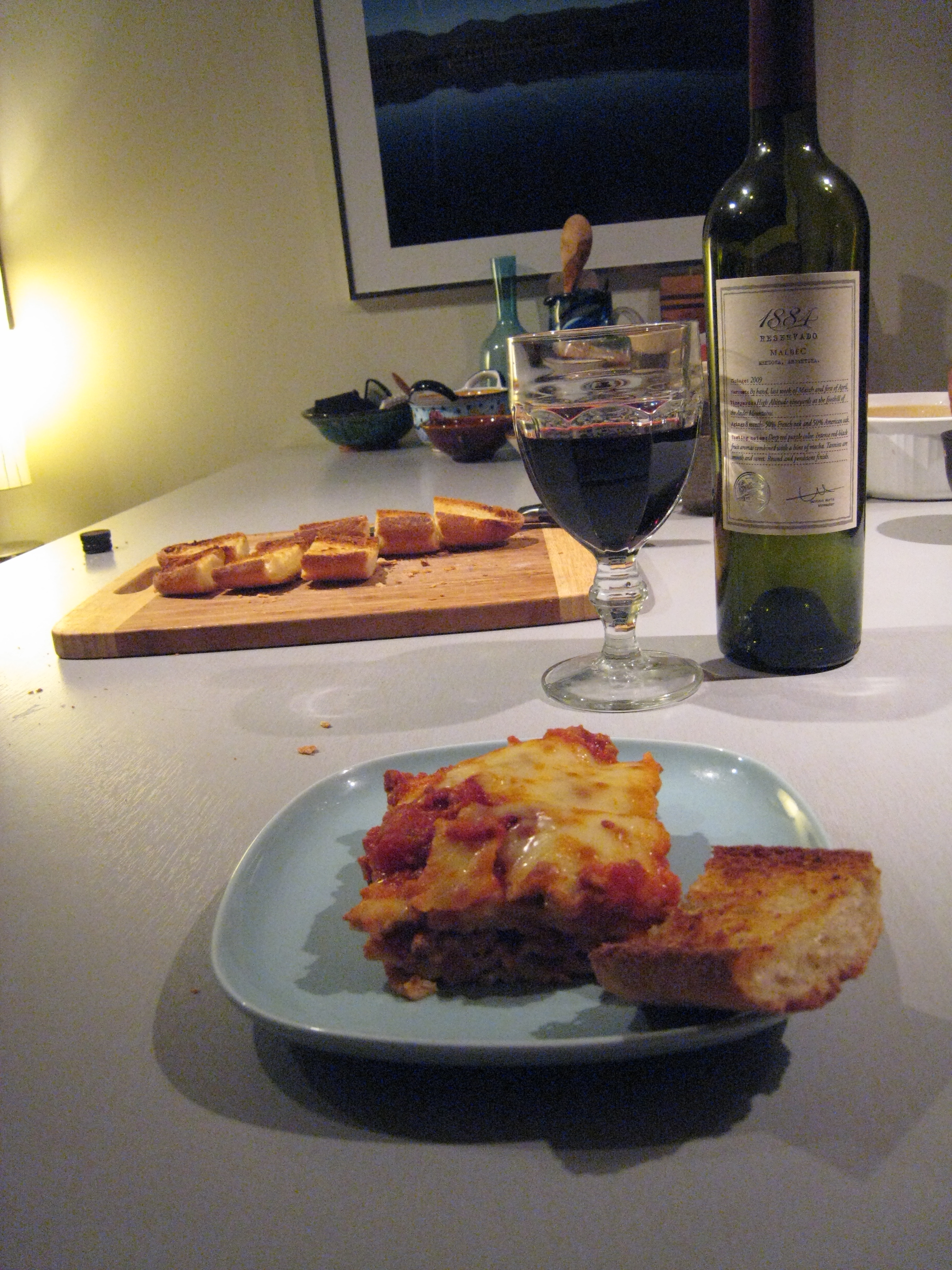
Mushroom, Turkey and Hot Italian Sausage Lasagna, lactose-free

Lasagna is such a great dish for a dinner party – throw it in the oven before the guests arrive and you’ve got time to do a few last-minute things, and then sit down and relax a little while dinner cooks.

This recipe can be made lactose-free or lactose-full, depending on which way you lean.  For me soy and lactose-free cheese are revolutionary.  For cheesy/dairy people, just substitute with the real thing.  One product I never use is soy cheese; they don’t taste very good, and they stick to your teeth like melted plastic might.  Ick!  Instead I use lactose-free L’Ancetre cheeses, which tastes fabulous!

What you need:

1 recipe homemade pasta OR store-bought lasagna noodles

1 recipe Turkey & Hot Italian Sausage Tomato Sauce

1 recipe mushroom cream sauce

2-3 cups mozzarella cheese

What you do:

You have prepared all of your ingredients, and are now ready to put the lasagna together!  I used a 9×11 deep-dish pan for this recipe.  My homemade noodles were quite thin, so I was able to do 4 layers of pasta; if you are using store-bought noodles you might not be able to fit that many layer into your pan.  If this is the case you could assemble it in two pans, or save the extra sauce for another use.  (You can use the mushrooms to stuff some crepes!  And the tomato sauce could be served over pasta!)

1.  Spread a little tomato sauce on the bottom of the pan, about 1/3 of it.

2.  Lay out the noodles on top of the sauce.  If you are using homemade pasta you don’t need to cook it first.

3.  Now add a layer of the mushroom sauce, about half of it, then put some more noodles on top.  (Or, if you’re really into your cheese, you can add some extra mozzarella on top of the mushroom sauce.)

4.  Add another third of the tomato sauce, then more noodles.

5.  Now add the remaining mushroom sauce, then another layer of noodles.

6.  Final layer: the last of the tomato sauce.  The mozzarella cheese will go on half way through the baking.

So now you’ve got:

tomato, noodle, mushroom

noodle, tomato, noodle,

mushroom, noodle, tomato

7.  Cover the lasagna with foil and bake for 30 minutes at 350F.

8.  Remove the foil and sprinkle on the cheese.  Bake for another 30 minutes, then check to see if it has browned.  If not, then pop on the broiler for a minute, watching carefully so it doesn’t burn, until it’s browning and bubbly.

9.  Remove the lasagna from the oven and let it rest for about 20 minutes before cutting.  Letting it rest helps the pieces will stay together when you serve them.

Mushroom Cream Sauce, lactose-free

I’ve used this sauce in my Mushroom, Turkey and Hot Italian Sausage Lasagna, as well as in crepes.  Of course you can use real milk or even a little cream if you can handle the real stuff!

What you need:

15-20 mushrooms

2 cloves finely chopped garlic

1/4-1/2 cup white wine

1/4 cup + 2 tablespoons butter or dairy-free “butter” or margarine

1/4 cup flour

2 cups soy milk

salt and pepper

What you do:

1. Clean mushrooms by rubbing with a damp cloth, then slice into pieces about 2 mm thick.

2. Add butter to a large frying pan on medium-high heat.  In small batches add the mushrooms, and after a few minutes of cooking, add a splash of wine.  Cook mushrooms until both sides have browned.  In the last batch of mushrooms add the garlic and cook as you did the others.

3.  Heat the soy milk.

4.  Heat 1/4 cup butter/substitute in a pot.  Add the flour and cook, stirring, for a few minutes.  Very gradually add the soy milk – add a little, then stir until incorporated into the flour mixture.  Continue adding the milk gradually, until it has been incorporated.  Add a splash or two of wine and continue to stir.  If it’s very thick, add a little more soy milk or wine.

5.  Season with salt and and quite a bit of pepper.

Turkey and Hot Italian Sausage Tomato Sauce

Here’s a tomato sauce you can use for spaghetti or lasagna – I made it up to go in my Mushroom, Turkey and Hot Italian Sausage Lasagna.  It’s pretty easy to make, and just requires a bit of cooking time.

What you need:

3 spicy italian sausages

400 to 500 grams ground turkey

1 -796 mL can crushed tomatoes

1 -796 mL can chopped tomatoes

1 onion

3 cloves garlic, chopped

1 cup white wine

1 bay leaf

2 tablespoons olive oil or butter

1 tablespoon brown sugar, or to taste

a few shakes of chili flakes

salt and pepper

What you do:

1.  Remove casings from the sausages, then cook them in a large pot until the meat is no longer pink, adding the turkey meat and chopped garlic part way through.  Break up large pieces of meat and remove excess fat.

2.  Add the canned tomatoes, the whole onion, garlic cloves, wine, bay leaf, olive oil or butter and chili flakes to the meat.  Cook on low heat for about an hour, or more if you’ve got the time.

3.  Remove the onion and bay leaf, and add the brown sugar, salt and pepper to taste.

Feel free to make a big batch and freeze part of it.