This blog is my way of sharing recipes I love. I don't make a penny from the blog, it's just for fun! I do pay to keep it Ad-Free so it's a better experience for you. Please write a comment if you use a recipe! I'd love to hear your thoughts.
Tonight I made this squash dish and I just had to share it! It was so delicious!
The squash is first tossed in a honey soy sauce glaze, then roasted in the oven. To serve it is sprinkled with Furikake. The combination is a winner! A hint of sweetness, saltiness, and nuttiness from the sesame seeds. Love. It.
If you’re unfamiliar with furikake, it is a Japanese condiment made of sesame seeds, seaweed, and sometimes dried fish. The one I bought, Ajishima Nori Komi Furikake, has no fish, and also no MSG which some brands contain. In a pinch you could fake this ingredient with some toasted sesame seeds and a little salt. Even better if you have some nori.
The recipe comes from Jess Damuck’s Health Nut: a Feel-Good Cookbook. It’s got plenty of yummy healthy recipes. I enjoyed the Seed Crackers, recipe which happen to be gluten-free.
This recipe is only half the original, as I only had one acorn squash. It is more than enough for two people as a side dish. I used less oil than the recipe called for.
What you need:
1 delicata or acorn squash
2 tablespoons honey
1 tablespoon soy sauce
2 teaspoons-ish neutral oil
1 tablespoon furikake
What you do:
Preheat the oven to 400F. Line a baking pan with parchment paper.
Combine honey, soy sauce and oil in a large bowl. Taste and adjust to your liking.
Halve the squash then cut into slices about 1cm thick.
Toss the squash in the glaze and make sure it’s all coated. Place the squash on the lined baking pan, and add any remaining glaze.
Roast the squash until it is tender, about 25 minutes. Flip the squash half way through the time.
This delicious recipe comes from Anna Jones’ cookbook One Pot, Pan, Planet; A greener way to cook for you, your family and the planet. Here’s a link to her website where you can find a lot more yummy recipes and info about her book.
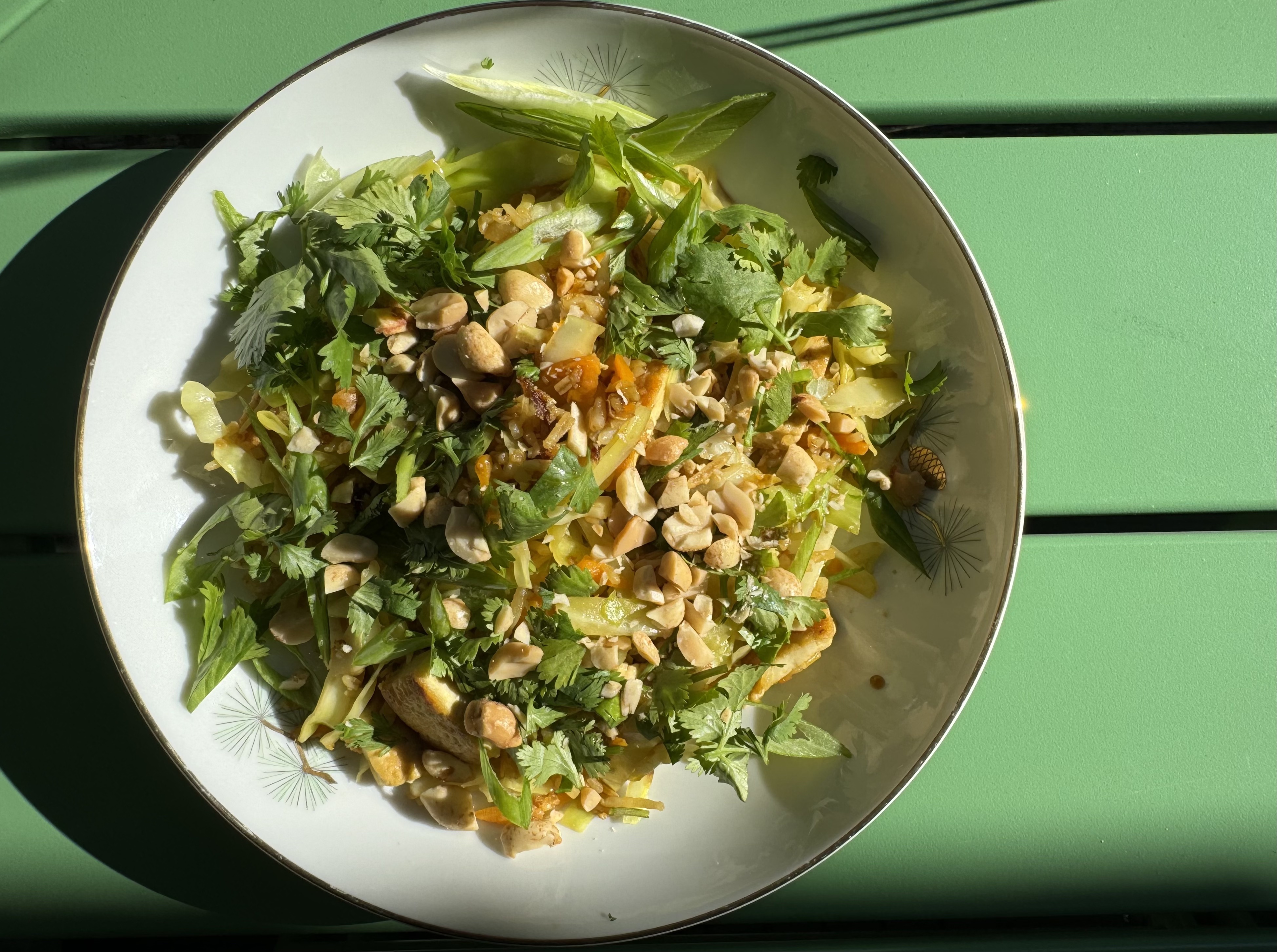
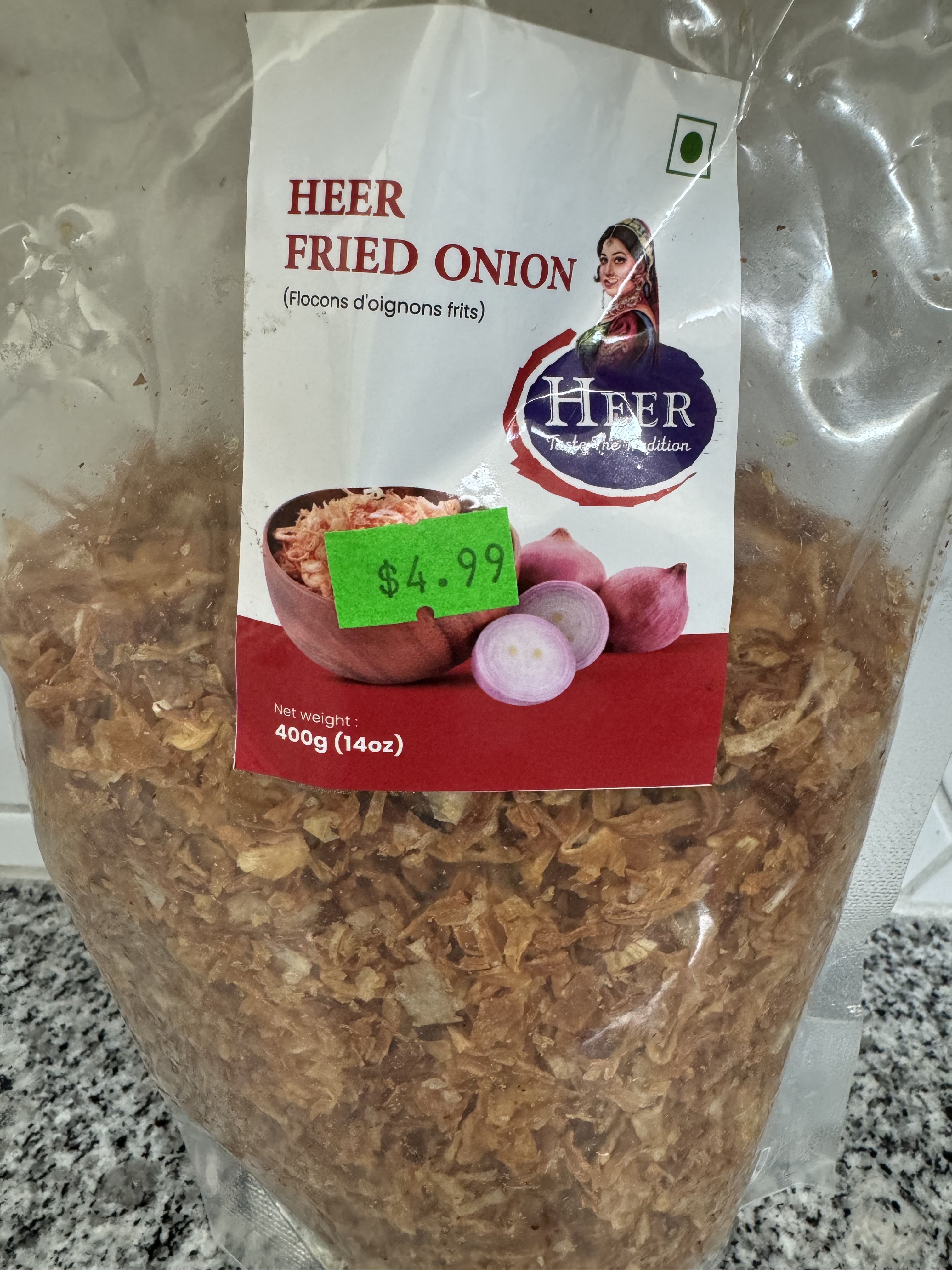
Why this recipe, especially after my long hiatus from contributing to this blog? Well, delicious, healthy, meal in a bowl: those are my favourite dishes. Plus most of the ingredients are things I normally have in my kitchen, with the exception of the crispy shallots. I found some crispy onions at a Mediterranean store for about $5 – close enough for me!
The title of this recipe in the cookbook is “Carrot and Peanut Nasi Goreng,” but I wanted a title that explains a bit more about the recipe. I’d say the cabbage, tofu, and peanuts are the main features here, with lots of flavour from ginger, garlic, herbs, lime, and the sauce that gets drizzled on at the end. My guests liked that they could add as much of the toppings as they wanted – not everybody loves cilantro and hot sauce it seems . . . so they can choose what they want to add the theirs.
Was a hot summer day the best time to make this? Only if you love standing in front of a hot frying pan . . . with a big fan running at least.
Was my frying pan big enough for this recipe? Of course not, even though it’s a big pan . . . so I just stirred carefully when it was fully loaded.
I only made a few little changes to the recipe: I did not use the complete half of a cabbage because I just couldn’t fit it in the pan; maybe I was meant to use half a small cabbage. I also didn’t put in as much rice as the recipe asked for; the recipe asks for 350g cooked rice, and I started with 1/2 cup dry rice, so that would be a bit less than called for. I used tofu; tempeh is given as an alternative, but I really don’t like tempe, and I really enjoy tofu! I also wrapped my tofu in a towel for about an hour before using it, to soak up some of the water. I put in only a little chilli oil, but put a bowl of it on the table to drizzle on later, so everyone could choose their own spice level. I have a batch of Wil Yeung’s chilli oil, which I highly recommend. I used the 50/50 mix of honey and soy sauce instead of ketjap manis. I didn’t use the optional fried eggs. I always keep ginger in my freezer – so I have it when I need it, and because it is so easy to grate it when it is frozen.
This recipe makes about 4 servings.
Please let me know if you try this recipe and what you thought of it! I’d love to hear from you!
What you need:
1 tablespoon vegetable oil
200 grams firm or extra firm tofu, cut into bite-sized pieces
1 small onion or 2 shallots
thumb-sized piece of ginger, grated (easiest to do this with frozen ginger)
2 cloves garlic, finely chopped
1/4 teaspoon turmeric
300-350grams cooked basmati rice (cold, day old rice!)
2 tablespoons soy sauce
1 teaspoon to 1 tablespoon chilli oil or sambal oelek, depending on your heat tolerance
2 carrots, peeled and grated
1/2 a head of cabbage, chopped (or other green veg of your choice)
For serving:
juice of 1 lime
small bunch of cilantro, chopped
100 grams chopped peanuts
2 spring/green onions, thinly sliced
crispy shallots or onions
1 tablespoon ketjap manis OR 50/50 mix of soy sauce and honey
(optional 2 eggs for frying)
What you do:
Begin by laying out all the ingredients you need and chopping all the vegetables up as listed in the ingredients.
Heat a large frying pan over medium/high heat, adding a little oil. Fry the tofu (I did mine in 2 batches) for about 5 minutes, turning frequently, until browned. Remove these from the pan into a bowl for later.
Turn the heat to medium and add a little more oil to pan. Fry the shallots until soft, taking care not to burn them. Add the ginger and garlic and fry for another minute. Add the turmeric and fry for another minute.
Add the rice to the pan, then pour on the soy sauce and chilli oil, stirring to coat the rice.
Add the grated carrot and chopped cabbage, frying for about 2 minutes.
Add the tofu and continue to fry until everything is hot. If you choose to fry eggs for this dish, do that now in another pan.
Squeeze the lime juice over the rice and vegetable mixture.
To serve, spoon some ketjap manis/ soy and honey sauce, on each serving. Sprinkle on the cilantro, spring onions, peanuts and crispy onions. Add extra chilli oil if you like a bit more heat!
Enjoy!! Please comment!!
Thanks to everyone who has been so patient in waiting for a blog post! I’ve had some incredibly busy years, completing a Masters degree while working a very full-time job. I got out of the habit of taking photos my new dishes, and sure didn’t have time to write up a blog posting. I also wondered if anybody is out there… I get a bunch of hits on my site, but very few people comment, so I sort of thought no one would really care if I quit this blog. I’m going to make an effort to post from time to time, so I hope you’ll stay tuned!
I’ve been growing fava beans on my balcony all winter. Planted in November, and beginning to harvest at the end of May. I didn’t think I would be harvesting so late, but it is so worth it! The beans are creamy and have lovely flavour. And check out the photo at the bottom of the page to see the gorgeous green of the bean after shelling!
This recipe is more of a guide. What I thought was going to be a massive crop, ended up being only 8 pods (for now), which yielded 18 beans. So I ended up making a really small portion of this spread, using less than half of an avocado.
In the photo I’ve got some delicious corn crackers, but we actually preferred the fava-cado spread on a piece of bread. The crackers had a lot of flavour on their own, so the milder bread allowed the flavours of the fava and avocado to shine through.
A word on growing fava beans: Yes, you can grow them in summer, but when I did that they got infested with aphids. Growing them over winter, in Vancouver, was pretty easy. I just had to wrap them up a bit when we had a cold snap. So after half a year of growing, I finally get to eat them! This is the first harvest, but there are a lot more pods still growing . . . hmm, what should I make with the next harvest?
What you need:
avocado
fresh fava beans
lime
salt
bread or crackers
What you do:
To prepare the fava beans, get a pot of salted water boiling. String the pods and remove the fava beans. Boil the beans for 3 minutes. Drain the beans and then put them in a bath of ice water right away. This will help them to stop cooking, and retain their gorgeous bright green colour.
Now you can slide the beans out of their skins, revealing the gorgeous green colour!
Mash the fava beans together with some avocado (I used more fava than avo). Use an immersion blender if you like. Season with a little bit of salt and a squeeze of lime.
Serve with bread or crackers right away. Not as good after refrigeration.
This soup made the perfect meal on a cold winter evening, and paired well with Savoury Cheddar Muffins.
As with most soups, the broth you use is so important to bring a fullness of flavour. I had some homemade chicken broth in the freezer, but turkey broth would also be perfect here. If you don’t have a homemade broth it might be wise to splash out a bit on a better quality broth like the one made by Pacific.
I bought some raw turkey breasts for this recipe, but left-over roast turkey or chicken would also be great.
What you need:
olive oil
1 leek, halved lengthwise and then sliced
2 celery stalks, sliced
3-4 carrots, sliced
1-2 turkey breasts (or leftover turkey or chicken meat)
Heat a small glug of olive oil in a large pot. Add the veggies and cook, stirring from time to time, until they soften a bit.
Push the veggies to the sides of the pot (or remove them from the pot if you want) and place the turkey breasts in the pot. (Unless you are using leftover meat which you will add with the broth). Cook the turkey breasts for a minute or two on each side; it doesn’t need to cook through yet, as it will continue to cook when you add the broth.
Add the bay leaf, sage, thyme, broth and barley. Bring to a light boil and cook for 25-30 minutes, until the barley is cooked but not too soft.
Remove the turkey breasts from the soup and shred them, using two forks or your hands. Put the turkey meat back in the pot.
I like to keep the salt and pepper until the very last moment, as the flavours of the soup develop as it cooks, and you may over-season if you add it sooner. Also I think the salt makes the veggies a bit mushier. So add salt and pepper to taste just before serving.
Tomatoes, freshly picked from the vine – is there a better taste of summer? Bruschetta is a tasty way to serve up some of these treasures from the garden, or the garden of a friend, or a Farmer’s market. Best made only with fresh summer tomatoes, but in a pinch, cherry tomatoes are often a best bet in winter.
I haven’t given amounts for this recipe because it’s easy to make, and you can alter amounts according to your taste and how much you want to make. Each tomato tastes a bit different, so the seasonings will depend on how much flavour is in our tomatoes.
What you need:
baguette
1 clove garlic
the freshest tomatoes you can get
fresh basil
sweet onion
balsamic vinegar
extra virgin olive oil
sea salt
What you do:
Slice and lightly toast the bread. You can toast it in the oven, toaster, or on the BBQ. The BBQ is a good option if it’s really hot and you don’t want to turn on your oven.
Slice the garlic in half and rub it on the toasted bread. Set the bread aside.
Mince a little bit of the onion, then chop the tomatoes and toss them into a bowl. Tear up or chop the basil and add it to the tomatoes.
Drizzle a bit of olive oil and balsamic vinegar on the tomatoes, along with a pinch of salt – give it a toss. Taste and add more of each of these ingredients as you see fit.
Just before serving, top each slice of bread with tomatoes. Alternatively, you can leave the tomatoes in a bowl and people can top their own.
I was fortunate to spend some time in Haida Gwaii recently, an archipelago off of B.C.’s coast. It is a gorgeous place, with lush forests and stunning coastlines. The Haida people have lived here since time immemorial and we experienced a thriving culture. We were able to see a lot of totem poles and other traditional art, and we experienced the sharing spirit of the place.
While staying in Masset at the Copper Beech House we were honoured to be invited to a dinner where we had, among other things, this pan-fried sea asparagus. Of course I had to find out more about it, so Chelsea who runs the show at the Inn taught me what to do. She taught me where to harvest it, and how to soak it to get rid of a lot of the salt, and then how to cook it. (see below)
Sea asparagus makes a nice side vegetable dish, or in a small quantity it could be a lovely garnish for salmon. We had it with ling cod and spruce tip syrup, and some herbed baby potatoes.
Sea asparagus goes by many names: sea bean, samphire, glasswort, saltwort, and probably others. Here is a link to an article about sea asparagus if you’re interested in learning more about it. Also this one. will give you more information on where to harvest. You can buy it at some Farmer’s Markets, but you can forage it for free if you live in the right area!
What you need:
sea asparagus
butter or olive oil
What you do:
After harvesting the sea asparagus, clean it of any bits that don’t belong, brown parts especially.
Rinse the sea asparagus, then soak it in fresh water for about an hour.
Heat some butter or olive oil in a frying pan. Cook the sea asparagus briefly, tossing with tongs. It should still be bright green, so that it doesn’t become soggy.
Serve immediately.
View from Tow Hill, Haida Gwaii
Totem Pole in Old Massett, Haida Gwaii
I was fortunate to have a visit from this eagle. He landed terrifyingly close to me, so I took a few steps back and snapped his pic.
A number of years ago I was on a trip to Spain, and I was treated to an amazing tapas feast. We ate so many delicious foods that night, but my favourite by far was the Padrón peppers – blackened, slathered with olive oil, and topped with crunchy salt. They were mildly hot; some were a little warmer than others, but the heat wasn’t uncomfortable.
I didn’t think I would enjoy these at all, since I’m not fond of green bell peppers, but these are completely different from bell peppers. Yay for trying new things!
When I got home from the trip to Spain I thought I would make these peppers all the time when I had guests, however, limited access to Padrón peppers in Vancouver crushed my dream. I was able to find them once at a Farmer’s Market. I paid a small fortune for them, and they were so hot that no one would eat them! I did eat them because I can be a bit stubborn, but they were not nearly as good as the ones in Spain.
Enter: the Shishito pepper. I found them in Vancouver at a Persian store, and at my local Korean store they are labelled as Twist peppers. They are incredibly similar to Padrón peppers – yay!
What you need:
Shishito or Padrón peppers
olive oil
flaky sea salt
What you do:
Wash and dry the peppers.
Bring a large frying pan (I like cast-iron for this) to high heat. Add a glug of olive oil, then add the peppers. Allow to fry for about one minute before turning; they should be blistered and darkened on the first side.
Fry on the other side for another minute or so.
Drizzle a bit more olive oil, then use your fingers to sprinkle on some sea salt.
Enjoy them while they’re hot! You can always soak up the excess olive oil with some bread.
I have seen a number of recipes for roasted chickpeas lately, but I wasn’t very interested in making them because of a bad experience with some chalky store-bought roasted chickpeas. For some reason I decided to give them a try, and was really happy with the result. They come out just the right texture, not too dry, not too soft. I love the bit of saltiness topping off the creamy eggplant and tahini sauce. Add the sweetness of the pomegranate seeds and you’ve got a pretty perfect vegan meal.
This dinner is quite simple to make. Most of the work is done by the oven, roasting the eggplant and the chickpeas, and while it is roasting you just have to whip up a quick sauce.
I made this a few months ago, and I didn’t actually measure the sauce ingredients, so this is my best estimate of the amounts I used. I cobbled this recipe together from ideas I’ve seen in various cookbooks, most notably the Ottolenghi (drool) cookbooks.
What you need:
1 – 540 mL can chickpeas
5 tablespoons olive oil, divided
kosher salt
freshly ground black pepper
½ teaspoon cumin
3 – 4 long and skinny, or 8 small eggplants
For the sauce:
1/3 cup tahini paste
2/3 cup greek yogurt
3 tablespoons fresh lemon juice
2 garlic cloves, minced
1/4 teaspoon salt, or to taste
1/4 cup water or more as needed
parsley to garnish
Optional:
pomegranate seeds, of they are in season. Chopped dried sour cherries might be nice too.
What you do:
Preheat the oven to 220C/425F.
Rinse the chickpeas and pat them dry with a clean towel. Toss them in 2 tablespoons of the olive oil, then toss with salt, pepper and cumin. Spread out into a single layer on a baking tray.
Wash the eggplants and slice them in half lengthwise. Place them cut-side up on a baking tray and brush them with olive oil.
Roast the chickpeas and eggplants for 30-40 minutes, tossing the chickpeas halfway through the time. The eggplant should be very tender when you poke it with a fork. The chickpeas should be slightly crunchy, but not hard. It’s a good idea to test the chickpeas a few times in the last 15 minutes of cooking time.
While the oven is doing its thing you can make the sauce. Whisk together the tahini, yogurt, lemon juice, garlic and salt. Slowly add the water to make a pourable yet still thick sauce. Taste and add more salt or lemon if needed.
Plate the eggplant, drizzling the sauce over them, and then top with the chickpeas. Garnish with chopped parsley and optional pomegranate.
Now that the warmer weather is here I’m starting to think about what to make for patio and picnic time. This salad is super tasty, and really healthy too. For me it’s a great quick meal salad, and since it keeps in the fridge for a few days I can just dig in whenever I need a little something to eat. You can also mix and match at you see fit, for example if you don’t like peppers you can substitute a bit of jicama or apple or whatever you’d like.
If you use canned beans and corn, all you have to do is make the dressing and add in whatever veg and herbs you like – super easy! Then let it all sit for about half an hour before you dig in.
I found the recipe here, and I just downsized the amounts. I used canned corn instead of frozen because I find frozen corn a bit rubbery, and peaches and cream corn is the best. I also added some freshly chopped tomato to the top of each salad, and a bit of extra bell pepper.
Avocado makes a great addition to the top of each salad serving. Sadly, I could not find a ripe avocado in the five stores I checked. They could charge double for the ripe ones… I’d pay double for a perfectly ripe avocado – would you?
What you need for the salad:
1 can black beans, drained and rinsed
I can peaches and cream corn, along with the liquid
1 small jalapeño pepper, de-seeded and diced (amount dependent on your heat preferences)
1 bell pepper, diced
1/4 cup roughly chopped fresh cilantro
1/4 cup chopped red onion
What you need for the dressing:
2 tablespoons olive oil
1 teaspoon honey
zest and juice of 1 lime
1/4 teaspoon kosher salt
1/8 teaspoon black pepper
a pinch of cayenne pepper
What you do:
Mix up all the dressing ingredients in a small bowl.
In a larger bowl, combine all the salad ingredients. Stir the dressing into the salad.
Let the salad sit in the fridge with a cover over it for half an hour, or a few hours.
This is SUCH a great salad! In my cookbook library is a copy of the amazing Jerusalem cookbook by Yotam Ottolenghi, which contains this recipe, but I didn’t think to make it until I saw rave reviews online. So many people were commenting that this was their favourite salad, and now I know what they are talking about. It is my new favourite salad, and I can hardly wait to make it again.
I love the buttery toasted almonds and pita tossed in sumac. The onions (I used red because they are pretty) that are nicely mellowed in a vinegar marinade, along with the dates which become meltingly delicious, and their sweetness is balanced by the onion and vinegar.
I served this with the most delicious Cinnamon Curry Roast Chicken and potatoes. It was plenty of food for four people.
2 small pitas, roughly torn into bite-sized pieces
1/2 cup whole unsalted almonds, coarsely chopped
2 teaspoons sumac
1/2 teaspoon red pepper flakes
150g baby spinach leaves
2 tablespoons freshly squeezed lemon juice
salt
What you do:
Place the vinegar, onion, and dates in a small bowl, adding a pinch of salt. Mix well with your hands, then leave to marinate for 20 minutes or more. Drain the extra vinegar
In a frying pan over medium heat melt the butter and add one tablespoon of olive oil. Add the pita and almonds, stirring to cook them for 5 to 6 minutes. The pita should become crunchy and brown. Remove the pan from the heat and toss in the sumac, red pepper flakes and 1/4 teaspoon of salt. Let this cool.
To prepare the salad toss the spinach with the pita in a large bowl, then add the dates and onion, 1 tablespoon of olive oil, lemon juice, and a pinch of salt. Serve right away!



 Trust in Kim: an ad-free recipe blog!