Fig & Anise Bread

fig and anise bread - trustinkim.com

The other day my sister was lamenting the fact that Terra breads had closed during the pandemic because she was craving their fig and anise bread. So I said, “Why not bake it yourself?” 

My sister wasn’t really into that idea, so I decided to give it a whirl, and it ended up being quite awesome!

I used my super easy no-knead bread recipe, and added figs and aniseeds to it. It was really delicious, and I only made one modification to my first try – more aniseeds. I thought that one tablespoon would have been more than enough, but it was actually quite a mild flavour. So I upped the amount in the next batch.

After I made the bread, my guy was quite jealous that it was going to my sister, so I ended up cutting off a portion for him – gotta try to please everybody! I have more friends who are fanatics about this bread, so I look forward to making more loaves to share with them.

If you give this recipe a try, please do let me know in the comments if you enjoyed it! The comments let me know if there’s anybody out there who is interested in my recipes.

This bread is lovely with a little bit of butter, cream cheese or goat’s cheese. 

If you have a hard time finding anise seeds, you can buy them in store in Vancouver or online at Gourmet Warehouse.

What you need:

  • 3/4 cup dark rye flour (or whole wheat, or only white flour if that’s what you have)
  • 2 & 1/4 cups white flour
  • 1 & 1/4 teaspoons salt
  • 1/4 teaspoon yeast
  • 1 & 1/2 tablespoons whole aniseed
  • 1 cup chopped dried figs
  • 1 & 1/2 cups room temperature water

What you do:

  1. Combine the flours, salt, yeast and aniseeds in a large bowl and mix them together.  Add the water and mix it in with a spoon, adding the figs part way through the mixing. You will end up with a shaggy, sticky dough.
  2. Cover the bowl with plastic wrap or a lid, and let sit for 12-18 hours in a warm-ish place, and out of direct sunlight. The dough should about double in size and become dotted with bubbles. If your house is a little on the cooler side you will likely need the longer rising time. 
  3. Cut a large piece of parchment paper and place it on a countertop where it can sit undisturbed. Coat the parchment paper with a bit of oil using your hands, then turn the dough out onto the parchment paper. Sprinkle the surface of the dough with flour. Cover the dough loosely with some plastic wrap or a kitchen towel. Let the dough sit for 1-2 hours, until it has doubled in volume.
  4. About 1/2 an hour before you want to put the bread in the oven, set the temperature to 475°F  and place your baking pot on a rack in the lower third of the oven. Let the pot heat up, and when the oven has reached 475°F, remove the pot from the oven. Pick up the dough by gathering together the corners of the parchment paper. Carefully (remember the pot is smoking hot!) place the dough (still on the parchment paper) into the pot. I cut away any really long bits of parchment that are sticking out of the pot.
  5. Put the cover on the pot and bake for 30 minutes while the bread forms its nice thick crust. Remove the lid from the pot and continue to bake for 15-20 minutes more.  The bread should become a deep brown when it is done, and if you tap on it, it should sound hollow.  Remove the pot from the oven, lift the bread out of the pot, remove the parchment paper, and place the loaf on a rack to cool. It needs to cool for about 1/2 an hour before slicing.
  6. Enjoy!
fig and anise dough rising -trustinkim.com
dough after the first 12-18 hours
fig and anise dough - trustinkim.com
dough after second rising
fig and anise loaf - trustinkim.com
the loaf, fresh out of the oven


Rye Bread, like Oma made

Rye Bread - trustinkim.com

My Oma made the best bread. Nobody that I know of in my family ever learned quite how to make her bread the way she did. I’ve tried a number of times to recreate it, including baking it in a brick oven once like she did sometimes. This is the closest I’ve ever gotten to making bread that tastes like hers, and I think the potato water is a big part of that. Also the method of baking it in a lidded dish helps to create that nice dark crust.

This is a version of the popular no-knead bread making method. I added the potato water to make it more like Oma’s bread. No-knead bread is super easy to make, and so delicious. Now that my favourite local bread bakery (Terra Breads) has closed due to the pandemic, I’m making this bread regularly.

The potato water adds some flavour and gives the bread a nice texture. To make potato water you can boil some potatoes ahead of time for another meal, then save the cooking water in the fridge until you want to make this bread. Just bring the potato water to room temperature before mixing the dough.

I used a lidded baking dish for this, my le Creuset French oven. At other times I’ve used a Romertopf baker. I imagine a casserole dish with a lid could work too. You could bake it without a lid too, which I haven’t done with this recipe yet.

What you need:

  • 3/4 cup dark rye flour
  • 2 & 1/4 cups white flour
  • 1 & 1/4 teaspoons salt
  • 1/4 teaspoon yeast
  • 1 & 1/2 cups room temperature potato water

What you do:

  1. Combine the flours, salt and yeast in a large bowl. Add the potato water and mix it up. You will end up with a shaggy, sticky dough.
  2. Cover the bowl with plastic wrap or a lid, and let sit for 12-18 hours in a warm-ish place, and out of direct sunlight. The dough should about double in size and become dotted with bubbles. If your house is a little on the cool side you will likely need the longer rising time. 
  3. Cut a large piece of parchment paper and place it on a countertop. Coat the parchment paper with a bit of oil using your hands, then turn the dough out onto the parchment paper. Sprinkle the surface of the dough with flour. Cover the dough loosely with some plastic wrap or a kitchen towel. Let the dough sit for 1-2 hours, until it has doubled in volume.
  4. About 1/2 an hour before you want to put the bread in the oven, set the temperature to 475°F  and place your baking pot on a rack in the lower third of the oven. Let the pot heat up, and when the oven has reached 475°F, remove the pot from the oven. Pick up the dough by gathering together the corners of the parchment paper. Carefully (remember the pot is smoking hot!) place the dough (still on the parchment paper) into the pot. I cut away any really long bits of parchment that are sticking out of the pot.
  5. Put the cover on the pot and bake for 30 minutes while the bread forms its nice thick crust. Remove the lid from the pot and continue to bake for 15-20 minutes more.  The bread should become a deep brown when it is done, and if you tap on it, it should sound hollow.  Remove the pot from the oven, lift the bread out of the pot, remove the parchment paper, and place it on a rack to cool. It needs to cool for about 1/2 an hour before slicing.
  6. This bread has no preservatives, so if you don’t use it up by the second day, it should be refrigerated frozen.

Potato Pizza

potato pizza - trustinkim.com

This pizza is surprisingly good!

I’ve been hearing about potato pizza from my guy for a long time, and to be honest, I wasn’t really interested. For a long time. But I gave it a try recently, and it was actually really good! And then he asked if we could have it a week later for his birthday dinner, so I knew it was a winner. 

This is not the type of pizza that I am used to: no sauce, just salted potato slices and onion tossed in olive oil, and some rosemary and Pecorino cheese. But really good! I love the thin crust and the crispy edges on the potato!

I looked at a lot of recipes to figure out what to do here, and went to a local Roman pizzeria in Vancouver to try theirs. I mainly followed the instructions in Smitten Kitchen’s recipe, but the Pecorino was my addition. The grocery-store-bought Pecorino wasn’t the best, so I’d say to splash out  on a cheese from a fromagerie/cheese shop if you can. A good substitution would be a nice Parmesan, or you could leave it without any cheese.

I’m leaving some of the amounts kind of vague here. You know how much pepper or rosemary you want on your potato pizza, right? If not, just play with it and see what works best for you!

If you don’t want to make your own pizza dough (although once you’ve tried this one you might find you love that it is easy and tasty) the Whole Foods dough is quite good.

What you need:

  • pizza dough (try this no-knead method) 
  • 4 teaspoons sea salt
  • a few Yukon gold potatoes (I used 2 smallish ones for one pizza)
  • 1 small onion, sliced
  • freshly cracked black pepper
  • olive oil
  • fresh rosemary, chopped
  • Pecorino cheese

What you do:

  1. At least half an hour before assembling the pizza, and up to a few hours before, peel and slice the potatoes. They should be sliced as thinly as possible; if you have a mandoline, this is the perfect time to use it. If not, try to cut the slices thinly and uniformly. Place them in a bowl of water with the salt, and let it sit until you are getting the pizza ready for the oven.
  2. Preheat the oven to 260C/500F.
  3. Drain the potatoes and use a clean kitchen towel to dry them. Toss the dried potatoes with some olive oil, pepper and rosemary.
  4. Pour a bit of olive oil onto a baking pan and spread it around with your fingers.
  5. Use your olive oil covered hands to form the crust into the pan, pushing it around until it is a somewhat uniform thickness.
  6. Spread the potatoes around the top of the dough, overlapping slightly. If you’re a cheese lover you can sprinkle a bit on now, or wait until it is baked.
  7. Bake for 15-25 minutes, depending on the thickness of your crust. The pizza will become crispy and somewhat browned. 
  8. Add a sprinkling of cheese before serving. My pizza cutting tool of choice is my clean kitchen scissors, so use those if you have them.
  9. Enjoy!

Delicious and Easy Pizza Dough

no knead pizza dough - trustinkim.com

The title says it all – this pizza dough really is delicious and easy. All you need is some time, but most of it is the planning ahead kind of time. You just need to mix up the ingredients and wait. We ate pizza twice this week – once when the dough sat in the fridge for two days, one after four – and the second round was even better! So if you can plan that far in advance, I recommend the three to four day ferment.

The most difficult part about making pizza dough at this time in history (Covid 19 times) is sourcing flour and yeast!  I happen to have half a jar of yeast in my fridge from “before,” and managed to find some flour recently – lucky me!

I’m not going to suggest toppings at this time, but I will say that it seems best when the toppings are minimal, as things get a bit mushy on pizza if there’s too much moisture on top. So a few well-chosen ingredients will be amazing on here. The one in the photo is just a simple tomato sauce with Mozzarella, but we also had a potato pizza, which was surprisingly good.

This is a Jim Lahey recipe, the guy who made this no-knead method so well known.

The recipe makes enough for four medium-sized hand-stretched pizzas. If you want a thin crust pizza it makes four large pizzas.

What you need:

  • 500 grams (3 & ¾ cups) all-purpose flour, plus more for shaping the dough
  • 1 gram (1/4 teaspoon) active dry yeast
  • 16 grams (2 teaspoons) fine sea salt
  • 350 grams (1 & ½ cups) water

What you do:

  1. Combine the flour, yeast and salt in a bowl.
  2. Add the water (room temperature) and mix it in until it is fully combined.
  3. Cover the bowl with a lid or plastic wrap. Let the dough sit on a counter for about 18 hours. It could take longer if it is in a very cold room, but less if it is very warm. When it has about doubled in size you will know it is ready.
  4. At this point the dough is ready to use, but I think the tastiest pizza crusts are made with dough that has sat in the fridge for a few days. So go ahead and skip to step #7 if you want to make pizza today.
  5. Cut the dough into four equal pieces and wrap each in plastic wrap. Refrigerate for a few days. You could even freeze a ball or two for a few weeks.
  6. Take the pizza out of the fridge a few hours (minimum 3 hours, but longer is okay too) before you want to begin making it. Unwrap the plastic wrap, put the dough on a plate. Place the plastic wrap on top of the dough, tucking it in lightly so the dough can expand. I like to put a tea towel on top of the dough while it sits.
  7. Heat the oven as high as it will go. Get your toppings ready.
  8. I like to drizzle a bit of olive oil on the pan, but only where the dough will be or it will burn.
  9. Take a ball of dough and press it into the centre, then hold it in your fingers and let the weight of the dough stretch it, turning it as it stretches. Here is a video with some dough-stretching tips, since it’s a bit difficult to describe. 
  10. Place the dough on the baking tray, put your toppings on it, and stick it in the oven. Depending on the thickness of the dough and the toppings you’ve put on it, it could be ready in 5-10 minutes.
  11. Eat it while it’s hot! 

Chili Lime Pepitas

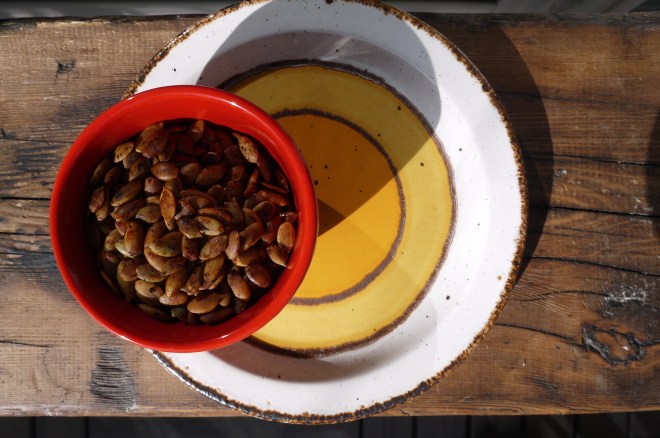
chili lime pepitas - trustinkim.com

Here’s a tasty and simple way to spice up some pepitas/pumpkin seeds. It’s a nice little appetizer, or a snack with your favourite beverage. Vegan, gluten-free and all that!

It’s super simple:

  1. Squeeze some lime onto a bunch of pepitas in a baking dish.
  2. Sprinkle on some salt and Ancho chili powder, or any chili powder that you have on hand.
  3. Throw them in the oven at about 250F for 10-15 minutes, until they get a bit crispy. If you hear them popping you know it’s time to take them out. Just make sure you move them around in their baking dish once or twice through the process.
  4. Yum! Once they are cooled you can store them in an airtight jar for a few days – if they don’t get gobbled up right away!

Baked Falafel Loaf with Tarator Sauce

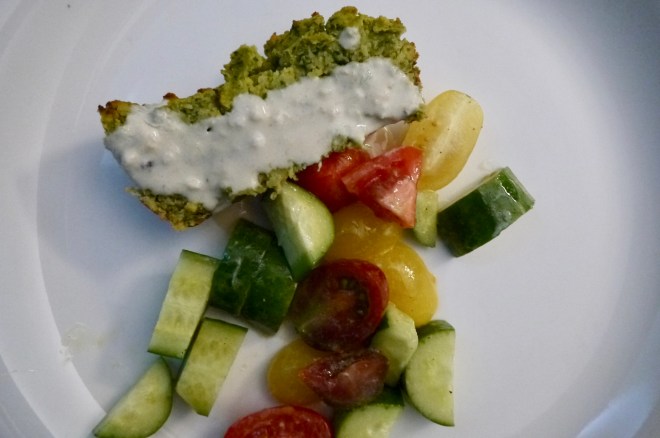
falafel loaf - trustinkim.com

Love falafel, but hate to deep fry? Then this one’s for you!

It’s got all the yummy and protein-y goodness of a falafel, minus the deep frying. It’s super easy to whip up if you’ve got a food processor. It is delicious. (this photo doesn’t do it justice; I’ve made this a number of times, and we end up eating it before I remember to take a photo. So finally I got this shot, not the best, but not nothing.)

I served it with a tomato and cucumber salad on the side, and my guest made it into a pita sandwich – both were delicious! In my opinion it must be served with this delicious tarator sauce, but maybe you have your own favourite.

This recipe came from the awesome cookbook called Taste of Beirut by Joumana Accad. I’ve taken it out of the library so many times and tried a whole bunch of recipes, and I think I finally need to buy this book!

The recipe says to serve at room temperature, but it was also good straight out of the oven. I didn’t change much with this recipe, just the order in which the ingredients are added to the food processor. The most recent batch I made I halved the recipe, using one egg. It was plenty for dinner for two plus leftovers – love leftovers!

What you need for the loaf:

  • 2 cans chickpeas, rinsed and drained
  • 3 large eggs
  • 1/ 2 cup bread crumbs
  • 1 large white onion, chopped
  • 1 cup flat leaf parsley
  • 1 cup cilantro (I like to use the stems too)
  • 1 tablespoon crushed garlic
  • 1/4 cup olive oil
  • 1 teaspoon baking powder
  • 1 & 1/2 teaspoons cumin
  • 1 teaspoon paprika or Aleppo pepper
  • 1 teaspoon salt

What you need for the tarator sauce:

  • 1/2 cup tahini
  • 1 teaspoon crushed garlic
  • 1/4 to 1/2 cup lemon juice
  • 1/4 to 1/3 cup water
  • salt to taste

What you do for the loaf:

  1. Heat the oven to 375F. Line a loaf pan with parchment paper.
  2. Add the chickpeas, eggs, bread crumbs, onions, parsley, cilantro and garlic to the bowl of the food processor and process until the mixture becomes doughy.
  3. Add the baking powder, seasonings and olive oil and process again until all the ingredients are combined.
  4. Spread the mixture into the lined loaf pan and even out the top surface a little.
  5. Bake for about 35 minutes, then check to see if it is done; mine needed more time. You will know when it is done if a knife inserted in the centre comes out pretty much clean.
  6. While the loaf is baking you can make the sauce.

What you do for the sauce:

  1. Mix the garlic in with the tahini.
  2. Add a little bit of lemon juice and mix well. Add lemon juice and water a little at at time until the sauce is creamy but not too runny.
  3. Add salt to taste.
  4. Enjoy!!
parchment paper 1 - trustinkim.com
fold parchment paper in the bottom of the pan
parchment paper 2 - trustinkim.com
open the parchment paper
parchment paper 3 - trustinkim.com
Fill the parchment paper with falafel


Savoury Cheddar Muffins

savoury cheddar muffins - trustinkim.com

A new favourite! These savoury muffins were super delicious fresh out of the oven, served with a nice bowl of soup. They have cheddar, spinach and spring onions in them, and they are nice and light. They also work well as a breakfast or snack muffin.

Of course they were best eaten fresh out of the oven, but I heated one up the next day and that one was really good too! I’ve got a few in the freezer for when I need a last minute addition to a meal. 

I found the recipe on myfussyeater.com, and only changed a few things: I omitted the red peppers, and I added a bit of salt to the tops of the muffins. As well, I never buy self-raising flour, so in my version printed below I have included ingredients to substitute for self-raising flour. The recipe called for medium eggs, and I only had large so I used those – seemed a fine substitution to me. Also, I didn’t have quite enough butter so I topped it up with olive oil. I used more spring onions than the recipe indicated.

What you need:

  • 2 eggs
  • 1/2 cup (150mL milk)
  • 1/2 cup (150mL) butter, melted
  • 2 cups grated aged cheddar
  • 3 spring onions, chopped
  • 2 cups spinach, chopped
  • 2 cups flour
  • 3 teaspoons baking powder
  • 1/2 teaspoon salt
  • 1/2 vegetable stock cube, crumbled
  • freshly ground pepper
  • salt for the top of the muffins

What you do:

  1. Preheat the oven to 350F (180C).
  2. Line muffin tins with 12 liners, spraying them if they are not parchment.
  3. In a large bowl whisk the eggs, then stir in the milk and the melted butter (let it cool before adding it or it will solidify when you add it). Mix in the grated cheese, spring onion, and spinach.
  4. Sift in the flour and baking powder, then add the salt and pepper and the crumbled stock cube.
  5. Hand mix until just combined; I added a little bit more milk because mine seemed way too dry.
  6. Scoop the batter into the muffin tins and crack a little bit of salt on top of each.
  7. Bake for 20-25 minutes. If you insert a toothpick or skewer into the middle of a muffin it should come out dry.
  8. Cool completely before freezing, but enjoy them while they are warm!

Sour Cherry Almond Muffins

sour cherry almond muffins - trustinkim.com

Why have I never made an almond and cherry baked good before? My apartment smelled so wonderful after baking these; the almond smell is dreamy! These muffins are a bit more on the mini-cake side, meaning I don’t think they’re the healthiest muffins I’ve ever made. That’s not to say I didn’t have one for breakfast a few times   . . . and they’re really good with tea!

We ate one of these while they were warm, which is when they are at their best, but they were also great the next day. I froze the rest as soon as they were cool, and they were still really good when thawed.

I found the recipe on this site: Pretty Simple Sweet. The original recipe uses sweet cherries, but I used sour cherries, and I think they pair really well with the almond flavour. I tend to like to balance sweetness with tartness.

The recipe calls for baking the muffins for a few minutes at a higher temperature, then lowering the temperature for the rest of the baking. My oven is really finicky; I have to set it for higher than the required temperature, but then I have to lower it once it is at the right temperature or it will get too hot. So for me this was quite challenging. The good news is, by checking for a light brownness, and then using a toothpick to check if they had baked through, they baked successfully. Yay!

What you need:

  • 1 & 3/4 cups (250 grams) all-purpose flour
  •  2 teaspoons baking powder
  •  1/4 teaspoon baking soda
  •  1/4 teaspoon salt
  • 3/4 cup (150 grams) granulated sugar
  •  1 large egg, slightly beaten
  •  1 cup yogurt (I use 3.5% fat, my homemade recipe)
  •  1/3 cup (80 mL) canola oil
  •  1/2 teaspoon vanilla extract
  •  1 teaspoon pure almond extract 
  •  1 & 1/2 cups (300 grams) cherries, halved and pitted 
  •  1/2 cup sliced almonds, plus extra to sprinkle on top

What you do:

  1. Preheat oven to 425F/220C. Line 12 muffin cups with paper liners; I also sprayed them with baking spray.
  2. Toast the 1/2 cup of almonds in a frying pan or in the oven.
  3. Sift the flour, baking powder, baking soda, and salt into a large bowl. Add the sugar and stir to combine.
  4. Mix the egg with the yogurt, oil, and vanilla and almond extracts in a medium bowl.
  5. Pit and cut the cherries in half. If they are really juicy or if you’re using frozen berries, you can toss them in just a bit of flour to prevent bleeding. Prepare the cherries right before you are going to add them to the batter so that your finished product will look pretty.
  6. Pour the wet ingredients into the dry ingredients and fold the batter with a rubber spatula just until combined. Be careful to not over-mix, which would toughen the final product. We want nice light muffins. You can expect the batter to be thick and lumpy.
  7. Fold in the toasted almonds and cherries.
  8. Spoon the batter into the lined muffin cups. Sprinkle each muffin with a few un-toasted almonds.
  9. Bake for three minutes, then reduce the temperature of the oven to 375F/190C and bake for 12-17 minutes more. Test for doneness by inserting a toothpick; the muffin should be tender but not wet.
  10. Cool the muffins still in the tins for about 10 minutes, then place the muffins on a wire rack to cool.
  11. Allow the muffins to cool completely before storing in an airtight container. They can be stored on the counter for a day or two, or frozen for a few months.
  12. Enjoy!

Bruschetta

bruschetta - trustinkim.comTomatoes, freshly picked from the vine – is there a better taste of summer? Bruschetta is a tasty way to serve up some of these treasures from the garden, or the garden of a friend, or a Farmer’s market. Best made only with fresh summer tomatoes, but in a pinch, cherry tomatoes are often a best bet in winter.

I haven’t given amounts for this recipe because it’s easy to make, and you can alter amounts according to your taste and how much you want to make. Each tomato tastes a bit different, so the seasonings will depend on how much flavour is in our tomatoes.

What you need:

  • baguette
  • 1 clove garlic
  • the freshest tomatoes you can get
  • fresh basil
  • sweet onion
  • balsamic vinegar
  • extra virgin olive oil
  • sea salt

What you do:

  1. Slice and lightly toast the bread. You can toast it in the oven, toaster, or on the BBQ. The BBQ is a good option if it’s really hot and you don’t want to turn on your oven.
  2. Slice the garlic in half and rub it on the toasted bread. Set the bread aside.
  3. Mince a little bit of the onion, then chop the tomatoes and toss them into a bowl. Tear up or chop the basil and add it to the tomatoes.
  4. Drizzle a bit of olive oil and balsamic vinegar on the tomatoes, along with a pinch of salt – give it a toss. Taste and add more of each of these ingredients as you see fit.
  5. Just before serving, top each slice of bread with tomatoes. Alternatively, you can leave the tomatoes in a bowl and people can top their own.

Hummus Sandwich

hummus sandwich - trustinkim.com

I don’t often make meals that are as easy as this one, and when I do I usually don’t think of it as a recipe worth sharing. But this one is! It’s tasty, nutritious, and easy to make. Feel free to alter the ingredients as you see fit.

I don’t recommend this one as a make and take, since it would probably get soggy. But then, I’m a bit of a sandwich snob and I never like sandwiches that have been made ahead of time. 

What you need:

What you do:

  1. The first step is optional, but I think it makes the sandwich extra tasty: slice the ciabatta in half, then heat a frying pan. Add a drizzle of olive oil to the pan, then place the bread cut-side down to grill it a little. Less than a minute is probably good.
  2. Add hummus to the bottom slice of the bun, and add whatever else you are putting on it (you know how to make a sandwich.) Salt and pepper the tomatoes a little.
  3. Put the top on and eat right away!