Oma’s Mennonite Bread

brinck oven bread - trust in Kim

brick oven - trust in kim

As I was planning a trip up to the family cabin at Mahood Lake I knew I had to make my Mennonite Oma’s Russian bread.  I love taking the opportunity to bake in that oven when I go up to the lake, because it’s the only place where I have access to one. and it is so much fun.  I usually just make pizza in there, but this time I wanted to branch out a little, so I thought of my Oma’s awesome dark-crusted bread.  My Oma was born in the Ukraine where they made this type of bread, and then she lived in Paraguay for 15 years where she also baked it in an outdoor oven.  In the early 1980’s my Opa built this great brick oven, in the style of the Paraguayan Mennonite  ovens.  My Oma always made this great bread – it was dark brown, almost black on the outside, with a thick crust, and tender inside.  Now, I’ve got the recipe, and I made a delicious loaf of bread, although I fully admit that it is nothing like my Oma’s bread.  I asked her in the past how she got that great crust on it, and she told me she just put all the ingredients together – so she had a magic touch that I can’t figure out.  Oma passed away a few weeks ago, so her secret it gone too.

You don’t need the brick oven to make this bread, it’ll work fine in a conventional oven.  I used a machine with a dough hook, but you could do it by hand if you’re feeling energetic.  This recipe makes 3-4 loaves.

If you’re using a brick oven you need to get a really good fire going so it’s smoking hot in there.  I pushed some of the coals to the back of the oven so it would retain heat for a full hour.

What you need:

1 medium-sized potato, scrubbed

2 cups buttermilk

1 tablespoon yeast

1 tablespoon salt

1 cup rye flour

1 cup bran

6 & 1/2 cups unbleached all-purpose flour (approximately)

What you do:

1. Boil the potato in about 3 cups of water until it is soft.  Place the potato, saving the liquid, in a 2 cup measuring cup.  Smash the potato up with the back of a fork, then add enough of the potato water to fill the measuring cup to 2 cups. Allow this to come to room temperature.

2. In a large mixer bowl add about 2 tablespoons of warm water and sprinkle the yeast top.  Wait until the yeast begins to bubble and is all dissolved (if it doesn’t your yeast may be dead).

3. Add the potato water and buttermilk to the yeast mixture.  With the machine running and using a dough hook, gradually add the flours, bran and salt.  Mix until you have a moist dough, using more or less flour to get this consistency.  Keep mixing until the dough begins to form a bit of a ball.

4. Remove the bowl from the mixer and cover it with a clean damp tea towel.  Let it rise to about double in volume; this will take about 1- 2 hours, depending on how warm your kitchen is.

5. Punch the dough down, then turn it out onto a floured surface.  Give it a few kneads, then cut into 3-4 equal pieces.  Form a loaf with the seam in the bottom and place in loaf pans. Cover with the damp tea towel and let it rise, again to about double, which should take slightly less time than the first.

6. Heat the oven to 400F.  When the loaves have doubled in size, and they hold an indentation when you poke the dough lightly, they are ready to go in the oven.   If you want to get more of a crust on your bread, you can spray the inside of the oven with water just before the bread goes in.  Just try not to spray the light bulb, as it might shatter. Place the bread in the oven and bake for about 1 hour. 

7. You will know the loaves are ready when you tap on the bottom of the pan and it sounds hollow, so keep an eye on it in the last 10 minutes or so of baking to see if it’s looking done, and test it using this method.

8. Remove the bread from the pans and let it cool on wire racks.  Once it is mostly cool you can slice it up and then slather on some butter, but we just broke of satisfying chunks and ate some with butter,  and on some we added apricot jam.  Not quite like Oma made it, but delicious nonetheless.
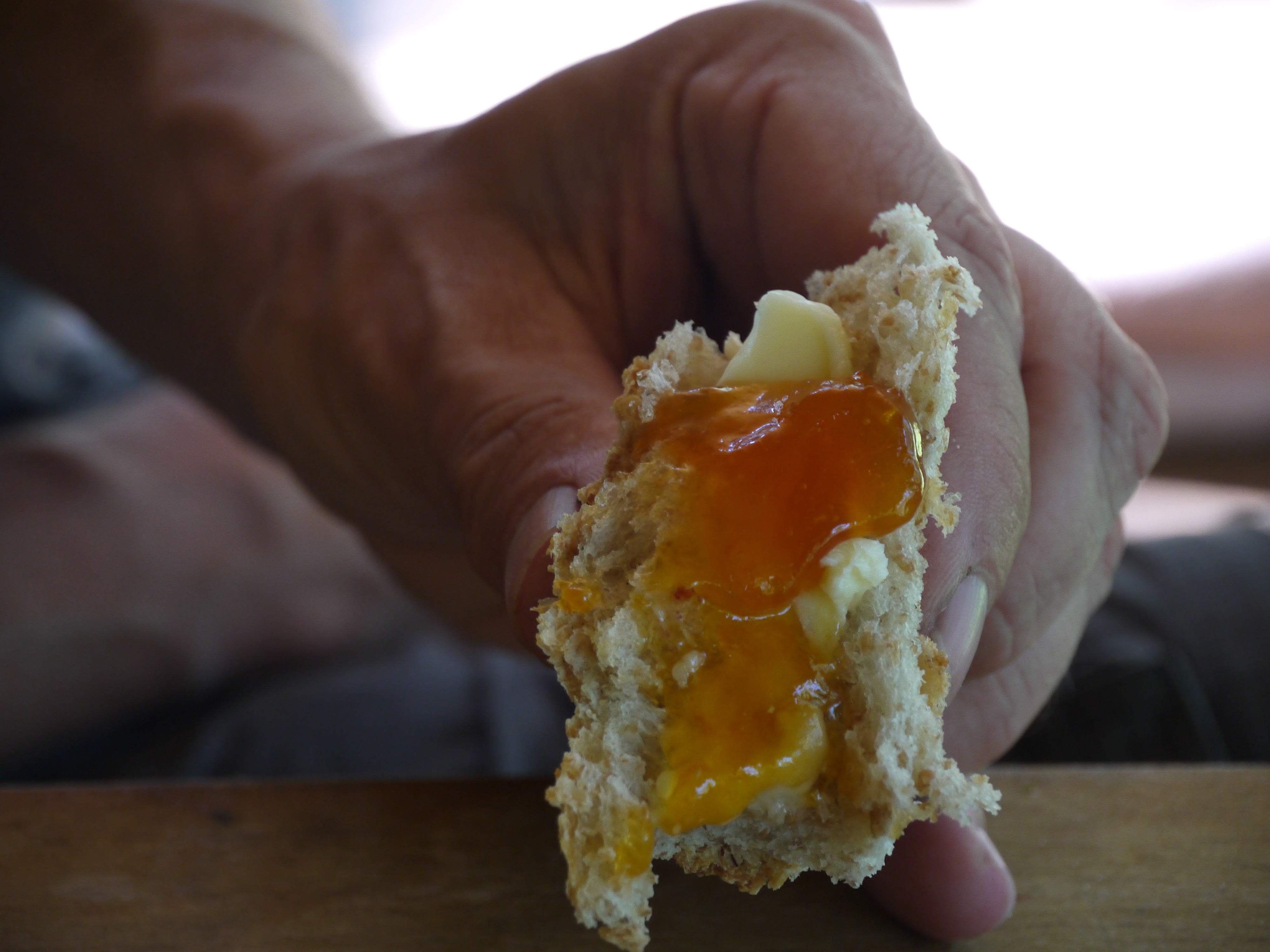
bread with jam - trust in kim

My Oma -trust in kim
My Oma

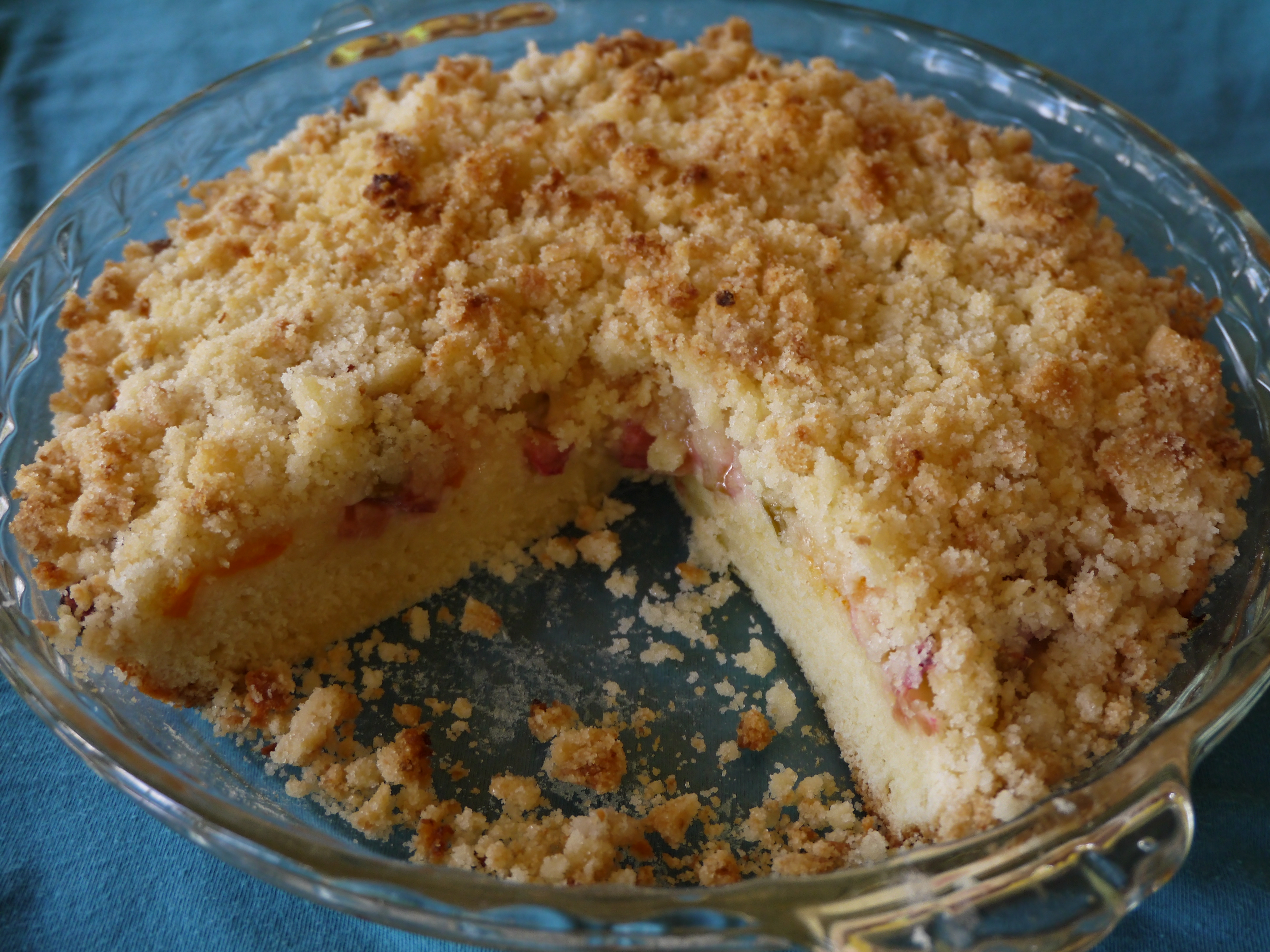
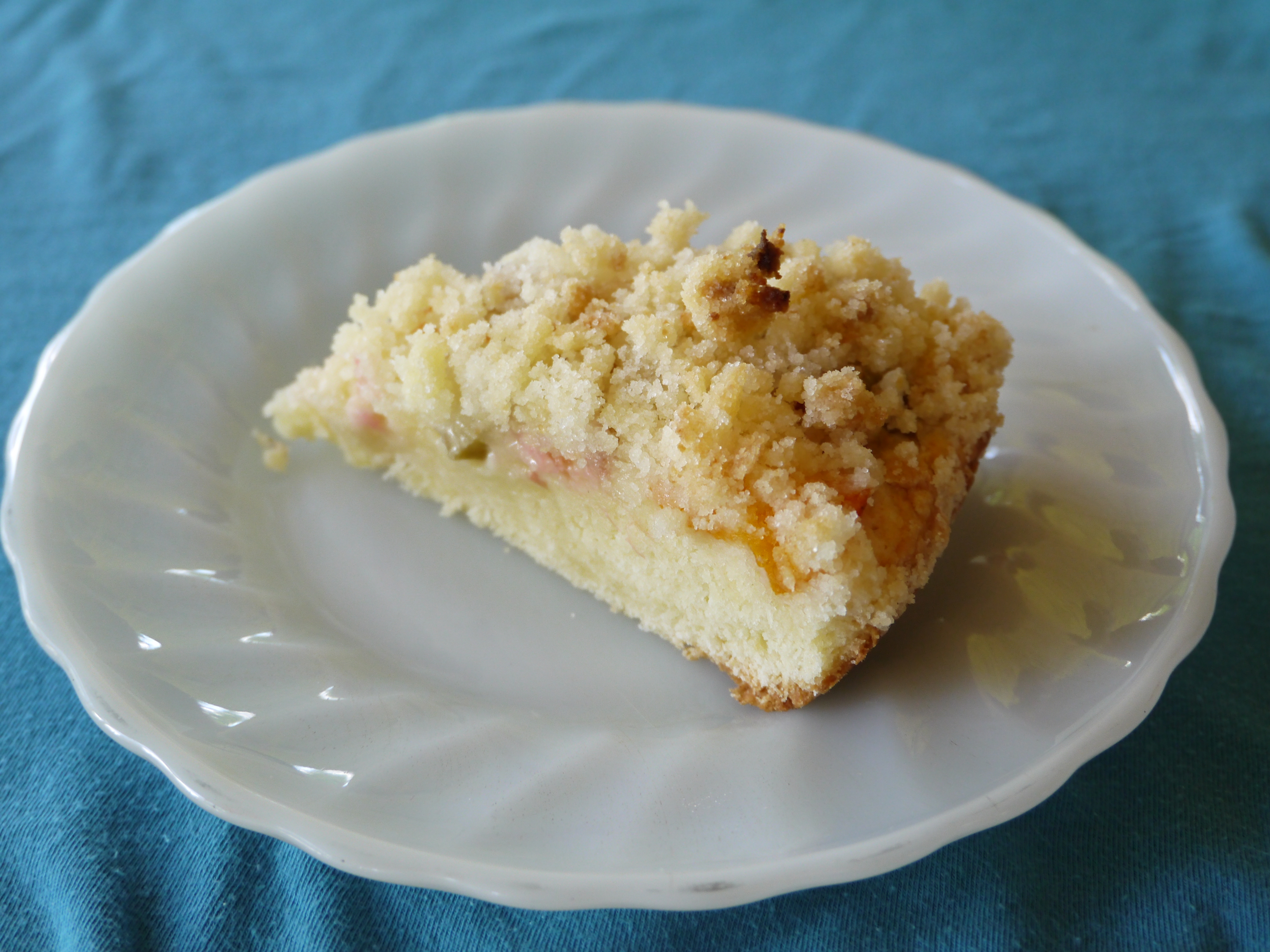
Mom’s Rhubarb-Apricot Platz


Mom's Apricot Platz - trust in kim


This is a recipe I grew up eating: my Mennonite Mom’s platz.  It is a thin coffee cake with fruit and streusel on top.  Sometimes on the second day the cake layer would get  a bit dried out, but I didn’t mind too much because the fruit and streusel were so yummy.  For this recipe I used a combination of rhubarb and apricots, but plums are another favourite.

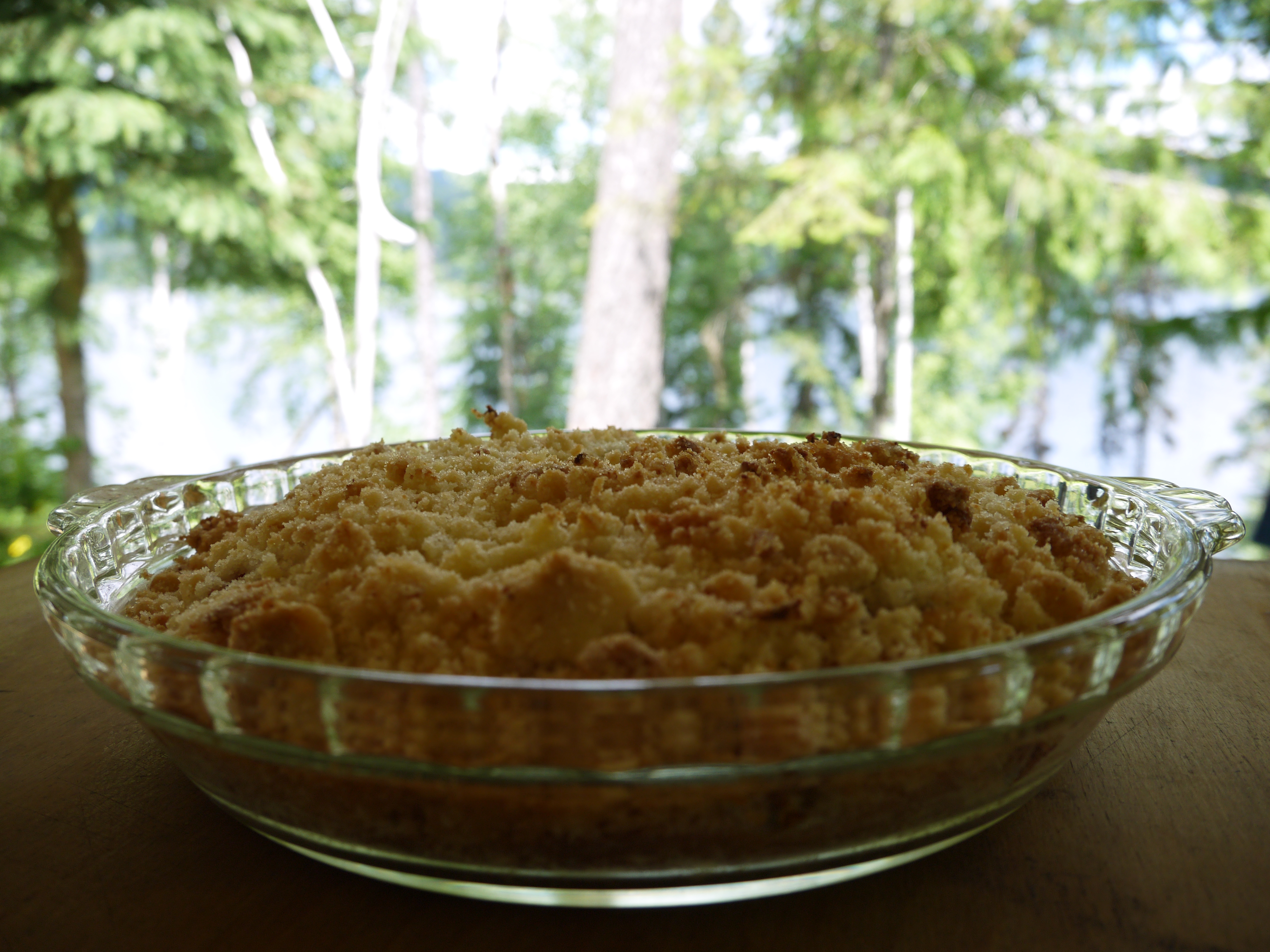
Even though the photos show a thick round cake, I grew up with it baked thinly in rectangular form, which was cut into squares.

What you need for the cake:

1/2 cup butter (the original recipe called for crisco or margarine)

1/2 cup sugar

2 cups all-purpose flour

3 teaspoons baking powder

1/2 teaspoon salt

1 egg

about 1/2 cup milk

2-3 cups chopped fruit of your choice

What you need for the streusel:

1/4 cup melted butter

1 cup sugar

3/4 cup flour

pinch salt

splash of vanilla

What you do:

1. Preheat the oven to 35oF.

2. To make the cake, cream the  1/2 cup butter and 1/2 cup sugar well.

3. Combine the flour, baking powder and salt.

4. Crack the egg into a measuring cup and mix it up a little with a fork.  Add enough milk to the measuring cup so it reaches the 2/3 cup mark.

5. Mix in some of the liquid and alternate with the dry ingredients. Spread this mixture in the bottom of a buttered 9 x 13 inch pan.

6. Spread the fruit on top of the batter.

7. To make the streusel topping just combine all the ingredients; my mom says to do it with a whisk, but I just used a fork and then mixed it with my hands, and then sprinkled it on the cake with my hands.

8. Bake for 35-40 minutes.

apricot platz - trust in kim

rhubarb platz - trust in kim

Apricot Almond Cake

almond apricot cake - trust in kim

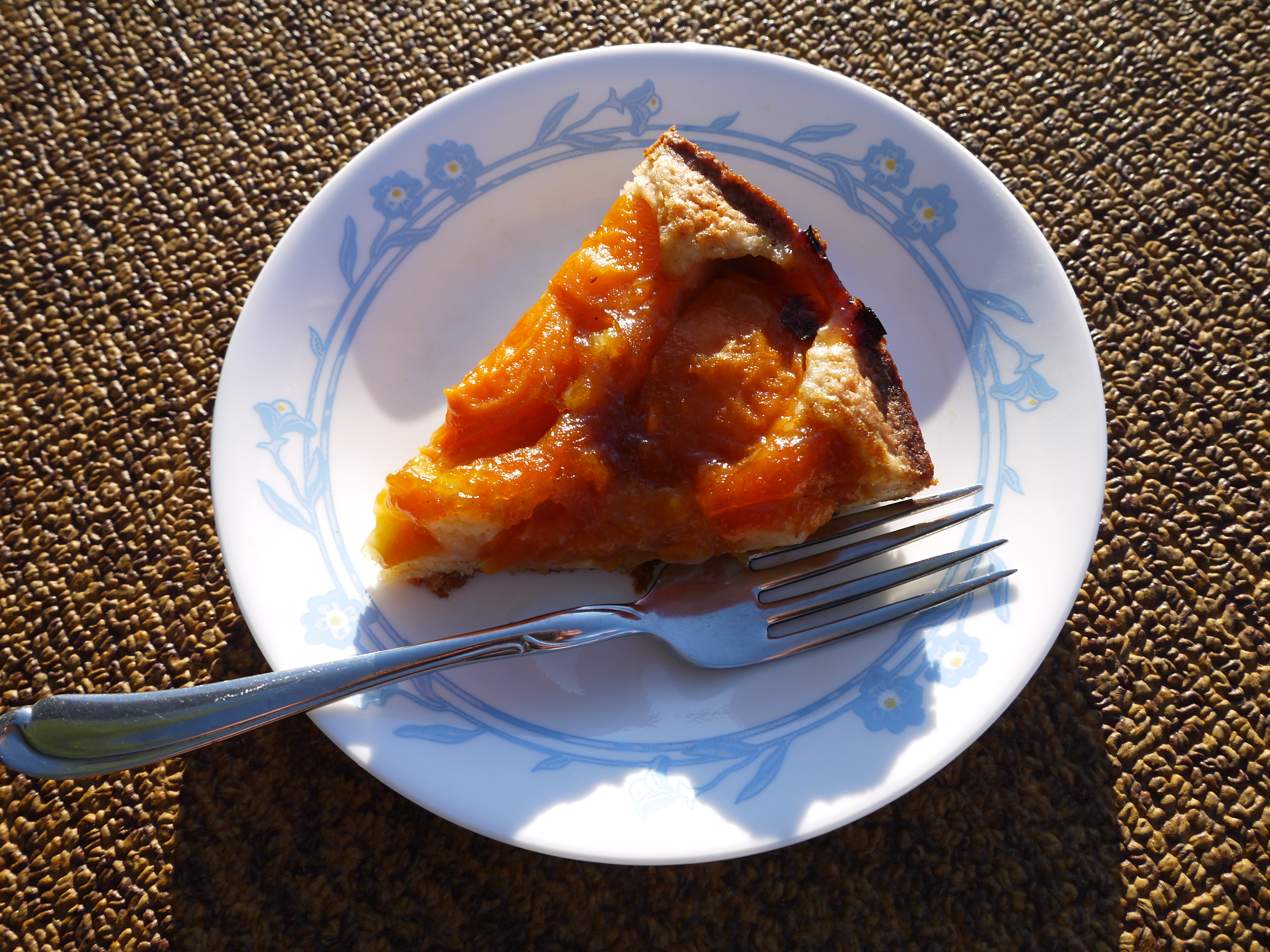
A big bowl of apricots was sitting in my kitchen ripening, and it was crying out to be made into a cake.  I searched around quite a bit fora recipe that looked more interesting than the usual, and found this gorgeous one on hungryrabbitnyc.com. What I love so much about this recipe is the addition of ground almonds and almond extract in the cake, and the use of rum and apricot jam to bring out the flavour in the apricots. It tasted amazing when it was still slightly warm, and surprisingly good the next day.  I can imagine it would also be really good with plums or nectarines on the top instead of apricots.

What you need:

2 tablespoons apricot preserve

3 tablespoons dark rum

1 pound apricots, halved and pitted

3/4 cup sugar

1/3 cup ground almonds

3/4 cup  unbleached all-purpose flour

1/2 teaspoon baking powder

1/4 teaspoon salt

6 tablespoons/3 ounces unsalted butter , cut into 6 pieces, slightly softened

1 large egg , room temperature

1 large egg yolk , room temperature

1 teaspoon vanilla extract

1/2 teaspoon almond extract

icing sugar for serving (optional – I forgot to sprinkle it on)

What you do:

1. Heat the apricot preserve and the rum in a large saucepan on medium heat.  Add the apricots, cut side down, and cook without touching them for 5-7 minutes, or until they begin to release their juices. Put these aside while you prepare the cake batter.

2. Prepare a 9-inch springform pan by greasing and flouring it.  Heat the oven to 350F, with the rack in the middle of the oven.

3. Combine the sugar, ground almonds, flour, baking powder and salt in a food processor.  (I did this by hand because I was at a cabin without all the gadgets, and it worked fine that way.)  Add the butter and combine until it is the texture of coarse sand.  Add the egg and extra yolk, along with the vanilla and almond extracts, and mix just until combined.

4. Spread the batter into the prepared pan, using a spatula to even out the surface. Carefully stir the apricot mixture to coat the fruit with the rum glaze, then arrange the fruit on top of the batter.  In the original recipe it looks like they are arranged cut side up, but I put mine on cut side down because I wanted to show off the bit or redness in the apricot skins.

5. Bake for 40-50 minutes, or until an inserted toothpick comes out with just a few crumbs attached but is not doughy.  Run a sharp knife around the edge of the cake, then allow it to sit for half and hour before releasing it from the pan.

Sprinkle the icing sugar on top if you wish, then serve delicious wedges of cake.

apricot almond cake slice - trust in kim

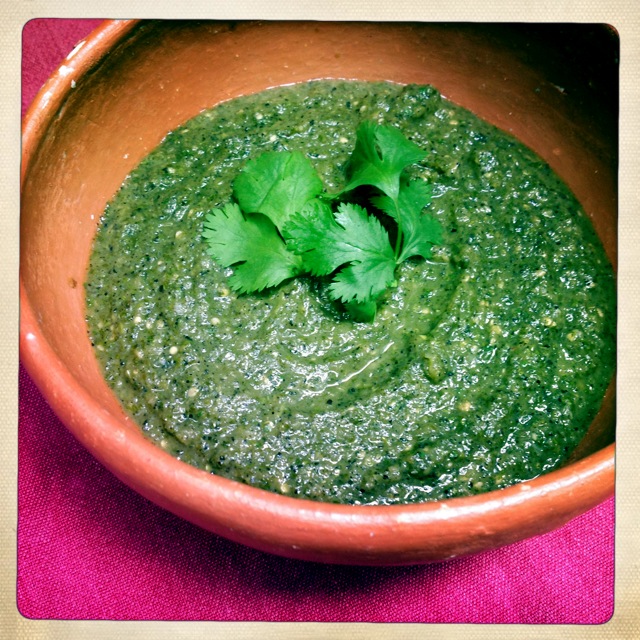
Tomatillo Salsa

tomatillo salsa - trust in kim

Here’s another recipe I got from the awesome cooking class I took in Tulum Mexico with Eric Fischer at Altamar Restaurant.  It’s not too spicy, and you can alter that by adding more or less pepper.  I served it with Mexican Barbecued Chicken, and it is also great on tacos.  The key to the flavour here is roasting the tomatillo, onion and chili peppers over a flame; I did this on my gas stove, but a barbecue works great too.  You can keep this in the fridge for a few days.

What you need:

500 grams tomatillo

1 small sweet white onion

20 grams cilantro

1 jalapeno and 1 banana pepper

20 grams garlic

2 grams salt

2 grams black pepper

olive oil

What you do:

1. Roast the onions over a flame, turning often, until the outside is blackened and the inside is soft, about half and hour.

2. Roast the peppers until blackened then put them in an airtight container for about 15 minutes.  Remove most of the skin along with the stem.

3. Roast the tomatillos until they are lightly blackened.

4. Put everything into a blender and mix well.

5. Preheat a pot then add some olive oil and cook the sauce for 7-10 minutes.

6. Allow the sauce to cool, then store it in the fridge.

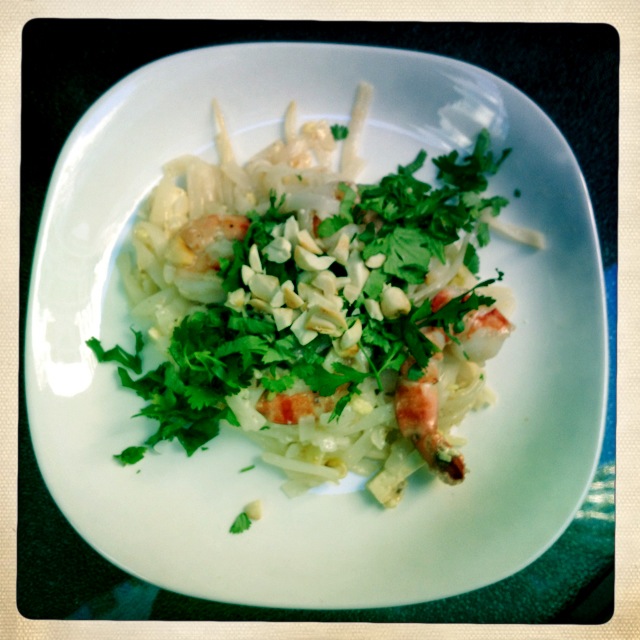
Pad Thai with Shrimp and Tofu

pad thai - trust in kim

Having tried several pad thai recipes, and not finding them to my liking, I assumed all my pad thai eating would be from a restaurant.  Or in Thailand, where I’d love to take  cooking classes one day…

This recipe, from Cook’s Illustrated April 2013, is definitely a winner.  The other recipes I’ve tried were bland or ketchuppy, while this one had lots of flavour, and no ketchup.  Real pad thai doesn’t contain ketchup, so don’t be tempted to substitute, no matter how many recipes you see online for pad thai with ketchup.  The real ingredient is tamarind paste or concentrate; I got mine in Mexico, but I’ve seen it in Vancouver in Filipino shops. If you’re in Vancouver I’ve heard you can also get it at T&T and Famous Foods.

What you need for the sauce:

1 tablespoon (I added extra) tamarind concentrate mixed with 2/3 cup boiling water, or 2 tablespoons tamarind paste with 3/4 cup boiling water

3 tablespoons fish sauce

3 tablespoons sugar

2 tablespoons vegetable oil

1 tablespoon rice vinegar

3/4 teaspoon cayenne pepper

For the noodles, shrimp and tofu:

8 ounces/225 grams of 1/4 inch wide rice noodles

12 ounces/ 340 grams medium shrimp

4 ounces/120 grams extra-firm tofu, cut into 1/4 inch cubes or thinner, longer strips like I did

salt and pepper

pinch of salt

2 tablespoons vegetable oil

3 garlic cloves, minced

1 shallot, minced

2 large eggs, slightly beaten

6 ounces/ 170 grams/ 3 cups bean sprouts

1/4 cup dry-roasted peanuts plus extra for garnishing

3 scallions, sliced thin on bias

1/4 cup cilantro

lime wedges

What you do to make the sauce:

1. If you are using the tamarind PASTE you need to let it soak for about 10 minutes, then run it through a fine-mesh sieve to remove the fibres.  I used the CONCENTRATE, so it was easier; I just had to add the boiling water.  Stir in the rest of the sauce ingredients and set aside.

What you do to make the noodles, shrimp and tofu:

1. Bring a large pot of water to a boil.  Remove it from the heat and let the noodles sit in the hot water for about 10 minutes, until softened but not mushy.  Drain the noodles and set them aside.

2. Toss the shrimp with 1/8 teaspoon each of salt and pepper, and a pinch of sugar.  Heat a tablespoon of oil in a large frying pan. Add the shrimp in a single layer and cook without stirring for about a minute, then flip them over and cook for about another 30 seconds.  Transfer the shrimp to a bowl with a cover and set aside.

3. Add a tablespoon of oil to the pan along with the garlic, shallot, and 1/8 teaspoon of salt, and cook on medium heat until they are golden brown.  Add the eggs and cook while stirring constantly for about 20 seconds, and the eggs are barely moist.

4. Toss in the drained noodles, then add the sauce.  Increase the heat to high and cook while tossing the noodles constantly for about one minute, until the noodles are evenly coated.  Add the bean sprouts, peanuts, and all but 1/4 cup of scallions.  Continue to cook, tossing constantly for about 2 minutes, or until the noodles are tender.

5. Add the shrimp and tofu to the pan and cook until heated through, about 30 seconds.

To serve, put the noodles on a large platter and garnish with the remaining scallions, peanuts and cilantro.  Serve with lime wedges.

Fudgey Oat Bars

oat fudge bar - trust in kim

Over 20 years ago a friend’s mom made these awesome oat fudge bars, and she gave me the recipe.  They were called Mrs. Larson’s bars, and they were awesome!  This mom wasn’t named Mrs. Larson, and I have no idea who she is, but I love her bars.

I hadn’t made these for many years, and I wanted to bring a treat to work the other day, so I pulled out the recipe.  Having tried an chocolate oat fudge bar at Starbucks, I was curious about how similar their recipe was.  I found a few recipes for imitation Starbucks Oat Fudge bars, and they all seem really close or exactly like this one. People at work all said these were better than Starbucks’ – but then homemade usually is, isn’t it? Because you know someone cared enough to take the time to bake for you.

Lots of people at work asked for the recipe, so here it is!  I changed the name from Oar Fudge Bars to Fudgey Oat bars, because let’s face it, we’re all here for the chocolate.

What you need for the base:

1 cup unsalted butter

2 cups brown sugar

2 eggs

2 teaspoons vanilla

2 1/2 cups flour

1 teaspoon baking soda

1 teaspoon salt

3 cups rolled oats
What you need for the chocolate:

12 ounces/340 grams semi-sweet chocolate chips

1  14-ounce can of sweetened condensed milk

2 tablespoons butter

1/2 teaspoon vanilla

1/2 teaspoon salt

What you do to make the base:

1. Prepare a 9 x 13 inch pan or two 8-inch pans by spreading a little butter in them.

2. Cream the butter and sugar well, then add the eggs and vanilla and beat well.  Beat in the flour, baking soda and salt, then mix in the oats. Add about 2/3 of the batter to the pan, reserving the rest for the top.

What you do to make the chocolate filling:

1. Preheat the oven to 350F.

2. Put all the ingredients in the top of a double boiler or in a bowl on top of a pot of water on the stove.  Let it melt, then pour it  on top of the base.

3. Add the rest of the base to the top of the chocolate mixture – I do this using my hands, to make sure none of the pieces are too big.

4. Pop it in the oven and bake for 20-22 minutes, when the top is getting a little browned.

Let it cool, then slice away! Yum!

Eggs with Veggies and Guajillo Chili Salsa

eggs with veg and guajillo chili - trust in kim

For breakfast this morning I took a little inventory of the fridge contents and made up this meal.  It’s just some fried veg mixed with guajillo chili salsa, and added to some scrambled eggs.  Feel free to substitute for another kind of salsa, and substitute mushrooms or tomatoes if you have them. It is, after all, a clean-out-the-fridge recipe. Use what you’ve got!

The amounts really depend on how many people you are serving, and how much you like the various ingredients.  The amounts suggested in brackets are for two people.

This recipe draws on the omelette-making I learned about in Spain, and the Mexican cooking I learned about with Eric Fischer at Altamar Restaurant in Tulum, Mexico.

What you need:

eggs, lightly beaten with a fork (4)

sweet onion, chopped (1/4 cup)

red bell pepper, chopped (1/2 a pepper)

garlic, finely minced (2 cloves)

avocado, chopped (1/2 an avocado)

olive oil (2-4 teaspoons)

salt and pepper to taste

guajillo chili salsa (or another salsa or some hot sauce) (2 teaspoons)

What you do:

1. Heat a little olive oil in a frying pan on medium heat. Add the onions and cook for about 2 minutes, then add the peppers and cook for a few more minutes.  If the pan is getting a little dry you can add some water to let the peppers soften up a little.  Add the garlic and cook for about another minute. Add some salsa and mix it in.

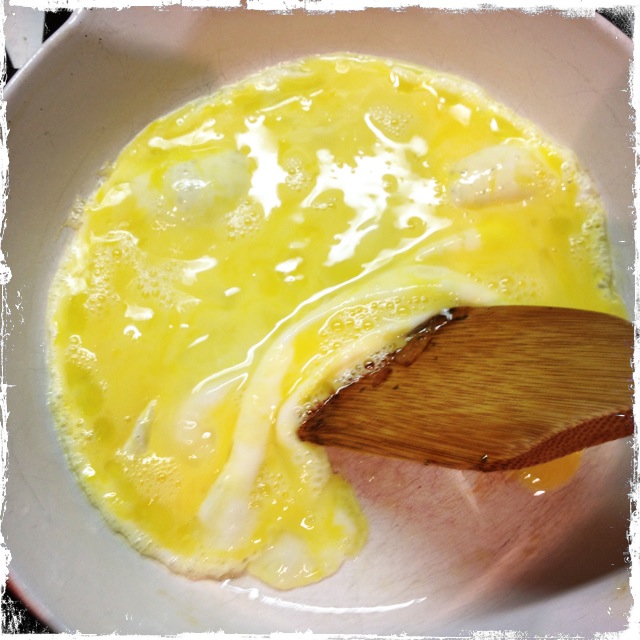
2. In another fying pan, heat some olive oil to medium-high heat.  Add the egg and let it bubble a little.  Rather than stirring the eggs around, push them away from the edge of the pan and let the uncooked egg move to the edges of the pan.  When the egg is just cooked, serve it alongside the veggies.  Serve immediately with some avocado on top!cooking eggs - trust in kim

Turkey & Zucchini Burgers

Snapseed

The other day the sun was shining, so we wanted to make something to go on the barbecue.  We ended up frying these turkey burgers on the stove-top because we wondered if they would hold together on the grill.  In retrospect, after we let them sit while waiting to cook them, they ended up holding together quite well.  I would recommend oiling the grill really well if you’re going to barbecue them. The original recipe, in Jerusalem by Yotam Ottolenhi, says you can get 18 burgers out of this recipe.  When he says burgers, he means tiny little meatballs 9which would probably make a great appetizer).  If you are making a real burger, the kind with the regular-sized bun, you can make more like 4-6 patties.

Now, about the taste – so good! So juicy! And healthier than a lot of other barbecue options. The sumac and sour cream sauce is excellent.  The original recipe doesn’t have green onions in it, but I had a happy accident when I added the green onions meant for the burgers to my sauce instead.  So feel free to make the sauce with or without green onions.   I also used only yogurt in my sauce; use 1/2 cup sour cream and 2/3 cup yogurt if you want to follow Ottolenghi’s recipe.

What you need for the burger:

500 grams ground turkey

about 2 cups coarsely grated zucchini

3 thinly sliced green onions

1 large egg

2 tablespoons chopped mint

2 tablespoons chopped cilantro

2 cloves garlic, crushed

1 teaspoon ground cumin

1 teaspoon salt

1/2 teaspoon black pepper, freshly ground

1/2 teaspoon ground cayenne pepper

sunflower or vegetable oil for frying (unless you grill)

hamburger buns of your choice; I used focaccia buns

What you need for the sour cream and sumac sauce:

1 cup Greek yogurt (just strained some of my homemade yogurt)

1 teaspoon grated lemon zest

1 tablespoon grated lemon zest

1 small clove garlic, crushed

1 & 1/2 tablespoons olive oil

1 tablespoon sumac

1/2 teaspoon salt

1/4 teaspoon black pepper, freshly ground

2 green onions, chopped (optional)

What you do for the sauce:

1. Mix all the ingredients together and set aside until needed, refrigerating if it’s going to be a while before you use it.

What you do for the burgers:

1. Combine all the ingredients for the meat patties, except for the oil for frying.  Mix with your hands and form into patties.

2. If you are pan-frying, preheat the oven to 425F. Pour a little oil into the pan, heat over medium until hot, then add the patties. Sear each side until it is nice and brown, then put the pan into the oven (or on another surface if your pan can’t go into the oven) and let them bake for 5-7 minutes.  In the meantime you can be toasting your buns, if you wish.

3. Serve with some of the sauce on top, and a salad on the side. Some options are found here and here.

Check out this posting if you want to see how to re-grow your green onions.

Chili Guajillo Salsa

chili juahillo sauce - trust in kim

I learned to make the most amazing guajillo chili sauce at a cooking class at Altamira Restaurant in Tulum, Mexico. Chef Eric Fischer showed us how to make this, and we tasted it with shrimp tacos and nopal cactus empanadas.  I recently served it with Mexican barbecued chicken, rice and beans, and it was awesome. The chef said it is also great if you spread it on chicken and bake it, or on seafoods such as shrimp, squid, mussels or scallops, and then serve it on pasta.

What you need:

1/3 cup olive oil

2 tablespoons finely minced garlic

salt and pepper

1/2 cup white wine

2 dried guajillo chili peppers, cut into strips

1/4 cup parsley finely chopped

What you do:

1. Heat the olive oil in a frying pan, then add the garlic.  Move the garlic around so it doesn’t burn, and add a big pinch each of salt and pepper.  When it starts to just get brown around the edges, add the wine.  Add the chili strips  – I removed the seeds from one pepper, and it was medium- hot, so you can add more or less of the seeds depending on your heat tolerance. Let this simmer for a few minutes.

2. Remove from the heat and put it in a blender with the parsley, or use an immersion blender, as I did. Taste and see if you think it needs more salt.

This should be kept refrigerated until you plan to use it, and should last a week if not more in the fridge.

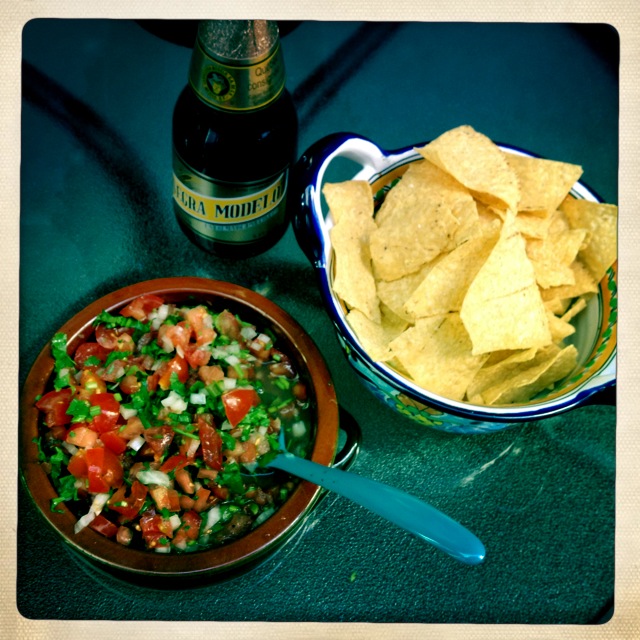
Mexican “Mother” Sauce – salsa fresca

salsa fresca - trust in kim

I’ve made the classic salsa fresca, or pico de gallo, many times before. This recipe is very similar, but I got it from a cooking class I took at Altamira Restaurant in Tulum, Mexico with chef Eric Fischer.  He called it the Mexican Mother Sauce, because it goes with everything. The thing I learned about salsa fresca from his class was that you don’t use the tomato seeds; not a big deal, but ends up being way less watery that way.

What you need:

100 grams tomato, diced, without seeds

50 grams sweet white onion, diced

5 grams cilantro, chopped

50 ml lime juice

2 grams serrano chili, finely minced

a large pinch each of salt and pepper

What you do:

1. Put everything in a bowl and stir it up.  Check the seasoning and add salt and pepper to taste.

Refrigerate until you use it.

Serve with tortilla chips, or on the side of a meal with beans and rice.