Spinach Salad with Glory Bowl Dressing

spinach salad with glory bowl dressing - trust in kim

This is my favourite salad dressing.  It is a really simple salad, but so good, and makes me wonder why anyone would buy a salad dressing.  This dressing is so perfect on spinach, and it makes a great side to almost anything.

What you need for the dressing:

1/4 cup nutritional yeast

3 tablespoons tamari or soy sauce

3 tablespoons apple cider vinegar

3 tablespoons water

1 tablespoon tahini

1 clove garlic, crushed

1/3 cup vegetable oil (the recipe calls for 1/2 cup canola)

What you need for the salad:

spinach

mushrooms, thinly sliced

What you do:

  1. Combine all the dressing ingredients in a blender, or use a stick blender to combine.
  2. Dress your salad with a few tablespoonfuls of dressing. The remainder of the dressing can be refrigerated for a few weeks.

Tomato Soup

tomato soup - trust in kim

(Revised January 2021: This is a great soup recipe, however, my favourite is closer to the actual Burgoo recipe. And it has red wine in it! Click here to find the recipe.)

Burgoo is a great comfort food restaurant in Vancouver.  They don’t have a lot of dairy-free options, so I tend to eat the tomato soup – which is the best tomato soup I’ve ever had!  I found this tomato soup recipe recently and omitted the milk to make it a dairy-free tomato soup.  I think it may be as good as the one I had at Burgoo; it is flavourful, and full of healthy ingredients.  It is also really easy to make, and freezes well.

What you need:

1 tablespoon olive oil

about 1 cup diced carrots

about 1/2 cup diced celery

about 2 cups diced zucchini (skin on)

1 large yellow onion, diced

5 cloves garlic, minced

1 tablespoon fresh thyme leaves, rubbed off the stems

2 bay leaves

salt and red pepper flakes to taste

about 4 cups (2 28-ounce cans) crushed Italian tomatoes

4 cups chicken (or vegetable) broth

What you do:

  1. Heat the olive oil in a large pot.  Add the carrots, celery, zucchini and onion.  Saute for 10-12 minutes, until the onion is very soft and the zucchini has cooked through.  Add the garlic and stir for one minute.
  2. Add the thyme, bay leaves, red pepper flakes, tomatoes and chicken stock.  Bring to a simmer and cook for about 30 minutes, until the carrots are very soft.
  3. Remove from the heat, and take the bay leaves out.  Blend the soup in a blender or with an immersion blender until smooth.  Add salt to taste.

Enjoy it hot! And I can imagine it is awesome with a grilled cheese sandwich, but this theory is yet untested.

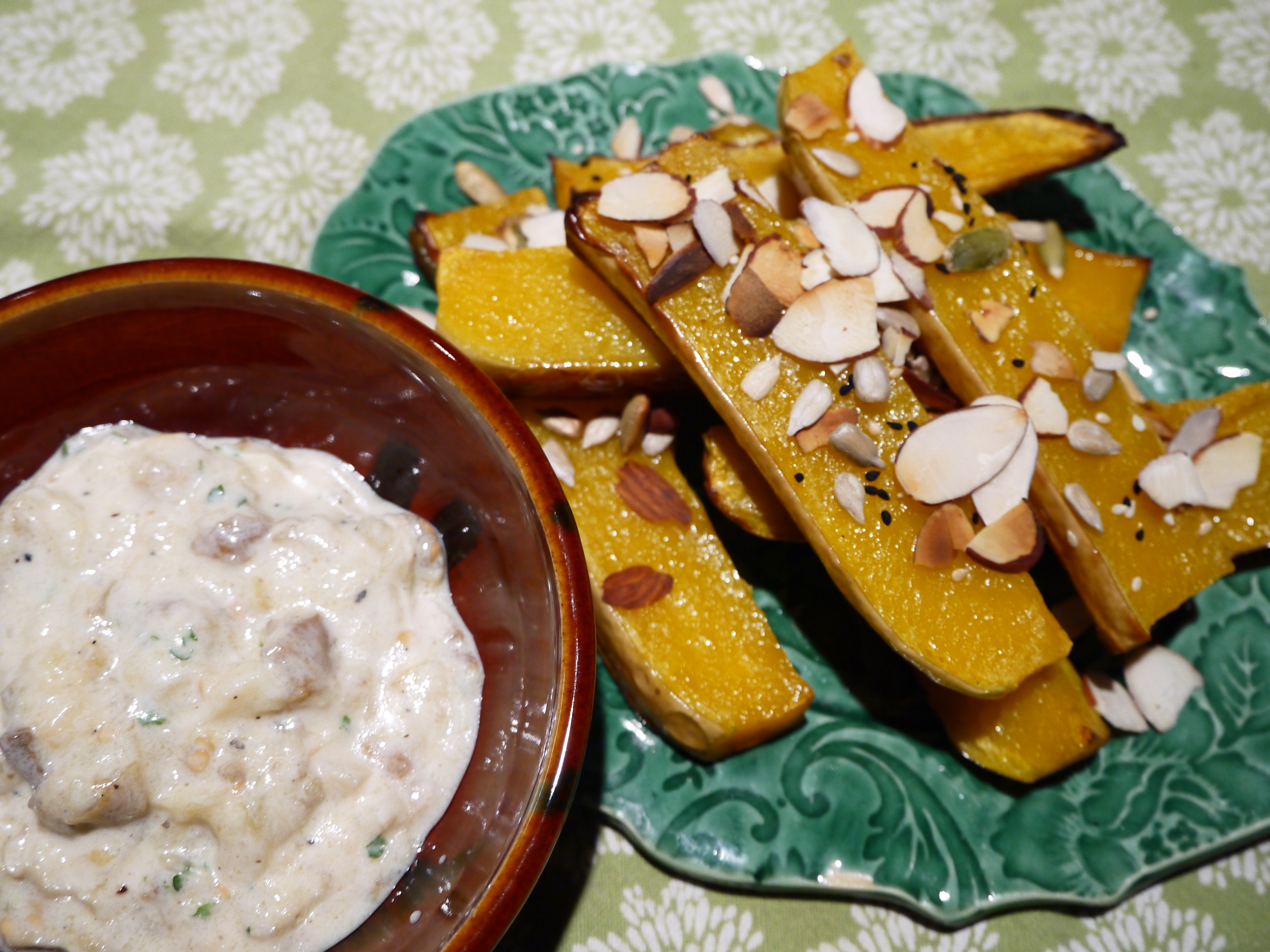
Roasted Butternut Squash with Burnt Eggplant and Pomegranate Molasses

yotam ottolengi butternut squash - trust in kim

Fall is here, so here’s a Yotam Ottolenghi recipe that is delicious and comfort-foody.  It isn’t the simplest recipe, as you have to bake the squash, burn the eggplant (doesn’t sound yummy but it is) and make it into a sauce, plus toast some nuts and seeds.  But if you love to cook you’ll probably enjoy making and eating this one.  The recipe is from Ottolenghi the Cookbook. (Thank you John for this fabulous surprise birthday gift – he saw me oohing and awing over it, and went back and bought it for me.)

I found it wasn’t necessary to add all the oil that the recipe called for, so I cut the oil content from 6 tablespoons to 3.  Feel free to add more oil if you wish.  The cookbook says to let the squash cool before serving, but I changed the order of the preparation so I could take the squash out of the oven last and serve it hot.

What you need for the squash recipe:

1 large butternut squash

2 tablespoons olive oil

1 tablespoon pumpkin seeds

1 tablespoon sunflower seeds

1 tablespoon black or white sesame seeds

1 teaspoon nigella seeds (if you can’t find them it is still so delicious without)

3 tablespoons sliced almonds

1/2 cup basil leaves (I forgot to buy these! but it was good without them too)

salt and pepper

What you need for the burnt eggplant recipe:

1 medium eggplant

2/3 cup Greek yogurt (I used my regular yogurt)

1 tablespoon olive oil

1.5 teaspoons pomegranate molasses

3 tablespoons lemon juice

1 tablespoon coarsely chopped flat-leaf parsley

1 clove garlic, crushed

salt and pepper

What you do:

1. Set the oven temperature to 350F.  Sprinkle the seeds and nuts on a baking sheet and toast for 8-10 minutes or until slightly browned.

2. To make the sauce begin by placing the eggplant over a flame – on your stove-top if you have gas, on a barbecue if you don’t, and in the oven if you have neither of those.  Burn the eggplant for 12-15 minutes, turning with tongs from time to time.  The skin should be dry and cracked, and you should smell a smoky aroma.  If you do this in the oven it will need a much longer cooking time.

3. Make a long cut through the eggplant and scoop out the flesh, doing your best to avoid the burnt skin.  Drain in a colander for 10 minutes, then chop coarsely. (you could get the eggplant into the oven now if you want-see step 5 )

4. Stir together the eggplant, yogurt, oil, pomegranate molasses, lemon juice, parsley and garlic.  Mix together and add salt and pepper to taste.

5. Raise the oven to 425F.  Cut the butternut squash in half lengthwise and remove the seeds. Cut into wedges that are about 2cm thick.  Arrange the squash on a baking dish preferably with the skin side down and brush with a tablespoon of olive oil. Season generously with salt and pepper.  Bake for 25 – 30 minutes, or until the wedges are tender and slightly browned.

6.  Arrange the squash slices on a serving platter and drizzle with a little olive oil.  Sprinkle the nuts and seeds on top, then garnish with the basil.  Serve with the sauce on the side.

Enjoy!

Roasted Cauliflower with Tomato, Dill and Capers

Roasted Cauliflower with dill, tomatoes and capers - trust in kim

Here’s a fabulous vegetable recipe that you will love if you enjoy cauliflower.  I’ve changed the recipe a little (from Ottolenghi the Cookbook) by roasting the cauliflower instead of steaming and then frying it, as the recipe calls for.  I love the flavour you get when you roast cauliflower, and the method in the cookbook was too many steps for me at the time.  I was happy with the results, as was my sweetheart who was dining with me. I also used less oil in the dressing: 1/4 up instead of 1/2 a cup.  Even 1/4 cup  in one vegetable recipe seems like a lot of oil to me. Anyways, another yummy vegetable recipe that I will definitely make again.

What you need:

2 tablespoons capers, drained and chopped coarsely

1 tablespoon French whole-grain mustard

2 cloves garlic, crushed

2 tablespoons cider vinegar

1/4 cup olive oil

1 cauliflower divided into florets

1 tablespoon chopped dill

1 & 2/3 cup baby spinach leaves

about 20 cherry tomatoes, halved

salt and freshly ground pepper

What you do:

1. Preheat the oven to 425F.  Place the cauliflower florets on a baking pan and roast for 20-30 minutes, or until they are nicely browned.  You’ll want to check on them halfway through and give the pan a bit of a toss.

2. To make the dressing mix the capers, mustard, garlic, vinegar, and some salt and pepper.  You can do this in a food processor, with an immersion blender as I did, or if you’re feeling energetic you can just use a whisk.  Add the olive oil slowly while blending, until the dressing is thick and creamy.

3. Cut the tomatoes in half, and wash and dry the spinach and chop the dill.  When the cauliflower is done combine it with the dill, spinach, tomatoes and dressing.  Add more salt and pepper if needed.

Serve warm or at room temperature. Enjoy!


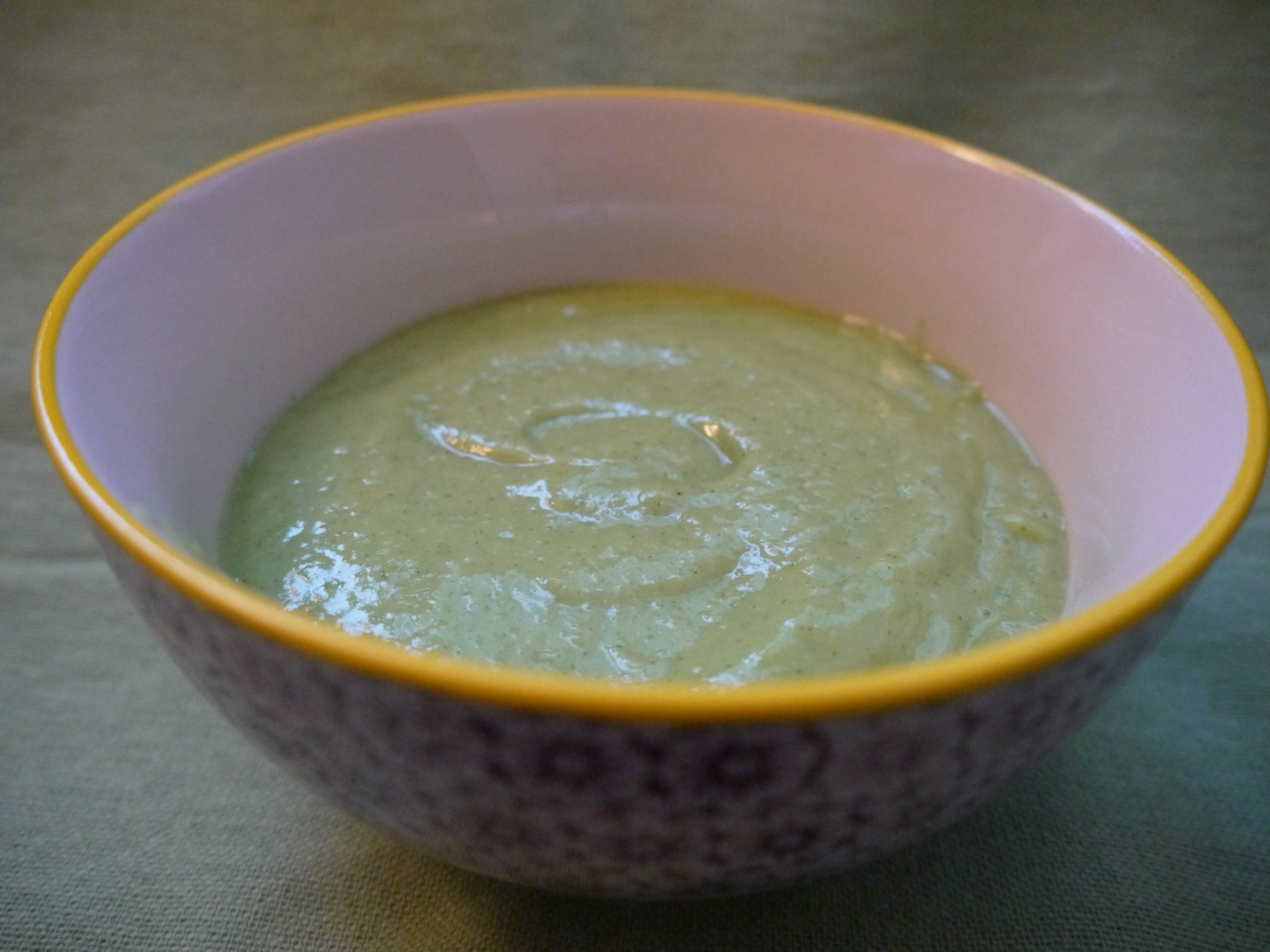
Guacamolata – Avocado Sauce

guacamolata avocado sauce - trust in kim

When I was in the Yucatan earlier this year I found a lot of places serving this runny avocado sauce with their tacos and some other dishes like eggs and fish. It is creamy, yet without any dairy.  When I took a cooking class at Altamar Restaurant in Tulum, the chef told me the ingredients for the sauce, which he called guacamolata.  Last night I was making several salsas to serve to company, so I gave this one a try.  It’s a nice light tasting sauce that doesn’t overpower the rest of the food you are drizzling it on, and a pretty colour too! People who aren’t into spicy foods will appreciate this option.  I served it with a spoon in it so that people could drizzle it on the chip they had dipped into the spicier salsa, to take a bit of the power out of the spice.

What you need:

1 ripe avocado (you know it’s ripe when you can press the little stem in easily – it should still be somewhat firm)

2-3 tablespoons chopped onion (I also used some grilled onion)

2-3 tablespoons chopped cilantro

juice of 1/2 lime

water to make it runny

salt to taste

What you do:

1. Put the avocado, onion, cilantro, lime juice and some salt into a bowl.  Add a little water and use an immersion blender to blend it together (or put it all in a blender).  Add more water until it is a very smooth and somewhat runny sauce.  Taste and add more of whichever ingredient you think it requires.  For serving with fish you can add more cilantro.

The sauce retains its green colour even if you don’t use it right away, so you can store it in the fridge for a few days.

Here is a picture of my breakfast at la Bruja on Isla Mujeres, Mexico, with some of this avocado sauce.
Here is a picture of my breakfast at la Bruja on Isla Mujeres, Mexico, with some of this avocado sauce. 


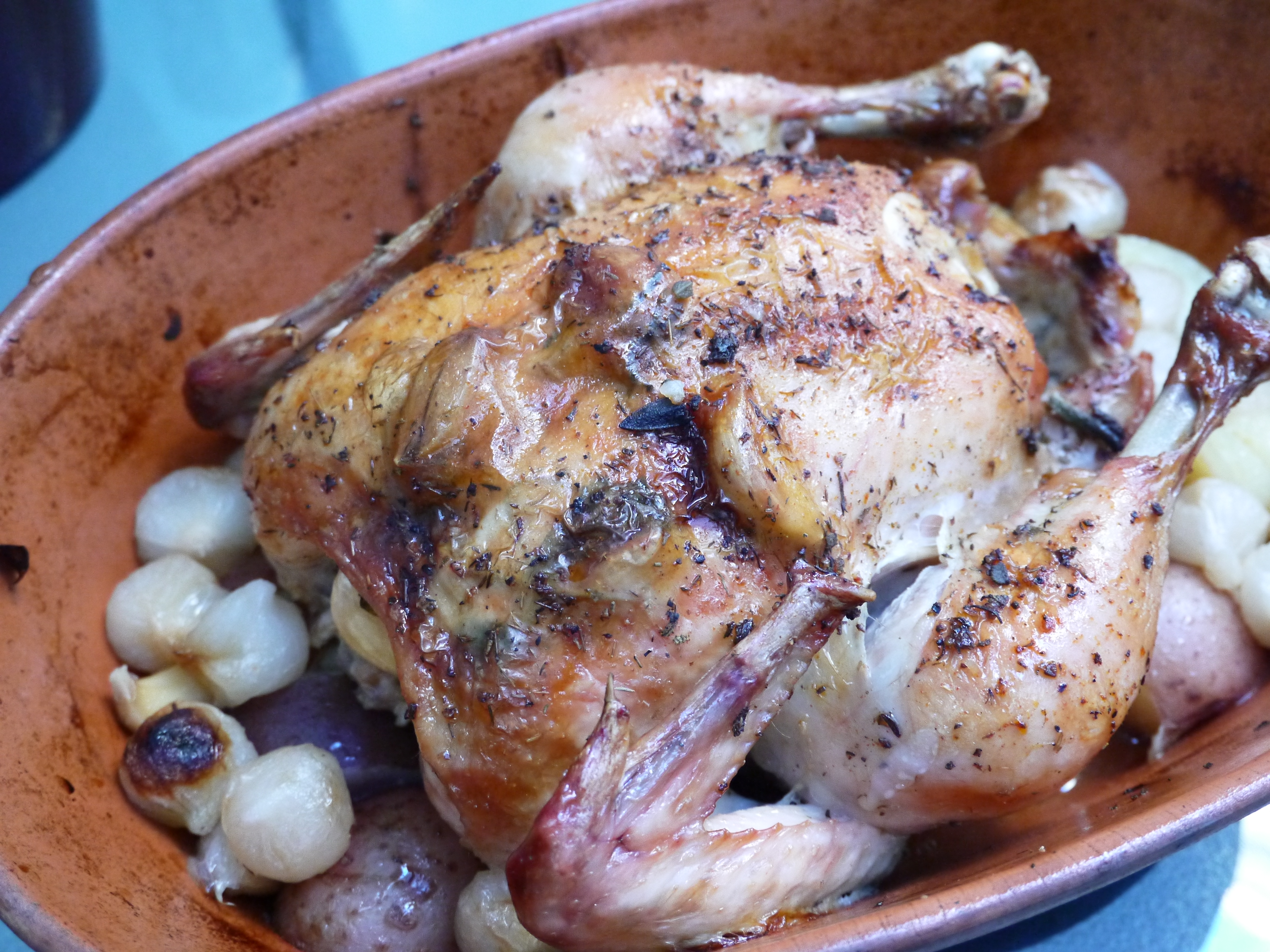
Romertopf Roasted Chicken

romertpf roasted chicken - trust in kim

Ah, roast chicken, comfort food and so easy to make.  Of course you can just go buy one from the grocery store… or you could fill your house with the scent of roasting chicken and treat the ones you love to something homemade.  I made mine in a Romertopf, a clay roaster with a lid that you soak before using, but you can make it in any covered roasting dish.  The Romertopft keeps the chicken really moist, and you can just throw the chicken with some herbs, potatoes and veggies into your oven and forget about it while you get other parts of the meal ready.

What you need:

a chicken, preferably free-range

1-2 tablespoons room temperature butter (or olive oil)

thyme  (preferably fresh)

rosemary  (preferably fresh)

sage (preferably fresh)

paprika

salt

pepper

1 head of garlic

small potatoes halved

pearl onions, or a large onion cut into chunks

dry white wine, optional

What you do:

1. If you are using a Romertopf soak it for at least 15-20 minutes before using. This provides some moisture for the cooking process, and keeps the roaster from cracking.

2. Spread the butter all over the skin of the chicken.

3. In a bowl combine a little of each of the thyme, rosemary, paprika and pepper, and a liberal amount of salt.  Rub this into the skin of the chicken.  If you have fresh sage or thyme you can put some under the breast skin, along with a few cloves of garlic.

4. Distribute the potatoes and a few onions in a layer on the bottom of the roaster, then place the chicken on them, breast side up.  If you have any more potatoes and onions you can put them in around the edges of the chicken with the rest of the garlic.  If you have some white wine on hand you can add a few splashes of that.

5.  Place the cover on the roaster, then put it in a cold oven – this is important to prevent the romertopf from cracking when it goes into a hot oven.  If you are using a different roaster you can preheat the oven.  Turn the temperature to 4ooF and set the timer for 1 & 1/2 hours. You can leave it to cook without peeking; this will help keep all the moisture inside.

6.  After the 1 & 1/2 hours of cooking time, remove the roaster from the oven. Test to see if it’s cooked all the way through by cutting into the leg joint to see if the juices run clear.  If not, return it to the oven for a little longer.  As well, if the skin doesn’t look browned, pop it back in without the lid and let it brown a little.  Once it is done let it sit with the cover on for about 20 minutes before carving.  I like to ladle a little of the juices over the chicken, and you could also make a gravy with the juices.

I keep the bones and excess juices in the freezer for a day when I want to make a stock.

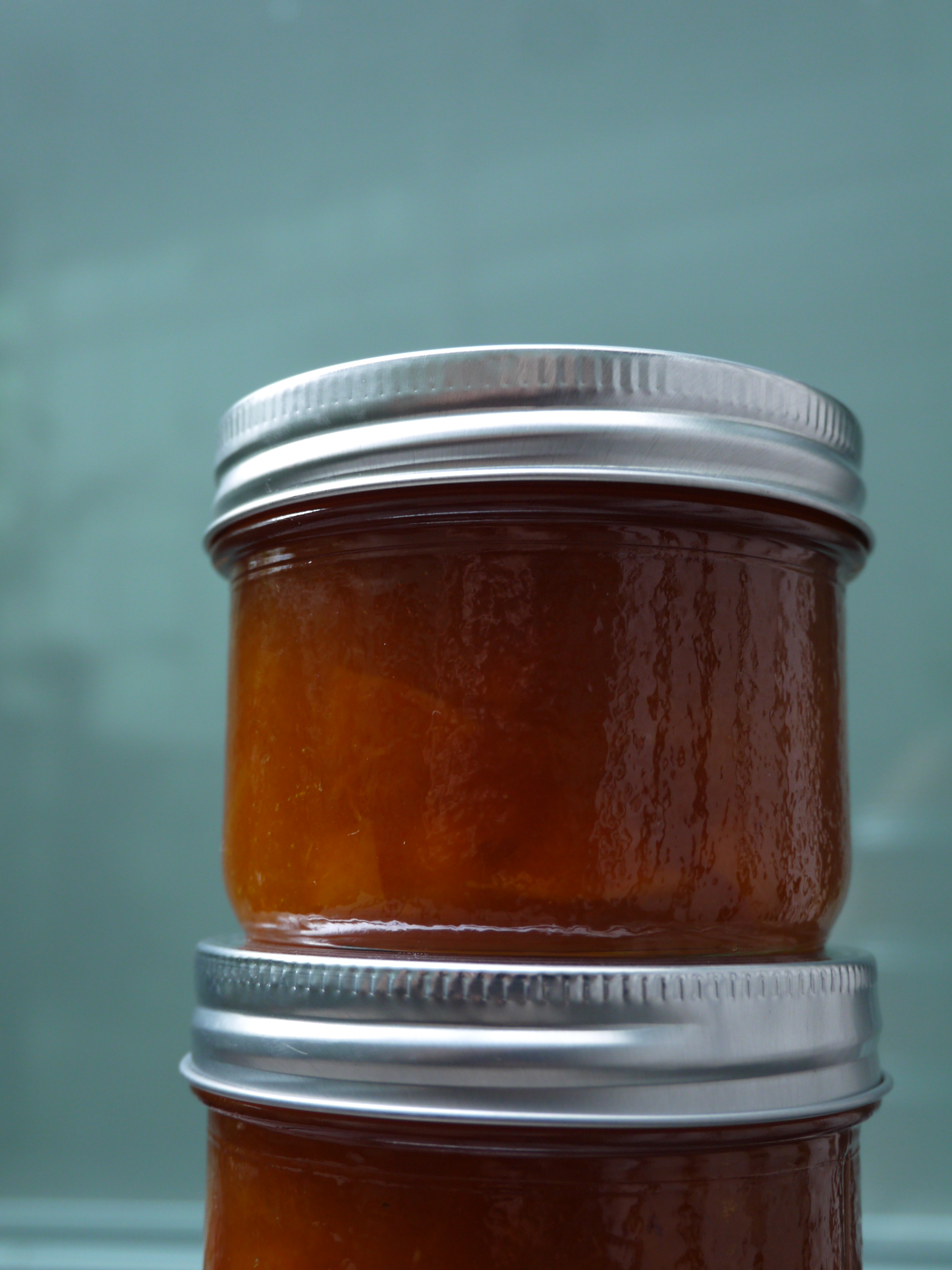
Apricot Jam

apricot jam - trust in kim

This summer my friend Connie visited from Ontario and brought a delicious jar of homemade apricot jam.  It was so delicious on toast, and amazing as a glaze for the apricots in this Apricot Almond Cake. I can easily say that apricot jam is my favourite of all the jams, and yet I’ve never made it before.  Since my sweetheart loves it as much as I do, I searched many produce stores to find apricots this late in the summer, (actually a few weeks ago now), and managed to find a few pounds.  Connie sent me her recipe, and I cooked up a batch.  Love the colour, love the smell, and I’m looking forward to tasting it all winter long!

The recipe is proportional, about 3 parts fruit to 1 part sugar.  I’m writing the amounts I used, but you can experiment depending on the amount you are using, as well as the flavour in your fruit.  Sometimes they need a little extra (or start with less) sugar or citrus.

What you need:

12 cups pitted and chopped apricots

4 cups white sugar

1/4 cup freshly squeezed lemon juice

1/3 cup freshly squeezed orange juice

canning jars, rings and new lids

What you do:

1. Chop the apricots up into small pieces and put them into a large pot with the sugar and citrus juices.  Bring to a low boil and skim off any foam.  Let it cook, stirring often,  on a low simmer until the mixture has thickened.  To test how thick your jam will be when it has cooled you can put a plate in the freezer.  Just drop a little jam onto the icy plate and let it cool, then give it a push with your finger to see if it is thick enough.  If not, just keep cooking it for longer.

2. Preheat the oven to 225F.  After washing your canning jars, put them in the oven for at least 20 minutes to sterilize them.  Heat a small pot of water for your lids to sterilize them and soften the rubber ring.  Just a note: it’s not a good idea to re-use the lids (the rings are fine to re-use though) because they may not seal properly.

3. Once your jam is ready pour it into the sterilized jars, keeping the edges of the jar clean so you will get a good seal.  Put a lid and ring on each and tighten it. My mom and Oma always put a tea towel over the jars until they seal, so that’s what I did.  You’ll hear the lids ‘ping’ as they seal.  I try to keep track of how many pings I hear so I know they’ve all sealed.

I used some jam in this recipe for warm peaches and yogurt.

Tomato, Corn and Cucumber Salad

tomato cucumber and corn salad - trust in kim

Here’s a really simple salad I’ve made a few times this summer, using tomatoes from my garden and cucumbers from a friend’s garden (and corn from the produce store).  I just used my favourite homemade vinaigrette, super easy and delicious.

If I use tomatoes and cucumbers out of season I always choose the little ones – cherry tomatoes and those small cucumbers.  They have way more flavour.  And for winter corn I prefer canned over frozen, and I usually us Peaches and Cream.  Still, the summer ones are the best, so I make this a lot while these things are growing nearby and in season.

What you need:

tomatoes

cucumber

sweet onion

corn on the cob

a few green olives

dressing ingredients:

about 1 teaspoon dijon mustard

about  1/4 teaspoon sugar

salt

pepper

white wine vinegar

olive oil

What you do:

1. Boil a pot of water for the corn and let it cook for a couple of minutes.  Remove the corn and run it under cold water.

2. To make the dressing, put the mustard in a bowl and add the sugar and some salt and pepper.  Add a little vinegar and mix it into the mustard so there are no lumps.  Mix in a bit more vinegar, then drizzle in some olive oil while mixing with a fork.  After you’ve added a bit, have a taste and see what you need to add more of.

3. Cut the cucumber and tomatoes into bite-sized pieces.  Chop the onion and olives.  Cut the corn off the cob, and put all the vegetables together in a bowl.  Toss it with some dressing and serve it up.

Enjoy!

Créme de Cassis

creme de cassis - trust in kim

Earlier in the summer I harvested the black currants from my community garden plot.  A number of years ago I made this beverage with my good friend Connie, and we enjoyed sips of the sweet liquor.  Créme de cassis can be served on its own, in sipping portions, in some white wine as a Kir, in champagne or sparkling wine as a Kir Royale, or on some vanilla ice cream.

I looked at many recipes, and then mainly went by this one, although I used Brandy instead of Vodka.

What you need:

1.5 lbs or about 680 grams fresh or frozen black or red currants (I didn’t have enough so I used some raspberries)

3 cups brandy

2 & 1/4 cups white sugar

1 cinnamon stick

What you do:

1. Clean a large canning jar, and wash and de-stem the currants.

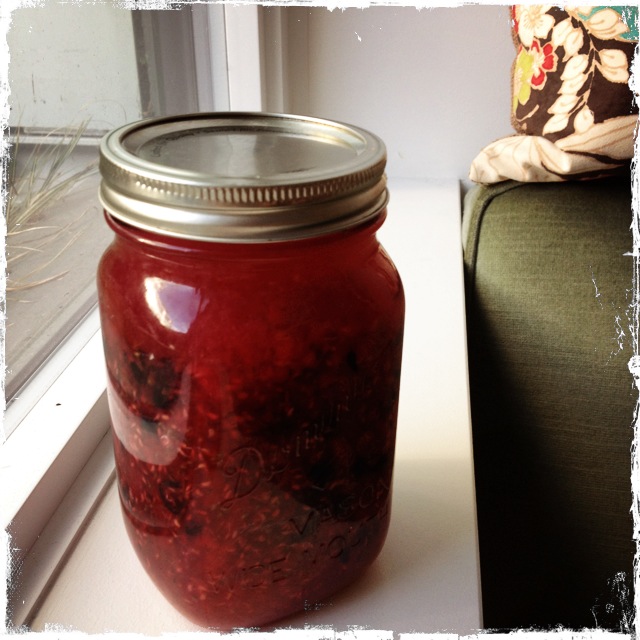
2. Smash the currants up and put them into the jar with all the other ingredients.  Give it a few shakes, then put the lid on tightly and store it in a warm sunny place for about a month.  Shake it around once or twice a week.

3. After about a month, strain the liquid through a fine sieve, lining it with a piece of cheesecloth if you want to get a really pure liquid. Bottle the liquid and enjoy as you wish.

You can also keep the fruit solids to make into other recipes, like an ice-cream sauce.

creme de cassis - trust in kim
sitting in the window for a month

Vegan Chocolate Mousse – not just for vegans!

silken tofu chocolate mousse - trust in kim

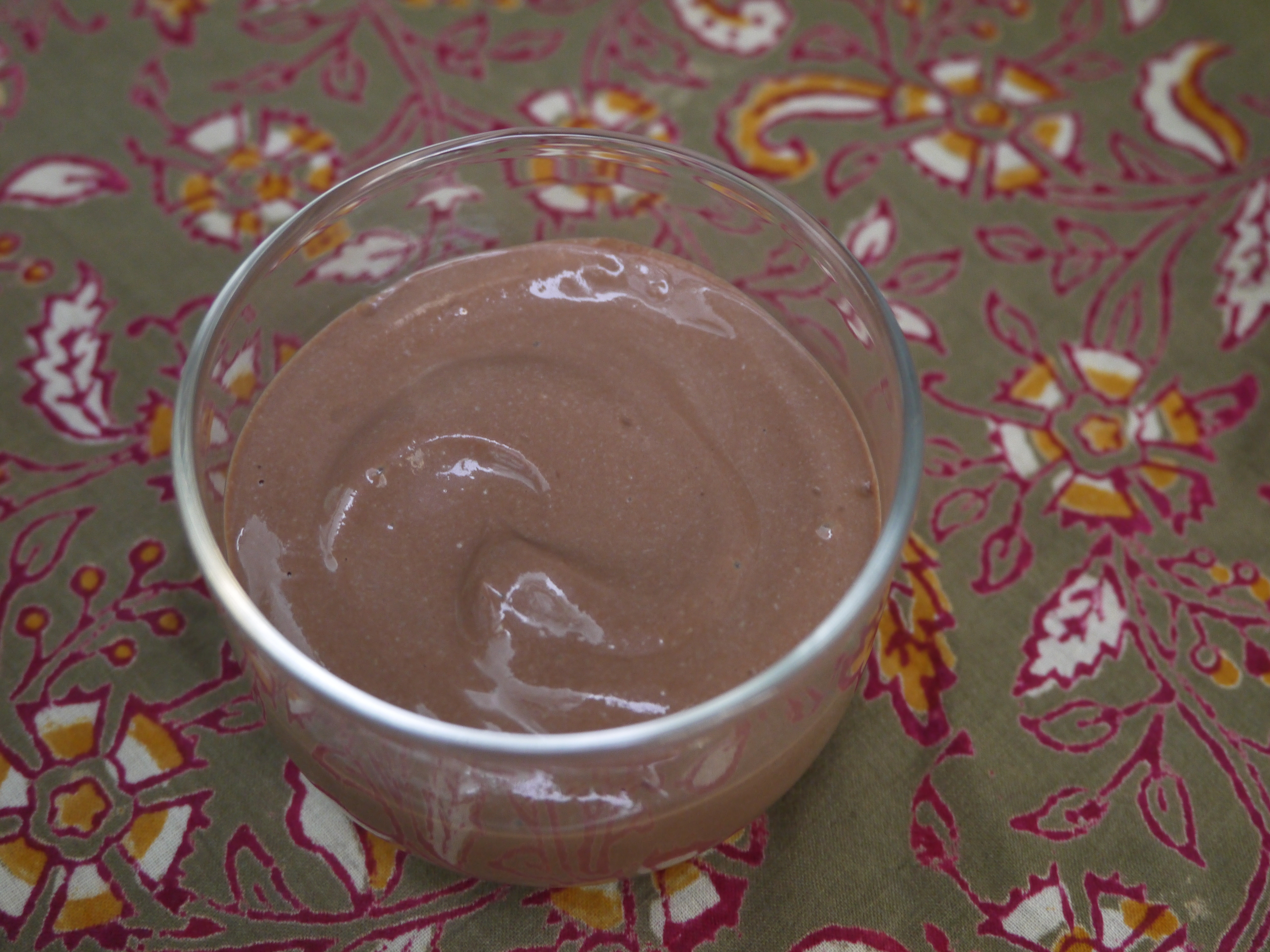
My friend I-Wen brought this chocolate mousse to a BBQ the other day, and people gobbled it right up, before we had even finished the meal part of the BBQ.  It is light, flavourful, and pretty much guilt-free! And did I mention easy to make?

What you need:

3/4 cup dark (70%) chocolate

12 oz silken tofu – Must be room temperature

1/2 cup unsweetened almond, soy or rice milk

1 teaspoon vanilla

What you do:

1. Melt the chocolate on top of a double boiler, or in a bowl on top of a small pot of water.

2. Warm the milk.

3. Throw all the ingredients into a blender or food processor (I used an immersion blender), and blend until it is all combined.

4. Scoop into bowls and refrigerate until cold.