Korean Beef Bulgogi

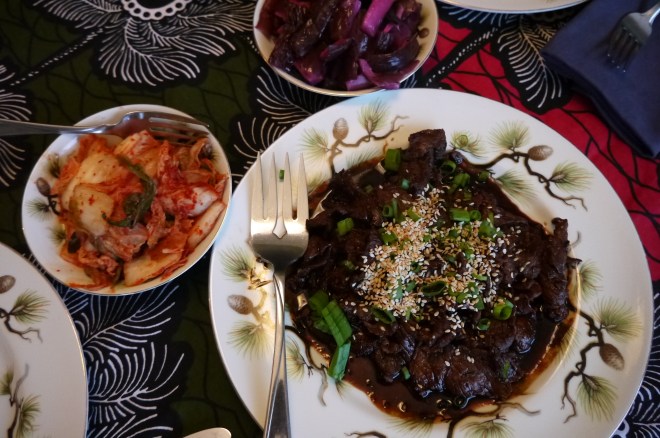
Korean Beef Bulgogi - trustinkimKorean beef bulgogi is marinated for a few hours, making it very tender, and then cooked quickly and dipped into sauce before eating. The marinade plus the dip provide the dish with a ton of flavour. We served it on white rice with a spicy kimchi, purple pickled cucumbers, and a cucumber salad. The only tricky part was getting the beef sliced really thinly.

It was fun to go to the Asian supermarket and choose some prepared pickled side dishes. I also bought an Asian pear that I was going to cut into matchsticks as a garnish, but totally forgot about it.

I found this in a cookbook called The Global Grill by Kathleen Sloan. It serves six people.

What you need for the beef marinade:

  • 2 & 1/2 pounds (just over a kilogram) beef strip loin
  • 1/2 cup light light sauce
  • 1/2 cup dark soya sauce
  • 1/2 cup water
  • 1 green onion, finely chopped
  • 3-4 cloves garlic, minced
  • 1 tablespoon sugar
  • 1 tablespoon minced ginger root
  • 1/4 teaspoon freshly ground black pepper
  • 2 tablespoons sesame seeds, toasted and ground

What you need for the dipping sauce:

  • 2 cloves garlic, minced
  • 1 green onion, finely chopped
  • 3 tablespoons dark soya sauce
  • 2 tablespoons water
  • 2 tablespoons rice wine or mirin
  • 1 tablespoon sesame seeds, toasted and ground
  • 1 tablespoon hot chili sauce (I used sriracha)
  • 2 teaspoons sesame oil
  • 2 teaspoons sugar
  • 1 teaspoon bean paste

What you need for serving:

  • rice (we used 2 cups of jasmine rice)
  • sesame seeds for garnish
  • green onions for garnish
  • side dishes such as kimchi, pickled vegetables, salad

What you do:

  1. Combine all the marinade ingredients in a container with a lid.
  2. Slice the beef as thinly as you can, using a very sharp knife. If you put the beef in the freezer for about 20 minutes before slicing it is easier to get the thin slices.
  3. Cover the beef with the marinade and refrigerate for about four hours.
  4. Combine all the ingredients for the sauce.
  5. Return the beef to room temperature before cooking.
  6. Preheat a grill or frying pan to high heat. Cook the beef for about 1 & 1/2 minutes per side. Serve it right away with the dipping sauce.

Chicken Noodle Soup

chicken noodle soup - trust in kim

This is the perfect recipe to make after you’ve roasted a chicken. Whether you’re feeling under the weather, or you’re perfectly healthy, a bowl of homemade chicken noodle soup is sure to make you feel even better.

After the roasted chicken has been consumed you can cook up the broth, let it cool over night, and then it’s ready to make into this soup the next day. I often freeze the broth for later use, so all my soups can have that homemade goodness in them.

If you haven’t just roasted a chicken and you want to make a broth, there’s a recipe for you here.

What you need for the broth:

  • 1 chicken carcass
  • 1 small onion
  • 1-2 garlic cloves
  • 1 bay leaf
  • a few peppercorns
  • a chunk of fresh ginger
  • 1 stalk celery
  • 1 carrot

What you need for the chicken noodle soup:

  • a stalk or two of celery, sliced
  • 1 carrot or two, sliced
  • optional: frozen peas
  • wide egg noodles
  • salt and pepper to taste

What you do:

  1. Remove any leftover meat from the chicken carcass and refrigerate for use in the soup later.
  2. Place all the chicken broth ingredients in a large pot and cover with cold water. Bring to a simmer, then lower the heat, so just a few little bubbles are coming to the surface. Leave on this very low simmer for 2-4 hours.
  3. Strain the broth through a fine mesh sieve; you can line the sieve with cheesecloth if you want a really clear broth. Discard the solids. Allow to cool, then refrigerate over night.
  4. By the time you make the soup the next day the fat should have hardened on the top of the broth. Scrape the fat off and pour the broth into a large pot on medium high heat.
  5. Add the leftover chicken meat, chopped, along with the celery and carrot, and let them cook for about 5 minutes.
  6. Add a few handfuls of the egg noodles and cook them according to the package instructions. By this time the carrot should be softer, but not mushy. Add the optional frozen peas and cook for just long enough to heat them through.
  7. Taste and season with salt and pepper. I like to add only a little salt, and then people can add more if they need to – too much salt ruins a perfect chicken noodle soup.

Mexican Brown Rice & Beans with Squash and Chorizo

Beans, Rice, Chorizo & Squash

This meal is awesome! So flavourful – a little bit spicy, or a lot if you prefer. But it’s not just spicy – I love the beans in this recipe, prepared like I would a soup stock, with garlic, onion and other ingredients to make them irresistible. The rice, as well, has onion, garlic, hot peppers and flame-roasted tomatoes to boost the flavour. And the Mexican chorizo and cotija cheese add some salty goodness. Add a salsa of your choice, and you’ve got a feast!

I’m not going to lie to you – there are a lot of steps here. Each of the parts of the recipe can be made to use in other meals; the beans and rice would be great on their own, and the rice, squash and chorizo would be great together. On another occasion I made the beans and rice with a beautiful pulled beef dish (recipe to come…). Use a vegetable broth and omit the chorizo for a vegetarian meal.

The beans can be made ahead of time and reheated; they take the longest amount of time. The timeline looks like this:

  • soak the beans the night before
  • make the beans ahead of time OR give them 1 & 1/2 hours or more to cook
  • bake the rice
  • if you are making your own salsa, do that (salsa fresca, salsa verde asado)
  • roast the squash
  • prepare the Mexican sausage
  • put it all together and top with Mexican cotija cheese, Mexican sausage, cilantro, and a wedge of lime

I cobbled this recipe together from a variety of sites, making a bunch of changes that are too numerous to list. The butternut squash is taken from a taco recipe, the beans are adapted from a Saveur recipe, and the rice is a combination of a Rick Bayless recipe and a  Whole Foods recipe.

What you need for the beans:

  • 2 cups dried pinto beans
  • about 8 cups chicken stock, or water and chicken bouillon cube
  • 1 stalk celery
  • 1 carrot
  • 1 clove garlic, smashed
  • 1 whole jalapeño
  • 12 small sweet onion
  • 2 bay leaves
  • salt and pepper to taste

What you need for the rice:

  • 1 sweet onion, diced
  • 3 cloves garlic, minced
  • 1 tablespoon olive oil
  • 2 jalapeño peppers, sliced
  • 1 & 1/2 cups brown rice
  • 1 teaspoon dried ancho pepper
  • 2 cups chicken broth or water (with chicken boullion added)
  • 1 & 1/2 cups fire-roasted tomatoes
  • 1 teaspoon salt

What you need for the squash:

  • 1 butternut squash
  • 2 cloves garlic, minced
  • 1/2 dried ancho pepper, snipped into small pieces with kitchen shears
  • olive oil
  • 1/2 teaspoon oregano
  • 1/5 teaspoon salt
  • 1/4 teaspoon cumin seeds

What you need for the Mexican Sausage:

  • 2-3 cured Mexican sausages (in Vancouver Armando’s Meats at Granville Island has excellent sausages)
  • 1/2 sweet onion, chopped
  • olive oil

Other things you need:

  • Mexican cotija cheese (salty and crumbly – yum!)
  • lime wedges
  • cilantro
  • salsa of your choice (homemade or store-bought)
  • your favourite hot sauce that people can add as they see fit – some of us like it hot!

What you do for the beans:

  1. Soak the beans in a large pot of water the night before you plan to cook them.
  2. Drain the beans and add the 8 cups of chicken broth or water and chicken bouillon. Add the celery, carrot, onion, garlic, jalapeño and a bit of salt. Bring to a boil, then lower the heat to a simmer. Cook for 1 hour and 45 minutes, or until the beans are soft. Add a little boiling water if they start looking too dry.
  3. At this point I decided to cook off a lot of the liquid by raising the heat and stirring. This way I kept a ton of flavour in the beans. Alternatively, you could drain the liquid and reserve it for making soup.
  4. Discard the vegetable pieces and bay leaves.

What you do for the rice:

  1. Preheat the oven to 350F.
  2. Use an oven-proof pot with a lid or a dutch oven for the rice. Add the olive oil to the pot on medium-high. When it is hot, add the onion and cook, stirring, for a few minutes. Add the garlic and cook for another minute or two.
  3.  Add the jalapeño pepper, rice, and the whole dried ancho pepper. Stir to combine, then add the tomatoes, broth or water and chicken bouillon, and the salt. Bring to a boil then cover with a lid and bake for one hour.
  4. Remove the rice from the heat and let sit for 10 minutes, or until the rest of the meal is prepared.
  5. Fluff the rice with a fork and cover until ready to serve.

What you do for the squash:

  1. While the rice is cooking, begin to prepare the squash. Turn the oven heat to 400F when the rice is done; if you have room in the oven you could cook the squash with the rice, letting it bake a little longer than suggested here.
  2. Peel and dice the squash. Place it in a large bowl. Drizzle it with olive oil, then add the garlic, ancho pepper, oregano, salt, and cumin seeds. Toss to combine.
  3. Arrange the squash in a single layer on a baking tray. Bake for 20-25 minutes, or until it begins to get a little browned.

What you do for the sausage:

  1. Heat a frying pan to medium-high and add a drizzle of olive oil. Add the onion and fry until it begins to brown. In the meantime, crumble the sausage into small bite-sized pieces.
  2. Add the sausage to the onions and cook until lightly browned. Keep hot until serving.

You can either serve family style, letting everyone put their plates together as they wish, or dish it up: rice and beans side by side, some squash and chorizo on top, sprinkled with a little cheese. Top with cilantro and place a wedge of lime on it for people to squeeze over the whole thing. Serve the salsa on the side, so people can add as much as they wish.

Enjoy!
Lasagna alla Amazing!

P1060012

lasagna - trust in kim

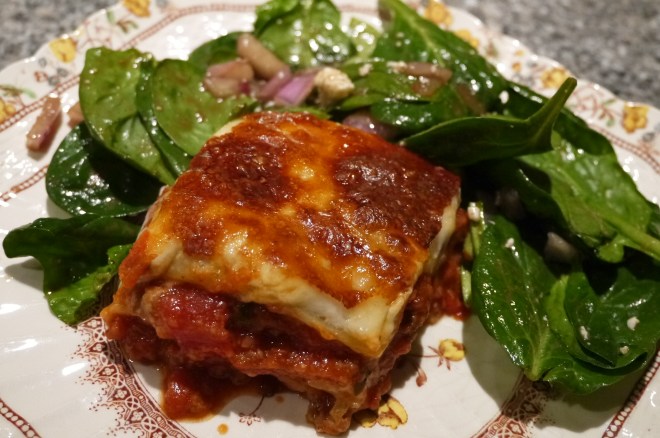
For this recipe I searched many websites and cookbooks for wouth-watering lasagna recipes. I found two that I really wanted to try (here and here), so I combined aspects of both recipes to make this awesome new recipe. The sauce is so delicious – with beef, pork and bacon, plus a purée of mushrooms and onions to add a ton of flavour.

The addition of the Parmesan rind was my idea; I’ve added this to sauces before, and it also adds a lot of flavour – the rind is removed before serving, but the cheesy flavour gets absorbed into the sauce. When I use up a chunk of Parmesan I throw the rind in the freezer to use one day when I make a tomato sauce. This time I needed to buy a new piece of Parmesan, so I used that rind.

I used fresh pasta instead of the dried kind. The original plan was to make my own pasta (when do I really have time for this on top of grocery shopping, cooking everything else, and cleaning my apartment??), but the store-bought fresh pasta was just as good. It makes a much more tender lasagna than the dried-pasta version. But both work just fine.

On a subsequent day I used up a bit of extra sauce by making a lower-lactose, higher-vegetable-content version of this. I made the white sauce with soy milk, and used only Parmesan cheese, which is very low in lactose. I roasted some eggplant slices and fried some mushrooms to add to the layers. Also delicious!

This recipe is a bit time consuming, but you can plan ahead by making the red sauce a day or two ahead of time. It was so delicious that I felt it was a good use of my time.

What you need:

-For the Red Sauce:
  • 3 rashers bacon, diced
  • 250 grams extra-lean ground beef
  • 250 grams lean ground pork
  • tablespoon olive oil
  • 1 tablespoon butter
  • 4 cloves garlic, finely minced
  • 1/2 large onion, diced (about 1/2 cup)
  • 8-10 white or brown mushrooms, chopped
  • 1-796mL can tomato puree
  • 1-796mL can diced tomatoes
  • 1-156mL can tomato paste
  • 1 bunch fresh basil (or two – yum!)
  • 1 teaspoon dried oregano
  • pinch of thyme
  • 1 Parmesan rind
  • 1/2 teaspoon salt
  • 1/2 teaspoon pepper
  • red wine (optional)
-For the White Sauce:
  • 3 cups milk (I used homogenized)
  • 1/2 small red onion or 1 shallot
  • 6 peppercorns
  • pinch of nutmeg
  • 4 tablespoons butter
  • 5 tablespoons flour
  • 1/2 teaspoon salt
-For the rest of the Lasagna:
  • fresh pasta lasagna noodles (or use regular dried lasagna noodles but cook them for a few minutes first) (the fresh ones make this super awesome!)
  • 1 pound mozzarella cheese, shredded (I used less and it was more than enough)
  • 8 ounces of a good quality, bold aged Parmesan cheese, shredded

What you do for the red sauce:

  1. Begin by making the red sauce. I cooked the sauce in a very large pot, but cooked each part of the sauce in a large frying pan before adding it. Start by adding the two cans of tomatoes and the tomato paste to the large pot and set it at medium heat.
  2. Chop the bacon up and add it to a hot frying pan. When cooked, drain it on paper towels. Add the bacon to the tomato sauce.
  3. Fry the beef and pork in the frying pan, draining off any excess fat. Stir the meat into the tomato sauce.
  4. Put a little bit of olive oil and butter in the frying pan, then add the chopped onion and garlic. Cook until they have begun to brown slightly, then add the mushrooms, frying until they are browned. Transfer the onion-mushroom mixture to a blender, or another container in which you can purée with an immersion blender. Add the puréed vegetables to the tomato sauce.
  5. Chop the basil stalks finely (saving the leaves for later) and add them to the tomato sauce, along with the oregano, thyme, parmesan rind, and salt.
  6. Cook the sauce on very low heat for as long as you can, adding a little red wine if it starts to get too thick. I cooked it for at least two hours, stirring once in a while, but you could get away with an hour.
  7. Chop the basil and add it to the sauce last. Add salt and pepper to taste.
  8. Let the sauce cool completely, then refrigerate until you are going to use it (unless you are cooking it right before you assemble the lasagna, in which case you can keep it cooking until you are ready to use it.

What you do for the White Sauce:

  1. In a medium-sized pot, heat the milk, onion, nutmeg and peppercorns to boiling. Remove from the heat, strain the peppercorn and onion out and discard them.
  2. Pour the milk into a measuring cup or another container with a pouring spout.
  3. Add the butter to the empty pot and let it melt. Whisk in the flour in and let it cook for about a minute as you continue to whisk (I just use a spatula at this point).
  4. Add a little bit of milk to the flour mixture, combining the milk into the flour before you add more. Continue adding the milk gradually until it is all combined and you have a smooth sauce. Cook for another few minutes until the sauce has thickened slightly. Taste and add more salt only if you think it needs it.

To Assemble the Lasanga:

  1. Prepare a large casserole dish by coating it with a little bit of olive oil.
  2. Preheat the oven to 350F.
  3. In the bottom of the casserole, spread 1/3 of the tomato sauce. Place a layer of the uncooked fresh pasta on top of this. Spread 1/3 of the white sauce on top of the pasta.
  4. Repeat this process: red sauce, pasta, white sauce.
  5. One more time: red sauce, pasta, white sauce.
  6. Now sprinkle the cheeses all over the top, to the edges.
  7. You will need to cover the lasagna with a sheet of foil, but here you can learn from my mistake. When I peeled the foil off, I pulled cheese off with it. So if you put a bit of olive oil on the side of the foil that will face the cheese, it will help avoid that sticking problem later on. As well, if you can tent the foil a bit, but manage to still seal the edges of foil to the pan, this can help too.
  8. Bake with the foil on for 20 minutes, then uncover and cook for 30 more minutes. The lasagna should become browned and bubbly.
  9. Let the lasagna sit for 15 minutes before serving; this way it won’t fall apart when you plate it, and the cheese will get a nice stretchiness to it.

Enjoy with a salad and a crusty piece of bread. This one makes awesome leftovers, which you can freeze if you wish.

kitchen helper - trust in kim

Chicken and Vegetable Tagine

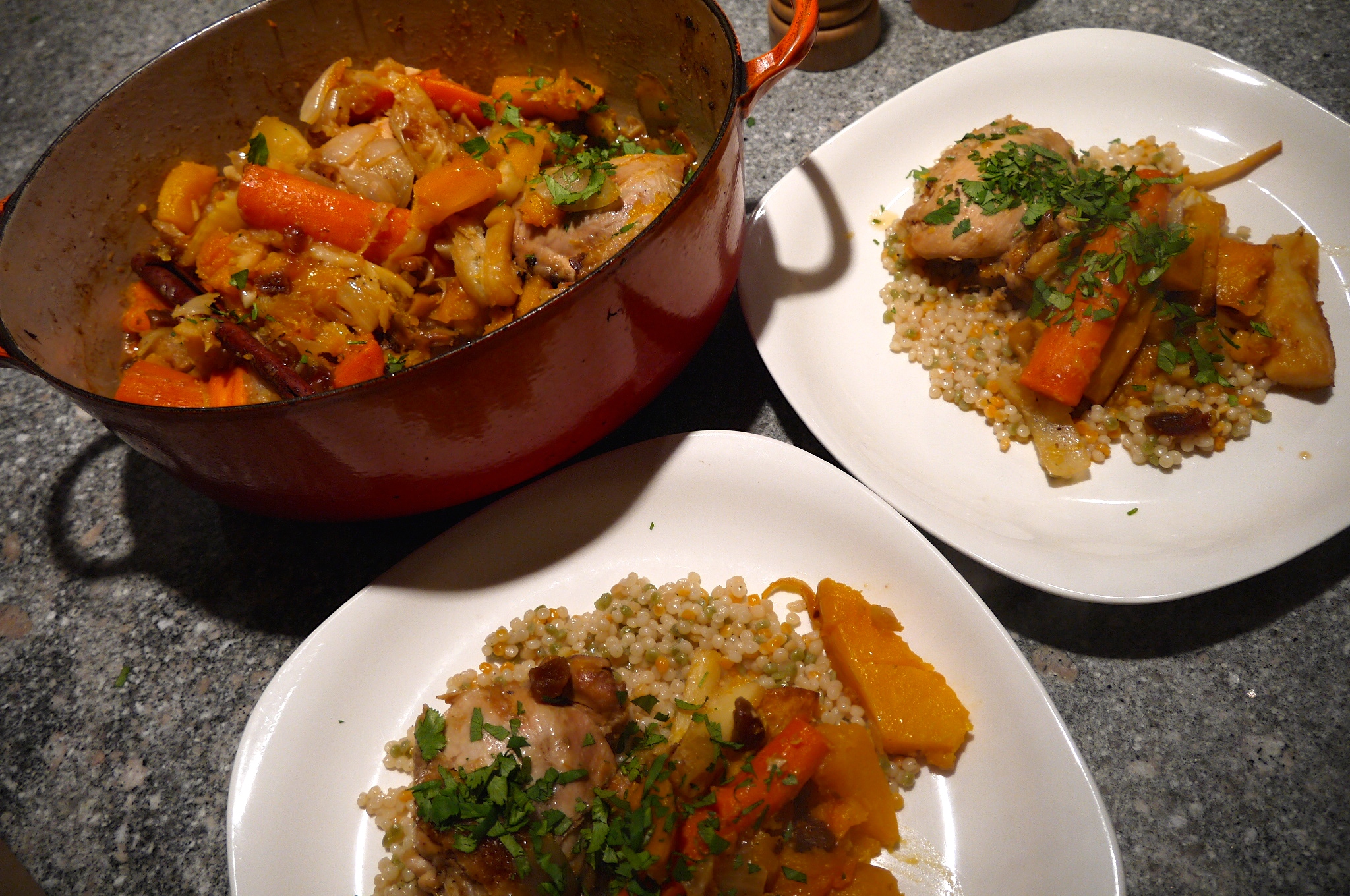
chicken and vegetable tagine - trust in kimA few months ago I made some preserved lemons , knowing that I would make a tagine one day – some things have to be planned ahead! So I had the beautiful sunny gems waiting in my fridge to use in this chicken and vegetable tagine, and they sure did make this recipe shine.

The recipe I ended up with was is amalgamation of two recipes I found online, here and here, and then a bit of my own experimentation. I really wanted it to be full of a variety of vegetables, and tons of flavour.

You could omit the chicken to make this a lovely vegetarian dish. I would probably throw some toasted nuts on top to add some protein.

I served the tagine on Israeli couscous, which have a nice pasta-like bite to them, but you could also serve it on regular couscous or rice.

A note about the tagine:

Tajine_potter

A tagine is a crockery vessel with a conical lid. I do not own a tagine, nor do I have room in my tiny kitchen to store one, so I have used a le Creuset lidded pot in its place. I’m sure so much of this recipe is inauthentic (yet awesome!), so using the wrong vessel is probably fine. Use any large lidded dish you have that can be used on both the stove-top and in the oven.

What you need:

  • 4-6 skinless, bone-in chicken thighs
  • 2 tablespoons olive oil
  • 1 large shallot
  • 2 cloves garlic
  • 1 tablespoon grated fresh ginger
  • 1 teaspoon cumin
  • 1 teaspoon coriander seeds, lightly crushed
  • 2 small cinnamon sticks
  • pinch of saffron
  • 1 teaspoon ground ginger
  • pinch of dried crushed chili flakes
  • 2 cups chicken stock
  • 2 small handfuls of dried apricots, chopped
  • 1 preserved lemon (optional)
  • 1 tablespoon honey
  • 1 sweet onion, cut into about 8 wedges
  • 1 small butternut squash, cut into 3-cm thick wedges
  • 3 carrots, cut into 4-5 cm long chunks
  • 2 parsnips, cut into 4-5 cm long chunks
  • 1 red pepper, cut into 2 cm wide strips
  • salt, to taste
  • cilantro

What you do:

  1. Preheat the oven to 400F.
  2. Place the onion wedges, butternut squash, carrots, parsnips and red pepper on a baking tray. Drizzle with olive oil and place in the oven to roast. This will take anywhere from 20-40 minutes. It’s okay if not all the vegetables are cooked through, but they should get some colour.
  3. Salt the chicken pieces.
  4. Heat 1 tablespoon of olive oil in a large skillet or a dutch oven with a lid, on medium high heat, then add the chicken. Brown the chicken on both sides, then remove it from the pan. The chicken does not need to be cooked all the way through, as you will continue the cooking process later.
  5. Lower the heat to medium-low and add the shallot and ginger to the pan. Cook until the shallot has browned.
  6. Add the fresh ginger, cumin, coriander seeds, cinnamon, saffron, chili, and ground ginger to the pan and cook until fragrant.
  7. Cut the peel off the preserved lemon and discard all the inside bits. Chop the lemon peel into about 1cm pieces.
  8. Add the chicken stock, honey, apricots, and preserved lemon to the pan, and then add the chicken back to the pan so it is mostly submerged in the broth. Simmer the chicken until the vegetables are ready.
  9. Add the roasted vegetables to the pot with the chicken. Gently combine them so they don’t break up. Put a lid on the skillet or dutch oven and place in the oven for 20-30 minutes, until the flavours have had a chance to mingle, and the chicken and vegetables have cooked all the way through.
  10. Serve on couscous or rice, garnished with cilantro.

Enjoy!


French Lentil Soup with Hot Turkey Sausage and Kale

P1050837

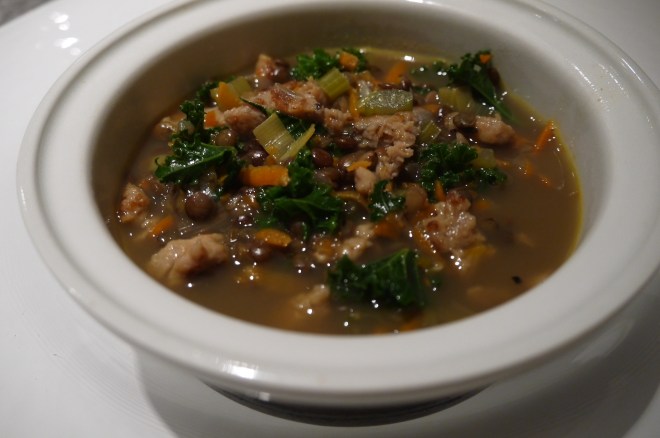
Here’s a tasty and healthy recipe – perfect for the wet Vancouver weeks we’ve been having, or the cold weather anywhere else. Apparently this is a typical French soup. Since I have only visited France in the summer, I have never had a chance to try this, but it’s delicious!

I found the recipe here, and only changed it a little. I used a few cups of chicken broth along with the water, and about half the amount of sausage. I used less olive oil than the original recipe called for, and I discarded the fat from the sausages instead of adding it to the soup. I think it’s leaner, but still really tasty.

What you need:

  • 1 & 1/2 cups French lentils
  • 300 grams hot Italian sausage (omit for a vegetarian soup)
  • 2-3 cups kale
  • 1 large leek, diced
  • 3 carrots, shredded
  • 3 stalks celery, diced
  • 1 tablespoon red wine vinegar
  • 3 bay leaves
  • 1 Tbs Thyme
  • 1/4 teaspoon red pepper flakes
  • 1 & 1/2 tablespoons olive oil
  • 6-7 cups water (or 3 cups chicken broth, the rest water)
  • salt and pepper

What you do:

  1. Pick through the lentils to make sure there are no small stones hidden in them.
  2. Remove the stems from the kale and cut it into ribbons.
  3. Remove the casing from the sausage. Heat about 1/2 tablespoon of olive oil in a large pot and sear the sausage on both sides, then break it apart. Remove the sausage and discard most of the fat.
  4. Add the red pepper flakes to the little bit of sausage fat, and then add the kale. Season with salt and pepper, and sauté the kale for about 2 minutes. Add it to the removed sausage.
  5. Pour the remaining tablespoon of olive oil into the pot and add the vegetables.  Sauté them for about 10 minutes, or until the vegetables become soft and transparent.
  6. Add the thyme, bay leaves, lentils and 6 cups of water.  Season with salt and pepper, bring to a simmer and cook for 25 – 30 minutes, at which time the lentils should be done.
  7. Add the vinegar, kale, sausage, and any more water to achieve the thickness you want.  Cook for 5 more minutes to reheat the kale and sausage. Taste and adjust seasonings.
  8. You can serve it right away, but it also makes fantastic leftovers. The flavours are even more developed with next day!

Hummus Kawarma (Lamb) with Lemon Sauce

Hummus kawarma (lamb) with Lemon Sauce - trust in kim

Yotam Ottolenghi, thank you for this recipe! I have several of his cookbooks, and I think this is my favourite recipe out of all of them. It comes from Jerusalem, which is filled with awesome recipes along with beautiful photos of the food and culture.

There is so much flavour in this dish – the lamb is marinated in herbs, and then it is served on top of hummus and drizzled with a delicious lemon sauce. Completely addictive!

In the colder seasons I serve this with another favourite recipe, roasted cauliflower and butternut squash. In summer I would switch to a refreshing fattoush salad.

You can substitute the hand-chopped lamb with ground lamb, but the hand-chopped meat has a much nicer texture to it. And it’s really easy to chop the meat yourself.

This recipe serves 6 people for an appetizer or small meal. Pita bread is nice served with this.

What you need:

kawarma ingredients:

  • 300g neck fillet of lamb (which I couldn’t find, so I just used a piece of top round)
  • 1/2 teaspoon ground black pepper
  • 1 teaspoon ground allspice
  • 1/2 teaspoon ground cinnamon
  • pinch of freshly grated nutmeg
  • 1 teaspoon crushed dried za’atar or oregano leaves
  • 1 tablespoon white wine vinegar
  • 1 tablespoon chopped fresh mint
  • 1 tablespoon chopped flat-leaf parsley, plus extra to garnish
  • 1 teaspoon salt
  • 1 tablespoon unsalted butter or ghee
  • 1 teaspoon olive oil

lemon sauce ingredients:

  • 10 grams flat-leaf parsley, finely chopped (also delicious without parsley)
  • 1 green chile, chopped finely
  • 4 tablespoons freshly squeezed lemon juice
  • 2 tablespoons white wine vinegar
  • 2 cloves garlic, crushed
  • 1/4 teaspoon salt

optional toppings:

  • pine nuts
  • pomegranate seeds

What you do:

  1. Chop the lamb finely. Combine all the kawarma ingredients except the butter and oil. Mix well, cover and refrigerate for 30 minutes.
  2. Combine all the ingredients for the lemon sauce.
  3. Heat the butter and olive oil in a large frying pan. Add the lamb, in two or three batches, and stir as it fries. It only needs about 2 minutes to turn nicely light-pink inside.
  4. To serve, make a mound of hummus on the plate, and use a spoon to create a well in the middle. Spoon some of the lamb into the well, and top with a generous amount of the lemon sauce. Garnish with more parsley or other optional toppings.

Enjoy it while it’s warm!

Lemony Greek Ribs

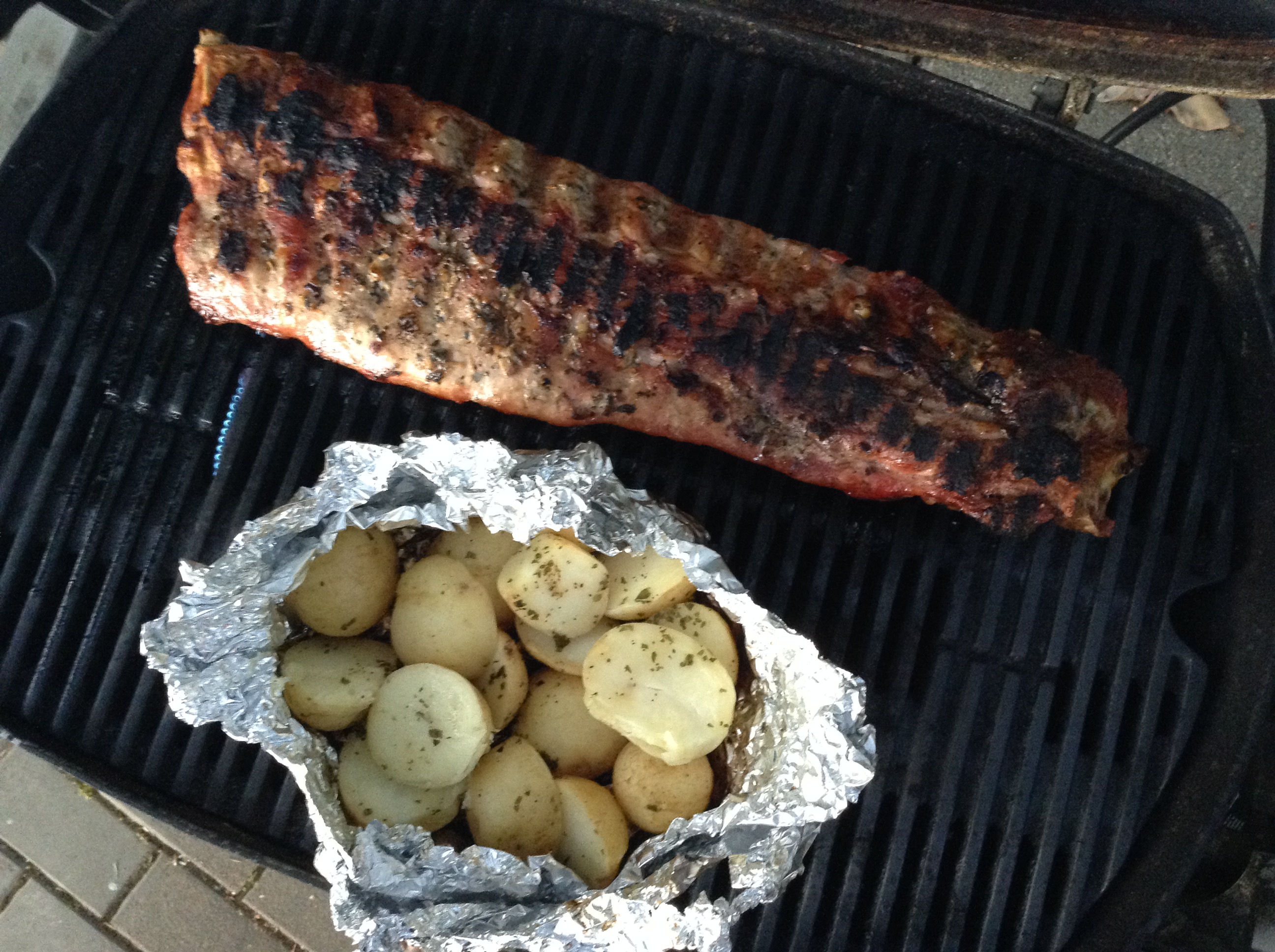
greek rib dinner -trust in kimgreek ribs - trust in kim

These dry Greek ribs are so flavourful – lemony and salty. The secret is to make a dry rub containing lemon zest, and let that sit for a few hours.

I lived in a small town way back when for a few years and there was, in my opinion, only one good meal available in a restaurant in that town at the time. It was Greek ribs, and it was awesome. But I’ve been in big(ger) cities for a long time, where there are endless possibilities for delicious meals to inspire my cookery, so I had sort of forgotten how much I loved these until this summer. I finally got around to trying to recreate the taste experience, and I am so pleased with the results. I already have requests from the friends who ate them to make them again soon.

I gleaned ideas from many recipes, and then just put together what I thought would work into this recipe.

Lemony potatoes, Greek salad, and some tzatziki make this an awesome Greek meal.

What you need:

  • 1 large rack baby/pork back ribs
  • 2-3 cloves garlic, finely minced
  • zest of two lemons
  • 1-2 teaspoons dried oregano
  • salt and pepper
  • juice of two lemons

What you do:

  1. A few hours before you plan to grill them, make up the dry rub. Combine the garlic, lemon zest, oregano and pepper, and work it a little with your fingertips to help the zest release its oil. Place the ribs on a baking pan or another dish that they fit into. Generously salt both sides of the ribs. Rub each side with the zest mixture. Cover with plastic wrap and refrigerate until half an hour before you will be grilling.
  2. Pour the juice of the lemons over each side of the ribs and let them sit for about half an hour.
  3. Heat the grill on high. When the grill is hot, put the ribs on (meatier side down) and turn the heat to low. Cook for about 20 minutes on each side. It might need a little longer depending on the size of the ribs and the heat of your grill.

Καλή όρεξη (Enjoy your meal!)

How to Make a Veggie Burger Even More Awesome

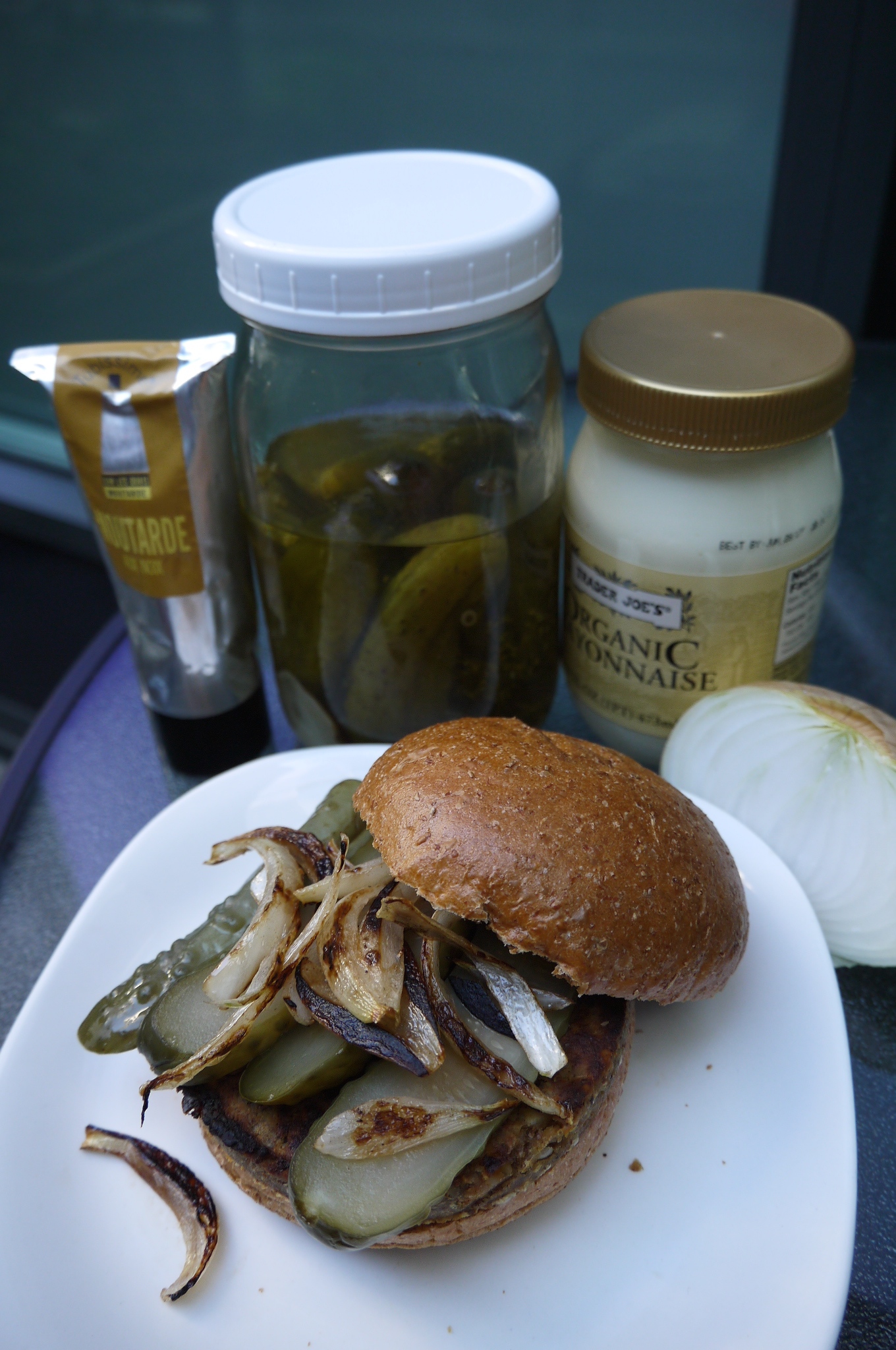
veggie burger - trust in kim


On Vancouver’s Granville Island there used to be a restaurant called Isadora’s. One of the many delicious foods they served was a walnut-based Go-Nuts burger. Most veggie burgers are soggy and unappealing, but I love this one because it is crispy on the outside, and it has a great nutty flavour. Of course it is nothing like a beef burger, but delicious nonetheless. Isadora’s restaurant has been closed for years, but they are still producing these burger patties on Saturna Island. They can be found in the freezer section of some grocery stores; in Vancouver they are at Whole Foods and Famous Foods.

I like to toast the hamburger bun, then just add a little mayo and Dijon mustard, and then top it off with the awesomeness of fried onions and homemade pickles. Fried mushrooms are great too.

Of course these toppings work on any burger, veggie or beef.

If you’d like to try making the patties yourself, here is a recipe. If you try it, please let me know how it turns out.

What you need:

  • sweet onion
  • butter or olive oil for frying the onion
  • (mushrooms are awesome on here too)
  • walnut Dijon (or regular Dijon) mustard
  • mayonnaise
  • dill pickles
  • burger patties
  • whole-grain hamburger buns

What you do:

  1. Slice some of the onion. Heat a frying pan to medium-high and add a little olive oil or butter. Fry the onions. lowering the heat as needed, until browned. Keep them warm in the pan until you need them.
  2. I fry the Go-Nuts burgers in a frying pan using a little butter instead of on the barbecue because they tend to fall apart, but you can bbq yours if you are a different kind of patty. While the patties are cooking slice the pickle and toast the buns.
  3. Spread a little mayonnaise and Dijon on the buns, then place the burger on it. Top with pickles and onions.

Enjoy!

Margherita Pizza

margherita pizza - trust in kim


A Margherita pizza is the true test of good ingredients and a great pizza crust recipe. It is so simple, but everything has to be just right to make it taste delicious. I like to use the A16 Restaurant dough, which requires planning ahead a day or two. It has a perfect chewiness, with a crispness on the edges that bubble up and blister. The tomato sauce is simple; just some canned San Marzano tomatoes, crushed by hand.

This pizza isn’t like one from a take-out place, with a crust thick enough to hold up a ton of soggy toppings and cheese. This one is light, with a crispy crust, and you can taste each ingredient. Delizioso!

What you need:

  • 1/4 teaspoon yeast
  • 1 & 1/2 cups warm water
  • 2 teaspoons olive oil
  • 2 teaspoons salt
  • 4 cups “oo” flour or all-purpose (I used all-purpose)
  • one 28-ounce can of tomatoes (San Marzano if you can find them)
  • 1-2 teaspoons salt
  • fresh mozzarella
  • freshly grated parmesan
  • fresh basil (optional)

What you do:

  1. Begin preparing the dough a day or two before you want to make the pizza. You can do this by hand, but it’s a bit more work than using a machine. Pour the warm (not hot – just body temperature) water into a mixer fitted with a dough hook, and then sprinkle the yeast on top.  Leave it for about 10 minutes and it should dissolve and become foamy – if it doesn’t your water was the wrong temperature, or the yeast is dead, so you need to try again with new yeast.
  2. Stir in the olive oil and salt.  Add most of the flour and mix on low for 2 minutes.  Knead on medium-low for about 10 minutes – it will pull away from the bowl and begin to look smoother.
  3. Cover the bowl with a damp towel and let it rest for 5 minutes. Knead once more on medium-low for 10 minutes – it will be smooth and quite soft.  If it seems much too sticky you can add a little more flour.  Coat a bowl with a little olive oil and then coat both sides of the dough with olive oil, placing the dough in the bowl.  Cover the bowl with plastic wrap and put it in the fridge over night (or two or three nights).
  4. In the morning remove the  dough from the fridge and punch it down.  Fold the sides of the dough under and put it back in the bowl.  Cover the bowl with a damp towel and let it sit in a warm (not hot) place until about 2 hours before you are going to use it.
  5. Punch the dough down and divide it into 4 pieces.  Form each piece into balls and cover them with a damp towel for about 2 hours.  By this time the dough should have doubled in volume.  If it starts to get a skin on it you can spray it with a little water.
  6. To prepare the sauce, just put the tomatoes and their juice into a bowl and squish them into little bits with your hands.  Add the salt.
  7. Preheat the oven to 500-550 F. I used a brick oven, which had to be lit a few hours before to heat it sufficiently. This makes the Best Pizza, but understandably, most people will be baking in a conventional oven.
  8. To form the crusts, shape the dough into a disk with your hands.  Push down in the centre with your palm and pull the dough out gently with your other hand, rotating slightly until you have a crust that is about 10-12 inches/25-30 cm in diameter with a slightly raised edge. Dust your baking pan generously with flour and place the crust on it.  I don’t have a proper pizza stone or pan, and the baking tray I used worked just fine.
  9. Spread some tomato sauce onto the crust, then add the mozzarella and a light sprinkling of parmesan. You want to go light on the toppings or the crust will become soggy.
  10. Bake for 6-7 minutes, until the crust is crisp, golden, with some dark blistering, and the top is bubbling.
  11. Add a little fresh basil to the top if you are using it.

Buon Appetito!


making pizza crust - trust in kim
forming the crust by hand


baking in a brick oven - trust in kim
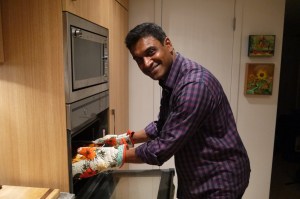
My dad had the job of baking in the brick oven.